A customer calls support. The agent knows what to do, except the CRM won’t load properly, or their permissions have vanished, or the knowledge base is serving yesterday’s answer while the customer sits there wondering why something simple is taking 15 minutes.
Internally, that’s an IT problem. To the customer, it’s just bad service.
Ty Givens put it perfectly during our May resilience roundtable:
“There are two questions. Can the customers get help? And can the agents do their job? Those are the two things that actually make an organization resilient.”
That disconnect has bothered us for a while. I’ve kept thinking about it since our Opsgenie coverage. Now Workday Rising has given us Sana Concierge, an HR-and-IT agent designed to deal with requests before employees need to open tickets. Atlassian has expanded Service Collection, while Salesforce's Paige can work above third-party ITSM systems. The employee-service front door is getting rather crowded.
ServiceNow’s added another talking point. Flow, announced October 1, is designed to bring IT support into Slack and Teams, while its October 6 AI Workflow Factory gives companies a governed way to build and run AI workflows. The service front door is getting easier to separate from the machinery underneath it.
That’s a lot of movement around employee service management in a very short window.
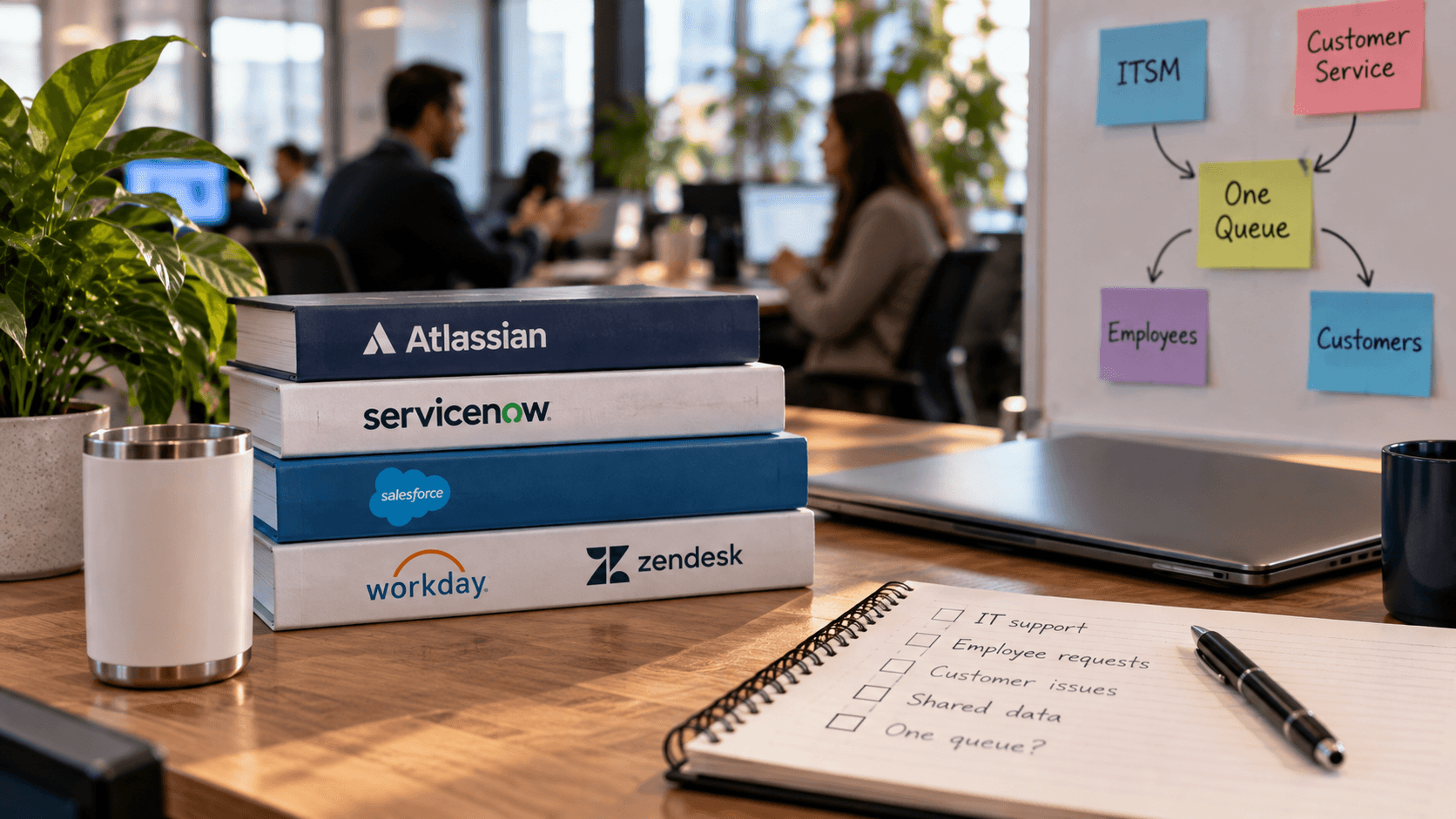
But does ITSM and customer service convergence really mean dumping every request into one queue? Or should we be asking why the same technical problem still needs so many different teams and systems to put it right?
TL;DR
-
Workday wants to deal with IT requests before anybody opens a ticket. Rising introduced Sana Concierge, bringing HR and IT work into the new Workday Home. Concierge is only in early access, with general availability planned for Q1 2027. I'd want to see actual IT support results before calling this a serious challenge to established ITSM vendors.
-
Atlassian's help desk ambitions are getting harder to ignore. Team ’26 Europe brought proactive employee support, Customer Service Management and Rovo closer together. Meanwhile, the Opsgenie migration keeps pulling more operational work into Jira Service Management. That's a lot more responsibility for what used to be an IT ticketing platform.
-
Salesforce wants to own the front door, even when someone else owns the plumbing. Paige now spans IT and HR support and can work above third-party ITSM platforms. Clever, certainly. But when work moves between systems, who's accountable if the customer or employee still doesn't get an answer?
-
ServiceNow would quite like to keep control of what happens behind the scenes. Flow is bringing IT help into Slack and Teams, while Action Fabric lets external agents kick off workflows without bypassing ServiceNow's approvals and controls. That's useful if you want employees to get help wherever they're working. I'd still want to know who's responsible when something goes wrong, particularly if several different systems have had a hand in it.
Why Are ITSM and Customer Service Converging Now?
The case for ITSM and customer service convergence gets pretty hard to ignore once you stop treating an agent’s working environment as an internal concern.
If authentication fails or the CRM becomes unusable, the employee has an IT incident. The customer waiting for help has a rather different name for it.
We heard another interesting perspective from Fin’s Brian Donohue. His team already uses separate agents for customer support, human-agent assistance, and service operations. How much context should those specialists share as their work overlaps? Surely that's more interesting than giving everyone the same ticket list.
ISG’s September 17 research describes enterprise service management as an emerging “enterprise execution layer,” extending into HR and finance. ISG Partner Andy Miears puts the challenge neatly:
“The defining test for ESM is whether intelligent execution can scale while keeping decisions linked to accountability.”
That accountability bit deserves attention. Riverbed’s October 6 survey found 77% of respondents hesitant to let AI make operational decisions without human approval, while just 17% reported fully unified visibility across their infrastructure.
More automation doesn't necessarily mean less work, either. SolarWinds’ 2026 ITSM survey found 84% said AI met or exceeded ROI expectations, yet 52% reported increased workloads.
One queue might mean fewer handoffs and better context. It could also concentrate failure and authority in fewer places. That's something buyers should be asking about before celebrating another merged service desk.
What Is Workday Rising 2026 Bringing to Employee Service Management?
Workday gave us a much clearer answer at Rising on October 13. Sana is becoming the new Workday Home, and its new Sana Concierge brings HR and IT requests into one employee-service experience.
That's quite a step beyond Workday's May Sana for ITSM announcement. Concierge combines those capabilities with Workday Help and Case Agent, covering onboarding, payroll questions, password resets, and application access. It is designed to resolve requests before someone has to open a ticket.
Chief AI Officer Joel Hellermark put the thinking together at Rising:
“AI is the new UI.”
Workday already knows an employee's role, reporting structure, and approval rules. Why make them explain it all again whenever they need IT support? Workday also plans to bring Sana into Slack, Teams, Copilot, Gemini Enterprise, and Claude, with permissions staying under Workday's control. The fuller Sana integrations aren't all available yet.
The new Workday Home is available now. Sana Concierge is in early access, with general availability expected in Q1 2027. I'd still like a named ITSM customer result showing how many requests it completes without human help. Workday's made the service-front-door pitch clearer; proving the difficult cases is another matter.
How Is Jira Service Management Expanding Beyond IT?
Atlassian's October 7 announcements at Team ’26 Europe gave us plenty to think about. Workforce Management in JSM is now generally available, with skill- and capacity-based routing. Solution Composer is in open beta, while proactive device monitoring and service actions through Slack, Teams, and Claude remain in closed early access.
Atlassian's announcement roundup adds more texture. Agents in JSM are generally available, allowing teams to assign work to Atlassian, Rovo Studio, and third-party agents connected through MCP. AI Change Risk Assessment is also GA, while new hardware asset-management capabilities connect device records to service context.
There's a customer-service angle too; you might be familiar with Customer Service Management, introduced in 2025, which supports live chat, WhatsApp, voice and email. Its newer MCP capabilities connect AI agents to external knowledge and services, while Optimize identifies knowledge gaps in human-resolved conversations.
Atlassian's Head of Product, IT Solutions, Shamik Sharma, summed up the ambition:
“The best service is the kind that unblocks teams to do their best work across dev, IT, business, and customer service teams.”
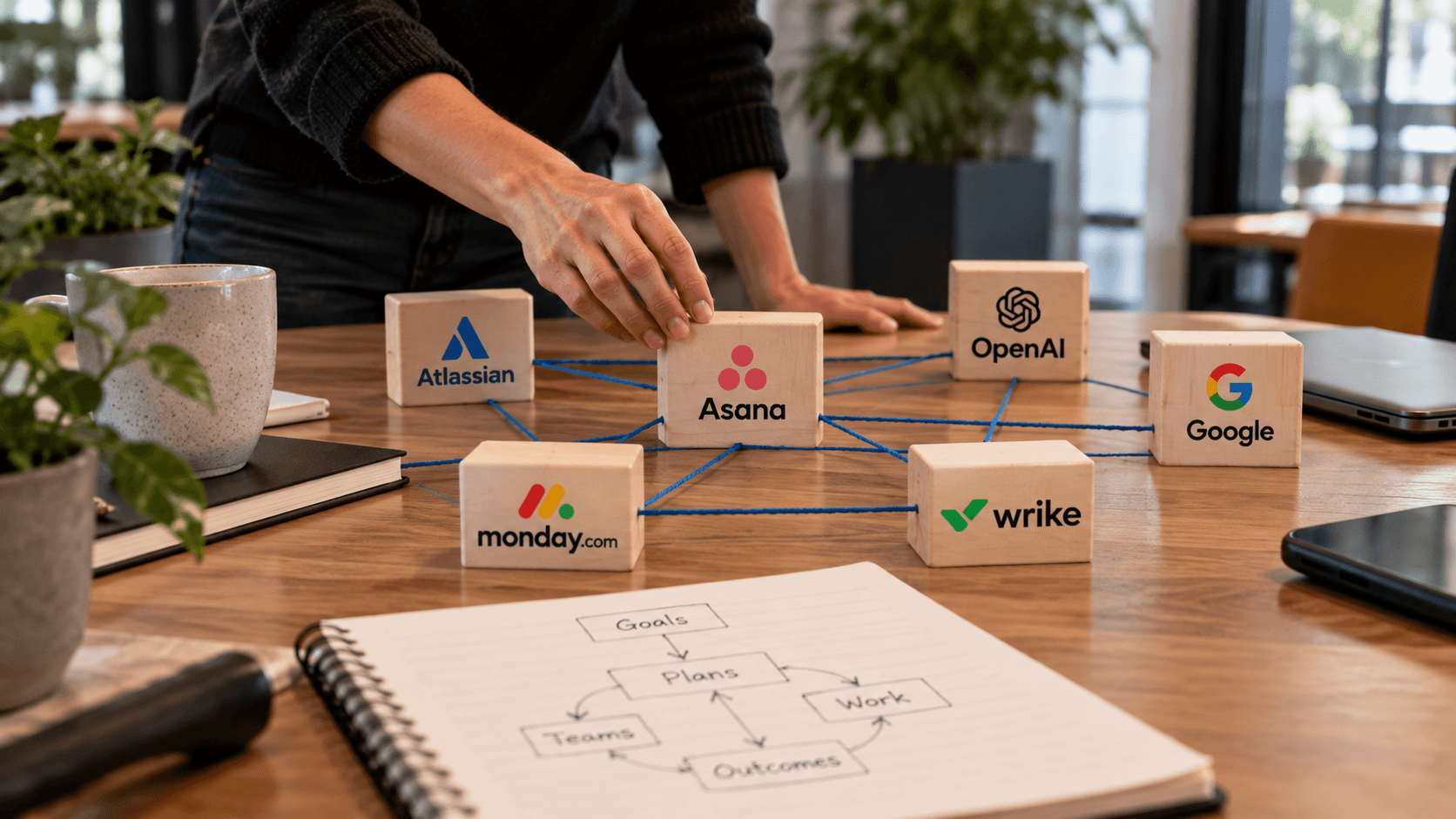
Atlassian wants employee problems, customer complaints, and operational signals meeting in the same service environment. One queue might be the wrong phrase. One service layer makes more sense.
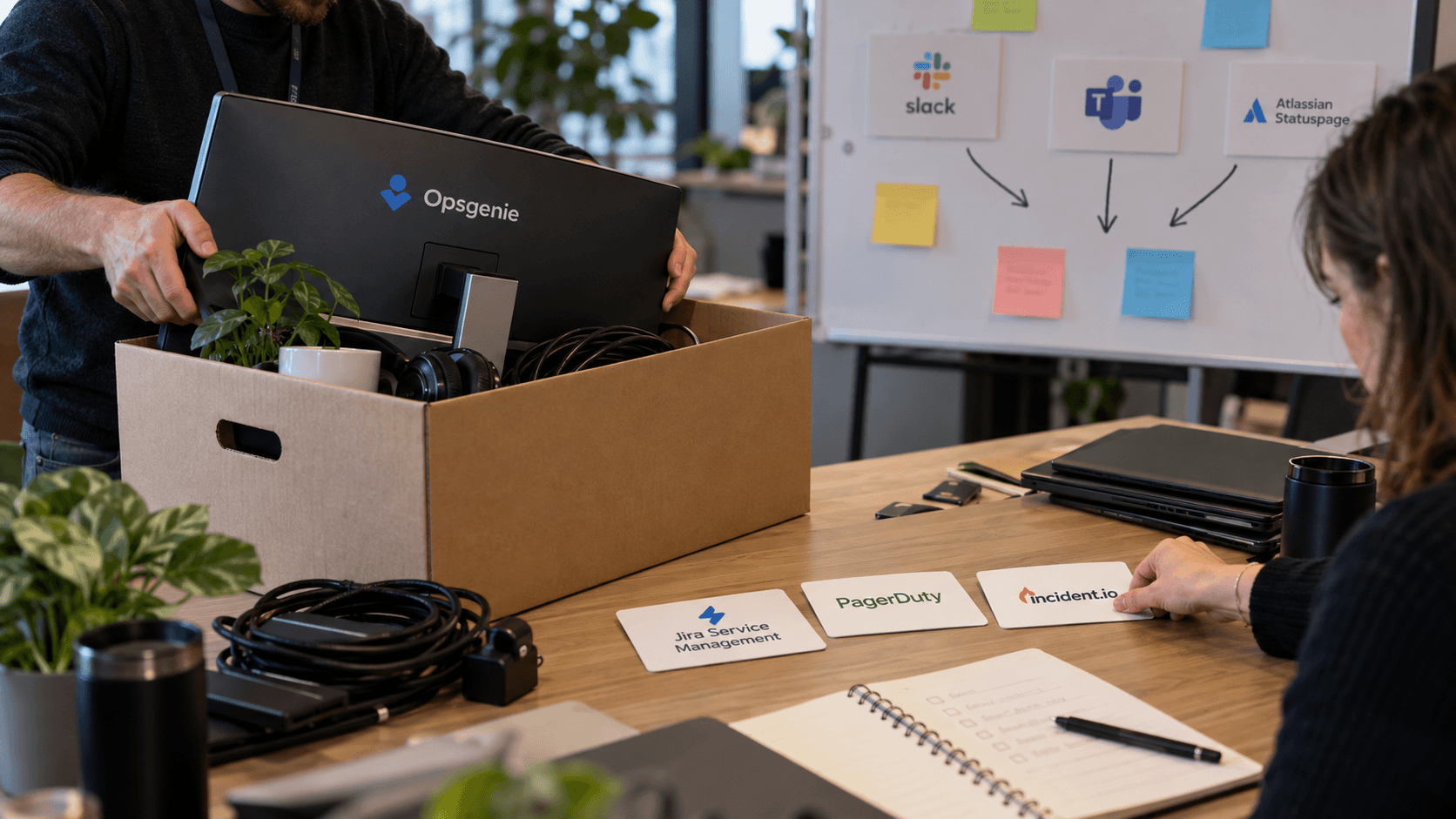
There's a forced move in that direction, as well, of course. Opsgenie support ends April 5, 2027, with unmigrated data deleted. JSM is Atlassian's recommended destination for IT operations. Our Opsgenie flagship covers the migration headaches. Here, the bigger story is how alerting and service work are coming together.
Are Zendesk and Freshworks Opening the Same Service Front Door?
Zendesk’s October 2 announcement takes Employee Service AI Agents toward broader availability, with rollout scheduled from November 3 to December 1. The agents work inside Slack and Teams while respecting source-level permissions. I’d still check resolution allowances and overage charges before celebrating.
Zendesk’s October product update offers an arguably more useful development: automated IT asset synchronization from Jamf Pro and Microsoft Intune, alongside department spaces and custom roles. The same service interface can access device records while keeping departmental permissions separate. A connected front door still needs to know which back-room door it’s allowed to open.
Freshworks is taking a similar route with its MCP Gateway, spanning Freshservice and Freshdesk. Both integrations reached general availability in September, with standard limits and pricing taking effect for early-access customers on October 5.
Freshworks also expanded Freddy AI Agent into Freshservice email workflows on October 5. It can handle multi-reply requests, trigger next steps, and hand work to a human without losing ticket history.
Plus, on October 12, it agreed to acquire Torii, which tracks software licenses, application access, and AI consumption down to the token. Freshworks wants that information in Freshservice, so IT can see who's using what and where the bill's coming from. The deal hasn't closed, but it's a useful addition to the one-queue argument: shared service agents need somebody checking their costs, too.
Is Salesforce Trying to Own the Service Front Door?
Salesforce gave us one of the clearest signs of ITSM and customer service convergence on September 28. Its Paige employee agent handles IT and HR questions, preserves context during human handoffs, and can work over third-party ITSM platforms. No immediate rip-and-replace required.
That means Salesforce could own the employee experience while somebody else runs the ticketing engine. Add Dynamic Discovery through Splunk, Workday HR connectors, and Proactive IT Customer Operations linking Salesforce Service with IT Service, and the boundaries start looking rather negotiable.
Salesforce makes its position clear in its headless ITSM argument. CMDB data and workflows can remain accessible through APIs, CLIs and MCP even when the front-end experience changes. Handy, sure, but buyers should ask which system records whether an action actually worked.
Workday is now making a related claim. Its October 13 Trusted Agent Platform release made headless access to HR and finance generally available, using MCP tools while keeping Workday's approvals and audit rules in place. That's a direct comparison with Salesforce's front-door approach, though it doesn't mean every traditional Workday ITSM workflow is already available headlessly.
There's evidence behind the ambition. Salesforce said more than 180 organizations had selected Agentforce IT Service by February. More interestingly, it now says Paige resolves 70% of administrative requests at Autism Queensland. That's vendor-reported, but at least it's a customer result rather than another adoption headline.
At Dreamforce, co-founder Parker Harris offered a revealing glimpse of the strategy:
“You may never log in to Salesforce again.”
That's the real one-queue fight. Who owns the service front door when somebody else still owns the machinery behind it?
What Does ServiceNow Action Fabric Mean for Enterprise Service Management?
For ServiceNow, enterprise service management is starting to look less like a collection of desks and more like the machinery underneath them.
Action Fabric lets Claude, Copilot, and other external agents trigger governed workflows through its MCP Server. ServiceNow keeps control of approvals and permissions. It doesn't necessarily need to own the conversation if it can own what happens next.
October has made that strategy more evident. Flow, announced October 1 in controlled availability, brings conversational IT support into Slack and Teams, with broader availability expected in Q4. On October 6, ServiceNow added AI Workflow Factory. Its MCP servers for ITSM, ITOM and CMDB are already generally available.
That makes Amit Zavery's Knowledge 2026 line feel particularly apt:
“Execution is where enterprises win or lose.”
ServiceNow World Forum London on October 20 should give us another test, with EmployeeWorks and cross-functional IT, HR and CX sessions on the agenda. I'd like to see customer evidence that those pieces work together rather than another impressive demonstration.
There's some evidence already. INRY says it deployed EmployeeWorks across Teams, Jira and SharePoint in six weeks.
More recently, Raleigh reported a 66% reduction in internal IT service desk costs, with nearly half of requests resolved autonomously. Its four-person desk supports 4,400 employees, and the city plans to connect employee-service agents to its Ask Raleigh resident portal. That connection isn't live yet, but it's exactly the kind of crossover worth watching.
There's a stressful question underneath all this, though. As our reporting on AI-agent identity warned, who authorized an action, and who's responsible when it goes wrong? The more services share, the harder that question becomes to dodge.
In Other News
Two relevant pieces of news I’d recommend reading up on this week:
-
Workday Wants to Get Rid of More Access Tickets: At Rising on October 13, Workday announced an agreement to acquire C1.ai, an identity-governance specialist for employees and AI agents. The attraction is easy to see: access that changes when someone joins, moves roles, or leaves, rather than another stack of permission tickets. The acquisition hasn't closed; completion is expected by January 31, 2027. It's a proposed answer to a very practical employee-service headache.
-
DEX Is Trying to Stop the Ticket Existing: Omnissa gave us another version of that argument on September 30. Its new DEX Agent can investigate device and app problems, pick an approved fix, run it, and check the result before the employee opens a ticket. TeamDynamix is heading the same way, bringing DEX, ITSM and ITAM together around proactive detection and remediation. That changes the service-desk question slightly. The winner may not be the platform that manages the queue best. It may be the one that keeps more work out of it.
What to Watch: The next few weeks should make the one-queue argument easier to test. Workday Rising gives us Sana for IT. Gartner will put autonomous service desks under the microscope. ServiceNow World Forum London should tell us how far its shared execution-layer story really goes across IT, HR, and customer service.
If you’re already running shared service infrastructure across IT and CX, tell us what actually got easier, and what still refuses to fit neatly together.
Should IT and Customer Support Share a Service Platform?
Probably, but the interesting answer is how much they should share.
A customer refund and a payroll correction might both need an approval and a record of what happened. They certainly shouldn't have the same access rules or escalation priorities.
That's where ITSM and customer service convergence gets more interesting. Salesforce's Paige can work above existing ITSM tools. Atlassian has brought employee and customer service into Service Collection. ServiceNow Action Fabric lets external agents initiate work through its controls. Fine, but who picks up the mess when something falls between them?
Take a CRM outage in the middle of a busy contact center shift. An agent reports it in Teams. IT opens an incident, but customer support still has people waiting for answers. Can agents see what's happening without being given access to internal diagnostics? Does IT know how many customer conversations are affected? When the incident closes, has anybody checked whether those agents can actually work again?
That's the trial I'd want before committing to a shared platform. Follow one incident across both teams. Count the unnecessary handoffs, check how long support waited for a useful update, and find out whether the customer ever received one.
Zendesk's source-level permissions and Freshworks' MCP Gateway offer ways to connect services without giving everyone unrestricted access. That's encouraging, though I'd still want to see what happens when an automated action fails halfway through.
The real saving could come from retiring duplicate systems and cutting the hours people spend chasing colleagues for updates. I'd want evidence of both before paying for another supposedly unified service platform.
FAQs
What Is Enterprise Service Management?
Enterprise service management applies service-management methods beyond IT to areas such as HR, finance, facilities, and employee support. The current ESM trends 2026 story goes further: platforms are increasingly sharing context, workflows, and AI agents across those functions, which is why employee service management now sits much closer to customer service than it did a few years ago.
Why Are ITSM and Customer Service Converging?
They've become dependent on much of the same technology. Applications, identity systems, and AI agents serve employees and customers, so a problem affecting internal operations can reach the contact center pretty quickly. If a support agent can't access the tools needed to help a customer, IT's problem has become the customer's problem too.
What Did Workday Announce at Rising 2026?
Workday introduced Sana Concierge, bringing HR and IT requests into its new Workday Home. Concierge is in early access, with general availability expected in Q1 2027. Workday also outlined plans for Sana in Slack, Teams and other AI assistants. The question now is how many IT requests it can resolve without an employee chasing a ticket.
There's a reasonable case for it when the two teams keep running into the same problems. Shared incident records, knowledge, and monitoring information can save a lot of unnecessary handoffs. They can also keep their own permissions and escalation procedures. Nobody needs to send a sensitive IT request through the same queue as a routine customer inquiry.