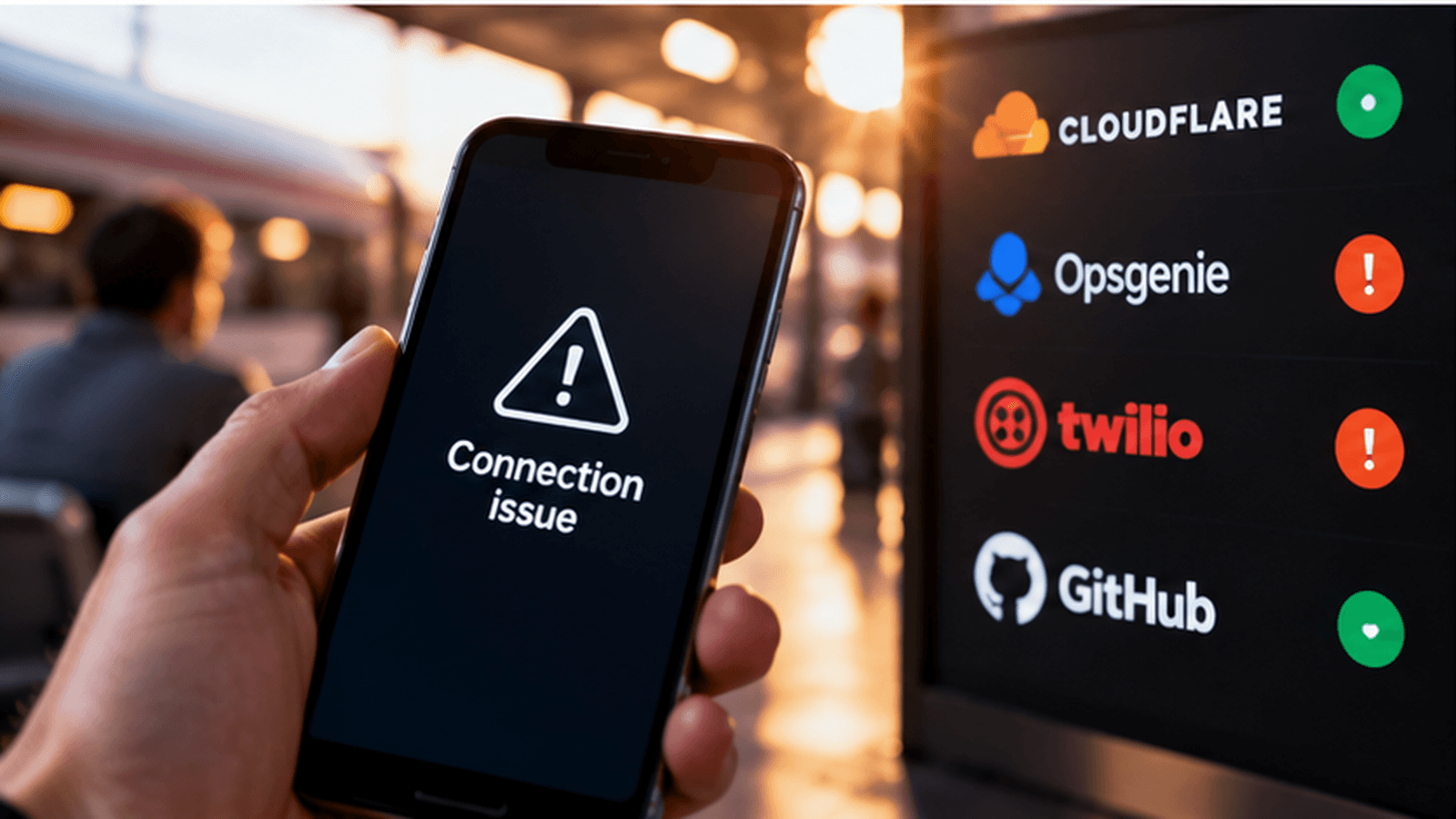
If you lead network operations, you’ve probably lived this contradiction: the network looks “green,” yet the business is hearing complaints. Calls sound robotic. Chat feels laggy. Customers abandon. Agents blame the CRM. CX blames the contact center platform. Meanwhile, your dashboards insist everything is fine. This is the classic network performance vs CX gap. Traditional KPIs track infrastructure health, not experience impact. That leaves connectivity performance gaps where micro-disruptions, jitter, and network latency CX impact quietly degrade interactions. The fix is shifting toward experience level monitoring and real user experience monitoring, so your team measures what customers and agents actually feel.
Read More
- CX Today's Guide to IT Observability
- How to Build Resilient CX Infrastructure
- Is Your CX Infrastructure Too Complex to Manage Effectively?
Why Do Network Metrics Fail to Reflect Customer Experience?
Because most traditional network metrics were designed to answer one question: “Is the network up?”
They were not designed to answer: “Is the experience good enough to complete a customer interaction without friction?”
Network teams tend to rely on interface status, utilization, and generic availability indicators. Those are useful, but they can miss the experience layer. Many CX failures are not full outages. They are micro-failures.
A micro-failure is a short disruption that doesn’t trip a threshold, but still causes:
- voice jitter and robotic audio
- dropped packets that lead to retransmits
- brief spikes in latency that break real-time flows
- intermittent DNS or routing behavior that delays sessions
This is why network performance vs CX becomes a measurement problem. The network can be “up” and still feel bad.
What Performance Issues Degrade CX Without Triggering Alerts?
Three issues cause most quiet CX degradation:
Latency spikes
Latency isn’t always a constant slow speed. It spikes. A ten-second spike can destroy a voice interaction, break a bot handoff, or stall an agent workflow. Yet that spike can be invisible if you’re only sampling averages.
Jitter and packet loss
Jitter and packet loss can degrade voice and real-time interactions without a hard outage. The customer hears it as poor quality. The network sees it as “within tolerance,” because the threshold is too high or the measurement is too coarse.
Path instability
CX journeys often travel across paths your organization doesn’t fully control. Changes in internet routing, cloud edges, and carrier paths can introduce performance degradation. If you don’t have visibility across those delivery paths, the issue looks random.
This is the heart of connectivity performance gaps. The gaps live where experience crosses boundaries.
How Does Latency Impact Real User Interactions?
Latency doesn’t just slow down websites. It breaks conversations.
In a contact center context, network latency CX impact shows up in:
- longer time-to-connect for calls
- delays in agent desktop loading
- lag in live chat
- slow CRM lookups that increase handle time
- delays in voice bot to human handoffs that lose context
The key insight for network leaders is that experience is cumulative. It’s not “the network” in isolation. It’s the network plus the app plus the dependency chain.
That is why real user experience monitoring matters. It exposes what customers and agents experience at the moment of interaction, not what your systems averaged over the last hour.
Follow CX Today on LinkedIn for weekly updates on CX observability, connectivity performance gaps, and reliability best practices.
Where Do Infrastructure Metrics Miss Experience Problems?
Infrastructure metrics miss experience problems in three predictable places:
The last mile
Your WAN can be perfect, while the agent’s Wi-Fi is congested. The customer’s ISP path can be unstable. That is not “your fault,” but it is still your customer’s experience.