UK neobank Monzo experienced a service disruption on January 13 that while brief, fueled a wider conversation on resilience as a customer experience and a trust issue, as well as increasingly, a commercial one.
Monzo moved quickly to communicate what was happening. “This afternoon, we identified some issues affecting Monzo,” the bank stated in a post on X, adding that it had activated Monzo Stand-in, its fully independent backup bank. This meant that customer could still make card payments, withdraw cash, freeze cards, send and receive bank transfers, and so on.
“We're rolling out a fix and moving quickly to get full service back up and running for everyone. Thanks for your patience,” the post said.
Less than half of hour later Monzo confirmed a return to usual service:
“Update on our previous post: you should now be able to use the Monzo app as normal. Thanks for your patience whilst we investigated the issue!”
That ability to keep core services running — and to explain the incident clearly in plain language — is as important to limiting customer frustration as the fix itself. But the incident also highlights how exposed customers feel when digital banking falters, even temporarily.
Scott Dawson, CEO of payments processor DECTA, framed the outage as part of a bigger structural problem. “Yesterday’s outage in the Monzo app outlines how critical reliability has become to the global payment ecosystem. In an era where digital banking is the default, retailers and financial institutions can no longer afford to treat resilience as an optional luxury.”
“We are seeing a worrying trend of institutional failures across high-profile organizations, from banks to retailers like Marks & Spencer. These incidents highlight how brittle legacy architectures and siloed practices remain vulnerable to disruption.”
Dawson pointed out that other enterprises could learn from Monzo’s fallback capabilities. “While Monzo was able to activate its ‘back-up bank’—a proactive engineering feat that kept core services like card payments and cash withdrawals running—not every company has that safety net.”
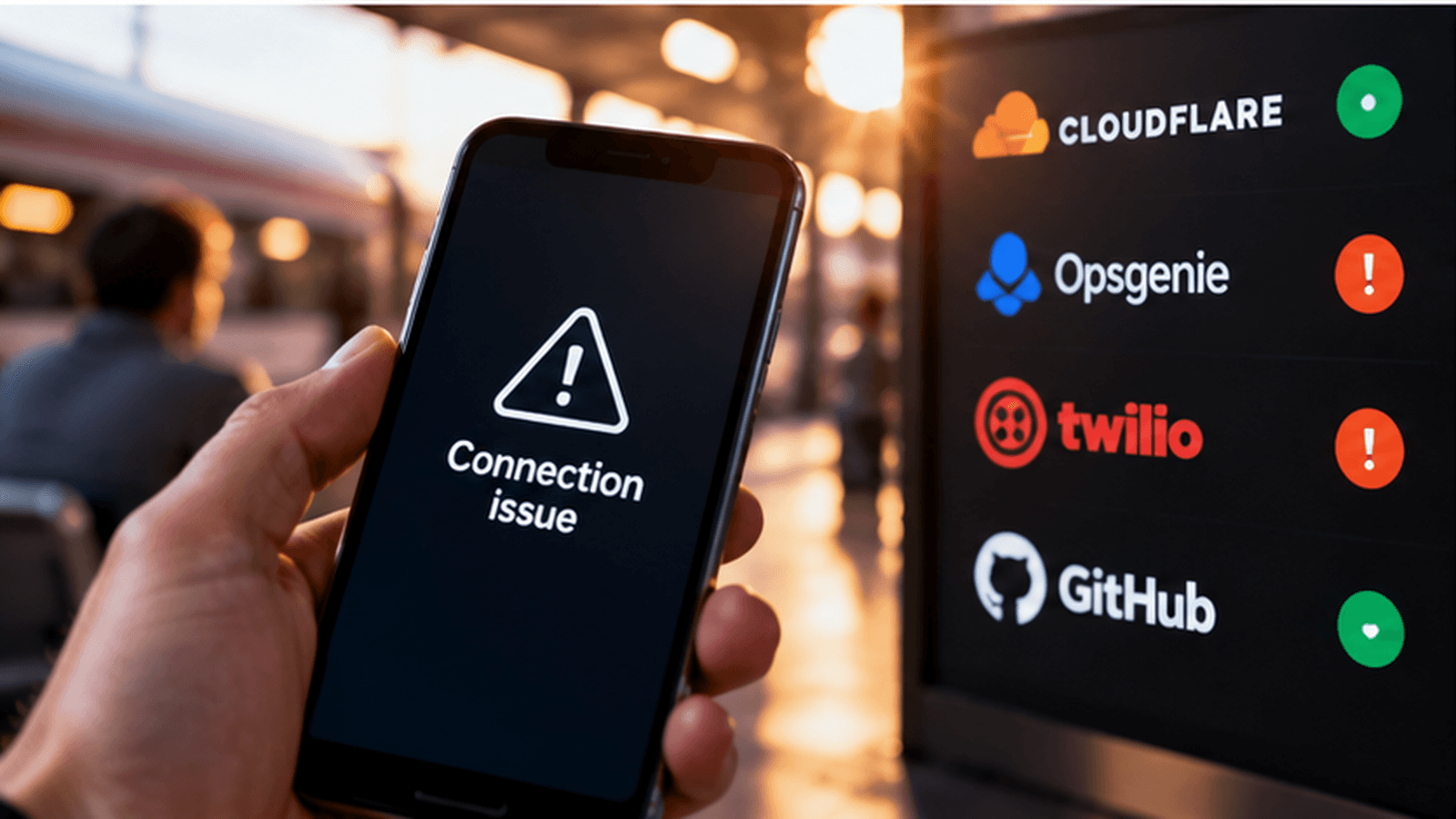
The outage sits within a much broader pattern of infrastructure fragility that extends well beyond banking. In recent months, high-profile disruptions at AWS, Cloudflare and Microsoft Azure have taken entire swathes of the Internet, retail platforms and financial services offline, often caused by a single misconfiguration or cascading dependency failure. For businesses, resilience can’t stop at the application layer. It has to account for upstream providers and concentration risk.
Dawson also connected outages directly to customer trust and brand value. “When a system fails, it isn’t just a technical glitch; it wipes millions off market values and, more importantly, erodes customer trust.”
That erosion often shows up as spikes in complaints, pressure on contact centers, and customers questioning whether a service is dependable enough to stick with.
Hannah Fitzsimons, CEO of Cashflows, reiterated the importance of building more resilient systems. “Stand-in capabilities and fallback infrastructure are becoming critical, not exceptional, and regulators will increasingly judge providers on real-world resilience rather than theoretical uptime.”
“For payment service providers and merchants, this sharpens the case for moving away from brittle, monolithic stacks towards modular, API-led platforms that are designed for failure as well as scale.”
“Operational resilience has to be engineered end-to-end, from processing and routing through to settlement and reporting, with redundancy built in by design.”