the voice of customer experience technology
Front page
NewsCX AI2h · 17:36 BST · 5 min read

This Week in AI: 3 CX Gaps That Still Need to Be Solved

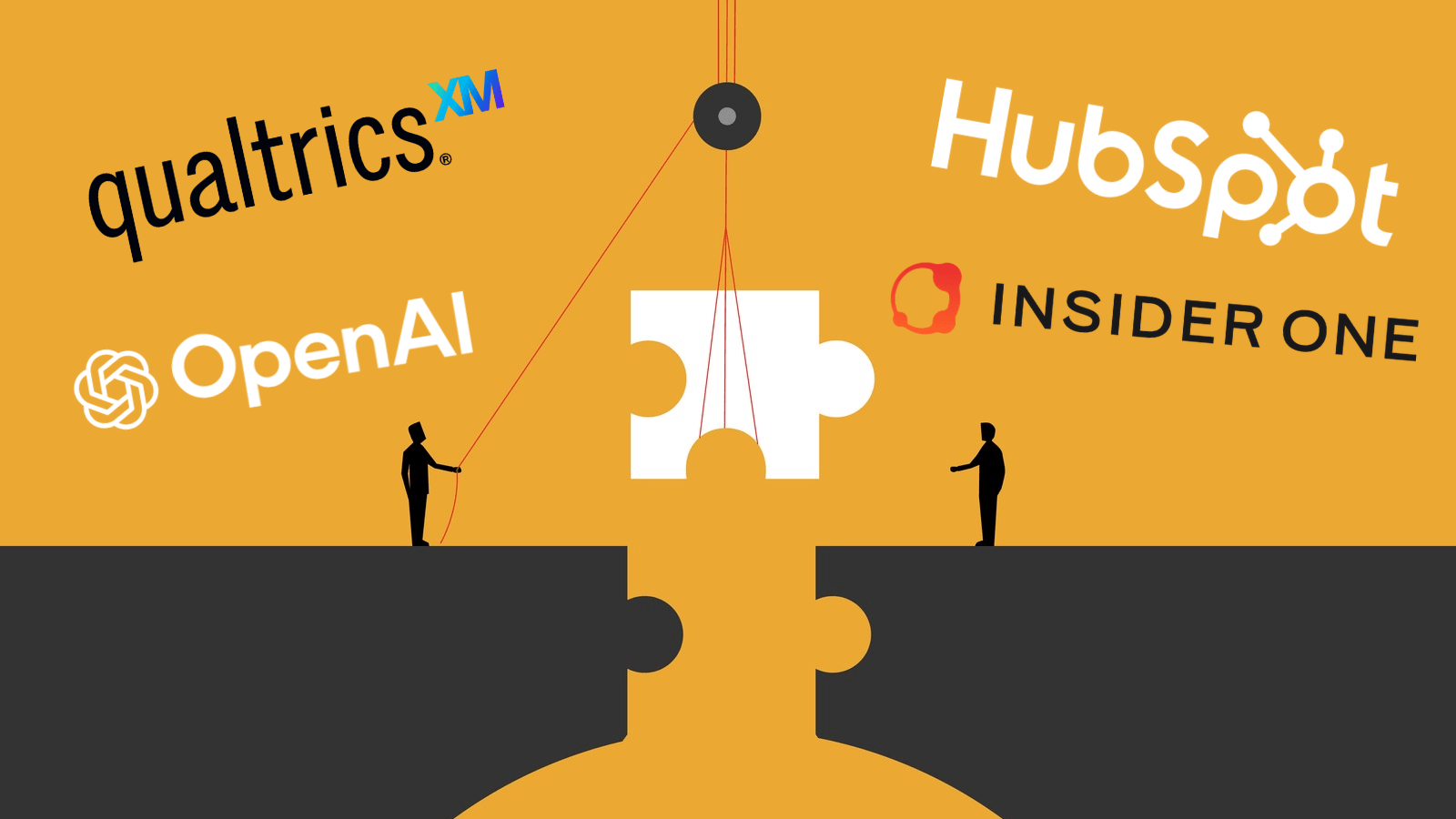
Qualtrics, Insider One, and HubSpot all made major CX announcements this week, each claiming to close a gap between what customers expect and what businesses deliver. Closing that promise on paper is very different from proving it holds up once the system is actually running.

4 vendors take on AI-related gaps in CX infrastructure this week

Every CX vendor right now is promising to close a gap. Whether its between what customers expect and what businesses deliver, between data collected and decisions made, or between where teams optimize and where customers actually are.

This week, I'd like to explore three major announcements that each claim to have closed a gap facing CX teams.

It may be easy to get lost in the solutions that vendors are offering. But for buyers, the real lesson could come from understanding why these 'gaps' are being targeted, and whether their organizations are quietly facing the same issue.

Editor's Pick - Can Simulation Actually Close the Experience Gap?

Hitting 'Publish'

Qualtrics built its entire announcement around an eye-grabbing stat:

"Close to $3 trillion in sales is at risk from poor customer experiences"

Its answer is the new XM Data & AI Platform, due in 2027, which adds simulation and prediction to experience data. The pitch is that businesses can now test a pricing change or a policy shift on digital twins of real customers before it ever reaches a live audience, rather than finding out how customers feel after the fact.

Qualtrics CEO Jason Maynard frames this as the missing piece that finally makes experience strategy executable:

"Experience has always been the strategy every leader believed in, but unfortunately the technology wasn't available to execute at scale"

Early results look genuinely strong. TruGreen reported $7 million in ROI from closed-loop feedback alone, with $30 million in total ROI across retention and churn prevention.

But simulation is only as good as the data and rules behind it, and Qualtrics is explicit that every action still gets checked against an organization's own policies before it reaches a customer.

That's reassuring from a governance standpoint, but it also means the platform's real test isn't whether it can simulate a decision. It's whether the organizations using it have the internal clarity to define what a "trusted" outcome actually looks like before they let the system act on it.

Can Autonomous Engagement Coexist With The Trust Gap?

Insider One's new Agent One system draws a sharp distinction between agents that assist and agents that act. Co-founder and CTO Serhat Soyuerel shared:

"Marketers were promised agents. What they got were operators. They complete part of the work, then hand control back to the team"

Agent One is built to remove that handback entirely, combining a system that runs engagement decisions (Agent One Teams) with one that listens to customers directly (Agent One Audiences), feeding each other in a continuous loop.

CEO Hande Cilingir frames it as a shift in priorities:

"The industry spent the last decade teaching systems to remember customers. The next decade will belong to systems that know when to change their mind"

While this next chapter of agentic AI sounds exciting, it naturally raises questions of trust. Naturally, enterprise leaders may end up asking themselves: "how much oversight are we actually keeping over decisions made at a scale no human team could review?".

The infamous 'Hugging Face' incident of an AI agent gone rogue is enough to send shivers up the spine of many enterprise leaders. Our colleagues at UC Today delved into this topic in depth.


Insider One says brands set the guardrails upfront. But creating high-quality guardrails that will keep AI agents in check will be the next challenge - one that involves skills & training in the workplace.

Is There a Visibility Gap Where Customers Now Shop?

HubSpot and OpenAI are deepening their partnership, adding a ChatGPT Ads integration directly inside HubSpot's CRM, and bundling ChatGPT Business seats with HubSpot's own tools for SMBs.

And there's a clear reason why. HubSpot has seen 250% growth in weekly active users on its existing ChatGPT connector.

The core takeaway is that buyers are increasingly encountering businesses inside ChatGPT before they ever land on a website.

OpenAI's VP of Global Partnerships, Brian Landsman, frames the goal of this partnership as reducing friction rather than adding another tool to manage:

"Putting AI to work shouldn't require businesses to rebuild the way they work"

For CX and marketing teams, these points represent a genuine shift in where attention needs to go. Optimizing a website and running search ads has been standard practice for two decades.

Optimizing for visibility inside an AI assistant is not, and most businesses don't yet have a clear sense of what "showing up well" in that channel even looks like.

TALKING POINT:

Will visibility in AI-search overtake traditional SEO? Let us know your perspective in the comments below.

HubSpot's pitch is that CRM context makes targeting and attribution smarter from day one. Whether that's enough to make ChatGPT a channel businesses can actually measure and trust, rather than one they're guessing their way through, is the open question.

In Other News:

  • Microsoft Copilot Gets Persistent AI Teammates

    • Microsoft has unveiled Copilot Autopilot, an always-on agent that can manage recurring work, monitor conversations and advance tasks across Teams, Outlook and shared documents. Alongside new Home and Code tools, the update gives organizations more ways to automate internal workflows and support employee productivity.

  • HSBC Automates Trade Document Checking with AI

    • HSBC has introduced Smart Checking, an AI-powered platform designed to review trade-finance documents faster and more consistently. The tool automates extraction, classification and compliance checks, while sending uncertain cases to specialists -helping businesses reduce processing friction, speed trade transactions and improve the customer experience.

The Common Thread

All three of this week's announcements point toward the same underlying shift: CX is moving from responding to customers toward acting on their behalf, or reaching them in places businesses don't fully control yet. Qualtrics wants to simulate the outcome before it happens. Insider One wants to act without waiting for permission each time. HubSpot wants businesses to show up inside a conversation they don't own.

None of that makes these gaps any less real, or any less worth closing. It just means the harder question for CX leaders isn't which platform promises the most automation. It's whether their organization has done the harder work of defining what a trustworthy outcome looks like before handing more of the decision over to a machine.

rate this story
helps rank stories across uc today
The discussion0 takes · attributed & checked

Does this reflect your experience?

opening the room…
Read nextordered by techtelligence · every pick explained
same beat · CX AI

Why AI Can Be Right and Still Get CX Wrong

23 Sept 2026
same beat · CX AIDreamforce 2026 Roundup: Salesforce Has an ‘Easy Button’ for AI. But CX Leaders Still Face the Hard Decisions.22 Sept 2026same beat · CX AIFrom Prebuilt Agents to Vibe Coding: Salesforce’s New CX Playbook22 Sept 2026