

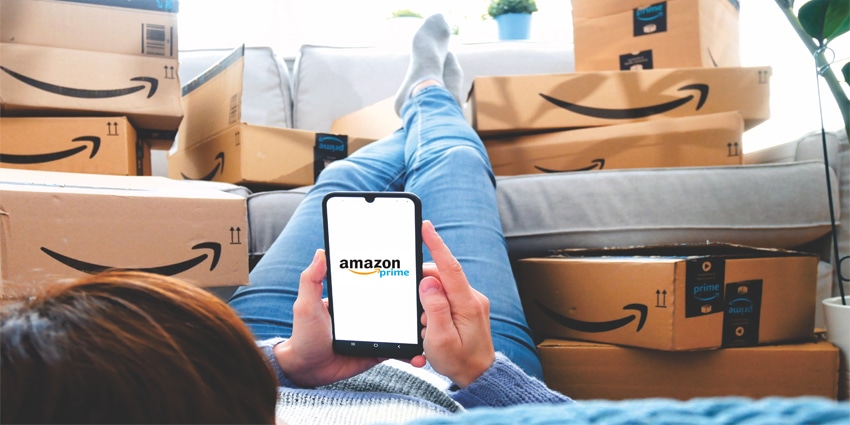
In 2024, next-day deliveries may seem like a fairly standard option for most e-commerce transactions. But turn the clocks back a few years, and the majority of companies were charging an arm and a leg to get your purchase delivered the next day, if they offered it at all.
Then Amazon Prime came along.
Launched in 2007, Amazon’s unlimited next-day delivery membership was introduced to fulfill the company’s edict that “fast delivery should be an everyday experience—rather than an occasional indulgence.”
What was initially viewed as a bit of a gamble soon became an undeniable success, with Prime currently having over 200 million subscribers globally, making it the second most popular subscription service in the world behind Netflix.
Of course, Prime has changed a lot since the first iteration, with its video streaming services undoubtedly accounting for a great deal of its current subscribers.
However, Prime’s impact on customer expectations and consumer behavior is arguably its most significant contribution to society.
The speed, availability, and frictionless nature of Amazon's platform has been crucial in altering and shaping customer habits – moving buyers away from traditional brick-and-mortar commerce to digital marketplaces.
But how exactly has the normalization of fast, ‘free’ delivery impacted customers’ overall expectations, and what lessons can CX teams learn from Amazon’s customer service strategy?
The Amazon Effect
You know that you’ve made a fairly memorable contribution to your chosen field when they start naming things after you.
Football has the Cruyff turn, writing has Dickensian prose, accidentally putting your foot in it has the Freudian slip – and the rise of e-commerce has the ‘Amazon effect’.
While Amazon may not have been the first player in the e-commerce space, it has certainly become the biggest, and the ‘Amazon effect’ has become a catch-all term for the proliferation of digital shopping and the subsequent rise in customer expectations and demands.
As Julie Ramhold, Consumer Analyst at DealNews.com, explains:
Amazon has changed the way we as consumers expect items to be shipped out – shoppers are often impatient now and expect their items to arrive soon after purchasing. Additionally, it’s forced other competitors to step up.
At its very core, Amazon’s strategy was to put customer satisfaction above all else, with the company’s next-day delivery model being a perfect example of that – but the e-commerce giant hasn’t stopped there.
Following the initial success of Prime delivery, Amazon has taken things a step further by offering same-day delivery for certain items in some parts of America – a strategy that is becoming increasingly popular and having a clear impact on customer experience.
A 2024 report conducted by delivery platform Roadie revealed some of the benefits associated with offering same-day delivery.
Of the 150 organizations surveyed, 80% reported higher customer satisfaction levels, with 70% also experiencing higher sales.
Moreover, 80% of respondents revealed overall revenue growth due to same-day delivery, with almost two-thirds reporting a 6% increase and 30% having seen an increase of over 10%.
However, while the merits of same-day delivery are clear to see, there are still significant factors to consider – namely, high startup costs.
With a median cost of $400,000, nearly half of respondents reported a six-figure start-up price. And the costs didn’t stop there.
Even after implementing the same-day delivery program, 79% of those surveyed also revealed that their day-to-day operating costs had increased from anywhere between one and forty percent.
So, the question becomes: how are companies offsetting the cost of implementing same-day delivery? Unfortunately, the answer seems to be by increasing prices for the customer.
As the old saying goes, nothing in life is free. The report revealed that in order to combat the upfront costs and higher operational fees, over half of surveyed organizations were increasing product prices.
While slight price rises for a far speedier service may appear to be a fairly reasonable trade-off, Chris Grubb – Head of Marketing for Roadie – questioned how viable a long-term solution it will prove to be:
Only certain products can withstand price increases. Raising prices is a decent short-term approach to understanding potential market traction of same-day delivery, but it may not be a viable long-term approach.
“There will be competitors that offer those products without a price increase. They’ll cover their costs in different ways. Pricing is pretty visible these days. Over time, if you’re the company that chose to increase product prices, then customers may walk away.”
The CX lesson here can be simplified down to the more generic idiom of knowing your limits.
While Amazon’s delivery model has put pressure on all e-commerce organizations to improve their speed, almost no one can compete with the company’s financial might and scale of infrastructure – and if doing so means overcharging your customers, it may well lead to more bad than good.
During the current time of financial difficulty that many are experiencing, customers may be more willing to sacrifice a slightly slower delivery time for a lower cost if it is communicated clearly and accurately to them by the organization.
Delivering a New Customer Experience
Away from the nuts and bolts of the delivery service itself, the Prime model has influenced overall customer expectations.
Shep Hyken, CX Speaker and Author, discusses how Amazon’s CX strategy has altered the entire commerce sector:
“Amazon has educated its customers as to what a great experience looks like. It meets and exceeds consumer expectations, and now customers want, hope, and expect every company they do business with to be as good as Amazon.”
By raising the standard, other companies are having to follow suit or risk being left behind.