A customer tries to pay a bill. The identity check takes forever. Your bot can’t verify them. The CRM takes too long to load. The customer refreshes, then calls. An agent gets stale context, apologizes, transfers them, and now the queue is bloated with people having the same bad afternoon.
Internally, all of those little failures get split into little boxes. A bot issue, CRM log, queue spike, and so on. Very few companies recognize the issue for what it is: a service failure cascade.
One small fault moves through a series of CX system dependencies until a tiny snowball becomes an avalanche. You’re still looking at individual, small problems. Your customer is looking at a completely broken journey.
Further reading:
- Your CX Outages Are Slow Failures You’ve Already Normalized
- Why Does Your CX Break When Customers Need it Most?
- Your CX Is Failing at the Exact Points You Can’t See
What Is a Service Failure Cascade in CX Systems?
A service failure cascade in CX happens when one small fault travels through connected systems, teams, and workflows until customers feel a much bigger service breakdown.
It starts with a problem that’s easy to ignore, like a payment API that takes a bit too long, or a CRM that stalls while a customer waits for an answer. Nothing crashes or breaks completely. The lights are still on, so nobody panics, but the cascade has already started.
The customer isn’t strolling through one neat little system. They’re being passed down a chain: identity check, routing, bot, CRM, knowledge base, agent desktop, probably three bits of plumbing nobody wants to admit exist. When one link drags, the next one starts covering for it. Then the next. Then the customer’s patience starts making that tiny cracking noise.
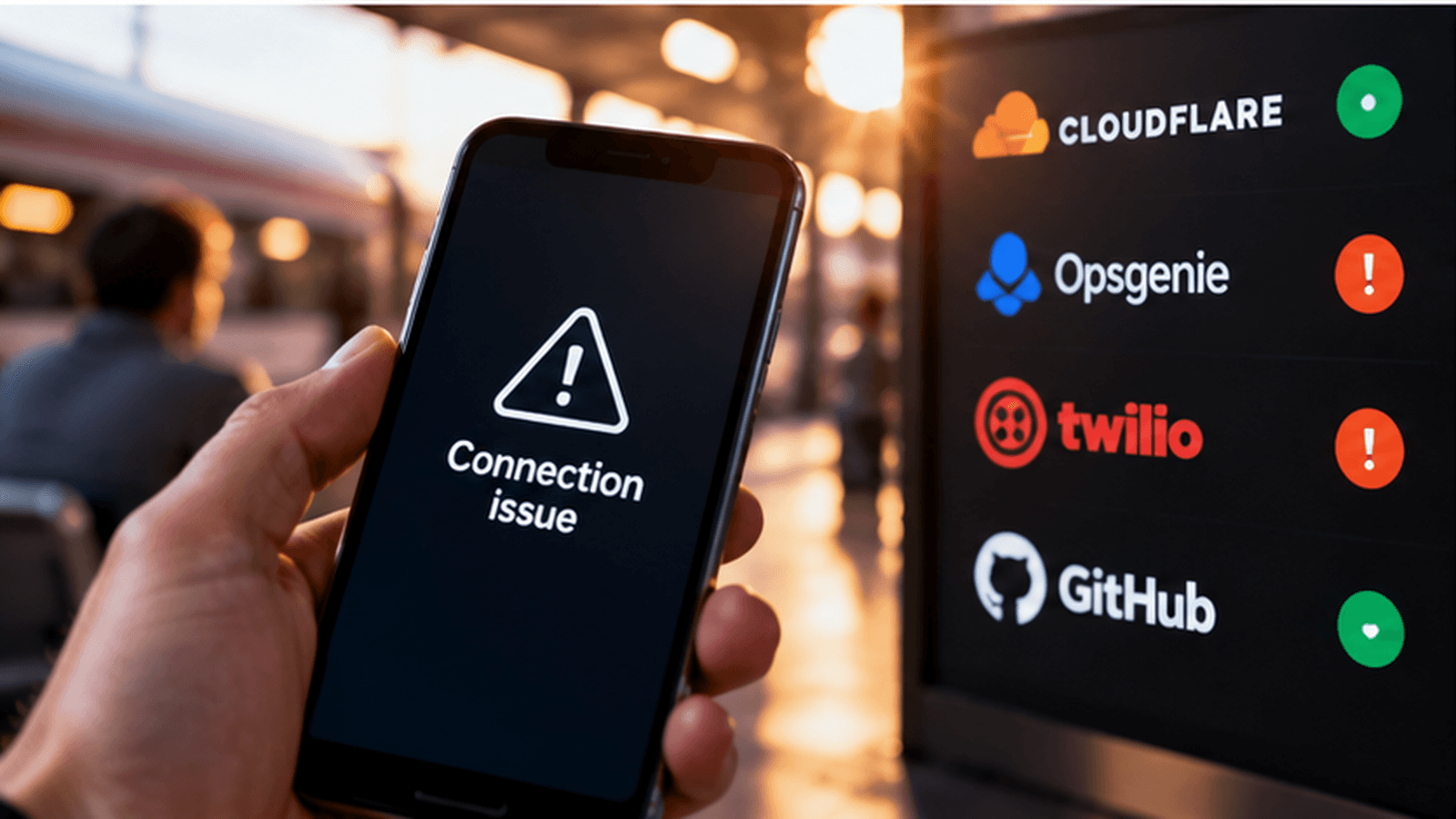
Look at the Cloudflare outage. Broken pages were the obvious symptom, but the uglier problem came from payment flows: failed transactions, repeated purchase attempts, unclear confirmations, duplicate charges, and later disputes. That’s not a glitch. That’s a cascade.
Why Do Small Failures Escalate Into Major Incidents?
Small CX failures escalate because the system keeps trying to function around them.
A hard outage gets attention. A partial failure gets absorbed. Agents wait, customers retry, and bots keep sending people through the same weak path. Supervisors patch the queue. Then the workaround becomes the incident.
The pressure usually builds in four places:
- “Up” doesn’t mean usable: A platform can be available and still wreck the journey. The call connects, but the audio clips. A bot answers, but can’t finish the task. The CRM opens, but the record loads too late. A transfer works, but context disappears. Degraded service looks like delay, stale data, weak handoffs, and customers giving up halfway through.
- Micro-delays stack up: One slow lookup isn’t a crisis. Add identity verification, routing, bot logic, CRM, knowledge search, payment data, the agent desktop, and follow-up workflow, and the journey starts to grind to a halt. A customer who should’ve self-served calls. An agent who should’ve solved the issue quickly spends half the interaction waiting for screens.
- Retries create more load: Customers retry when they don’t trust the answer. Systems retry when they don’t get a clean response. Refreshes, restarted chats, duplicate forms, second tickets, and calls after failed self-service all add pressure. Multiply that by a billing cycle, product launch, travel disruption, or cloud issue, and one slow dependency becomes avoidable volume.
- Ownership splits the problem apart: One journey breaks, but IT sees latency, CX sees longer handle time, digital sees lower containment, operations sees queue pressure, security sees failed verification, and the vendor says the platform is available. Nobody has the whole picture.
Learn more about how often contact centers fail, and what it really costs in this guide.
Where Do Service Chains Break Down?
Most CX service chain issues start at the handoff. One system needs another system, team, or vendor to pass over the right thing at the right second: identity, context, payment status, queue logic, network quality, and a clean transcript. One piece falters, and the journey starts limping.
The weak spots usually include a few places:
- Identity, authentication, and customer data: Identity sits at the front door, so failures spread fast. Password reset loops, failed verification, bots that can’t confirm the customer, agents stuck asking extra security questions, and routing based on incomplete records all create drag.
- Latency across CRM, payments, knowledge, and agent desktops: Latency looks like a small thing, like a pause, a frozen screen, a spinning payment confirmation, or the agent saying, “Sorry, my system’s slow.” The tool is available, but too slow to support the conversation. Customers lose confidence. Handle time rises.
- Bot-to-agent handoffs, routing, and queue logic: A bot can “contain” a conversation on paper while the customer still calls ten minutes later. A routing engine can send someone to the technically correct queue while ignoring two failed self-service attempts.
- Integrations, APIs, and vendor dependency: The contact center gets blamed for plenty of failures it didn’t create. A delivery API doesn’t update, or a payment provider stalls, or a CRM writeback fails. Vendor lock-in makes it worse. If one provider controls routing, recordings, exports, and key integrations, recovery gets harder.
- Network, cloud, carrier, and last-mile conditions: Some of the nastiest failures sit outside the CX platform. Robotic audio, jitter, packet loss, dropped calls, regional slowdowns, browser issues, remote agent lag, and “green” vendor status pages can still mean a broken journey.
That’s the issue behind modern cascading system failures. The service chain isn’t fragile because one tool is bad. It’s fragile because every tool is waiting for another tool to behave.
How Should Organizations Manage Cascading Failures?
Start with the uncomfortable bit: you can’t manage a service failure cascade when every team is staring at its own little slice of the wreckage. You need the whole route. Which journeys are customers actually using? Where do faults travel next? What has to stay alive when the stack starts wheezing? Answer that before the incident room turns into a blame hub.
Start With The First Five-Minute Questions
When something feels off, don’t start with, “Which platform is down?”
Ask:
- Where did the issue start?
- How is it spreading?
- Which customers, queues, regions, or channels are affected?
- What changed recently?
- Which dependency is making the issue worse?
- Who owns the next move?
An observability platform has to earn its place when everyone’s stressed. If it can’t show what’s affected, what changed, and who needs to move, it’s not helping. It’s just another glowing rectangle in the incident room.
Start With the Service Chains Customers Actually Use
Start with the journeys where trust breaks fastest:
- Login and authentication
- Payment and billing
- Account recovery
- Order status
- Refunds
- Complaint handling
- Bot-to-agent escalation
- Urgent service updates
- Case resolution without repeat effort
Then map the real chain behind each one:
- Customer entry point
- Identity
- Routing
- Crm
- Knowledge base
- Bot or AI layer
- Payment, delivery, or account system
- Integration layer
- Cloud, carrier, and network paths
- Agent workflow
- Fallback route
- Accountable owner
This is where CX system dependencies tend to become more obvious. You see which journey relies on one provider, one API, one routing rule, one identity service, or one team that’s already overloaded.
Monitor Propagation, Not Just Availability
Availability only tells you if something is technically accessible. It doesn’t tell you whether the customer can get anything done.
For service reliability in CX, track the signals that show spread:
- Customer-impact minutes
- Repeat contact within 24 to 48 hours
- Failed handoffs
- Transfer rate
- Bot fallback rate
- Authentication failure rate
- CRM lookup latency
- Payment confirmation delays
- Self-service abandonment
- Agent time spent searching for context
- AHT issues caused by system drag
- Time to detect, diagnose, assign, and restore
- Repeat incident rate
- Change failure rate
Customer-impact minutes, faster recovery, fewer repeat incidents, and steadier agent productivity tell you far more than dashboard logins ever will. Alert volume just proves the system can shout. It doesn’t prove anyone fixed the right thing.
Measure Delay Before It Turns Into Demand
In CX, latency changes behavior.
When a system drags, customers retry, abandon, escalate, call, complain, or start a second contact. Agents change behavior, too. They stall, apologize, search for other tools, repeat steps, or push the issue up the chain.
That’s why small issues cause big failures. A slow lookup becomes more calls. More calls become longer queues. Longer queues become poorer service. Poorer service becomes repeat demand.
Response time thresholds should sit next to journey outcomes: