
I have watched enough Magic Quadrants come and go to recognize the annual ritual. Vendors celebrate the dot. Buyers circulate the graphic internally. Sales teams convert a placement into apparent proof. And, for a few weeks, a two-axis chart is treated as an answer to a much harder question: who can genuinely deliver better customer service?
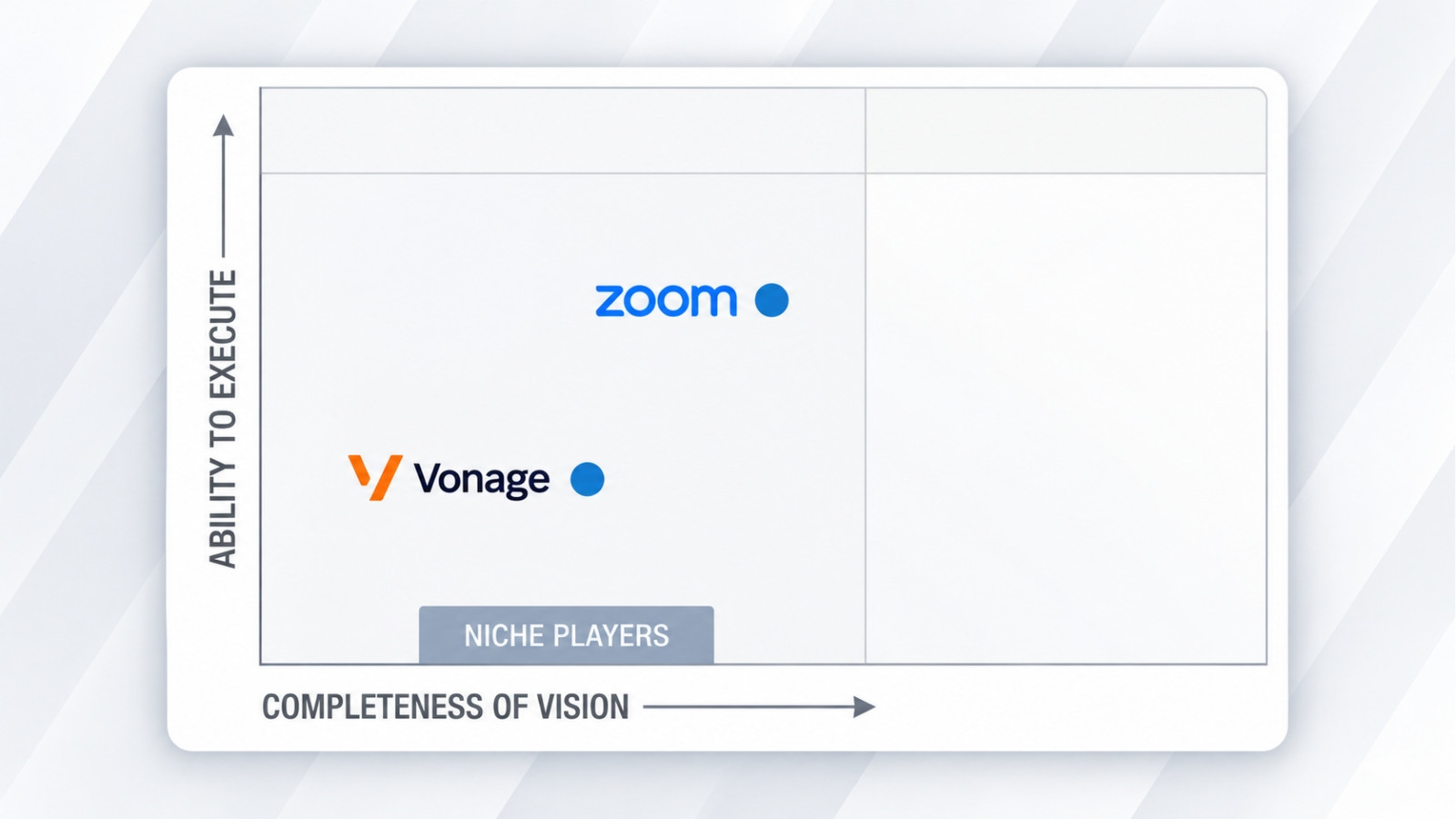
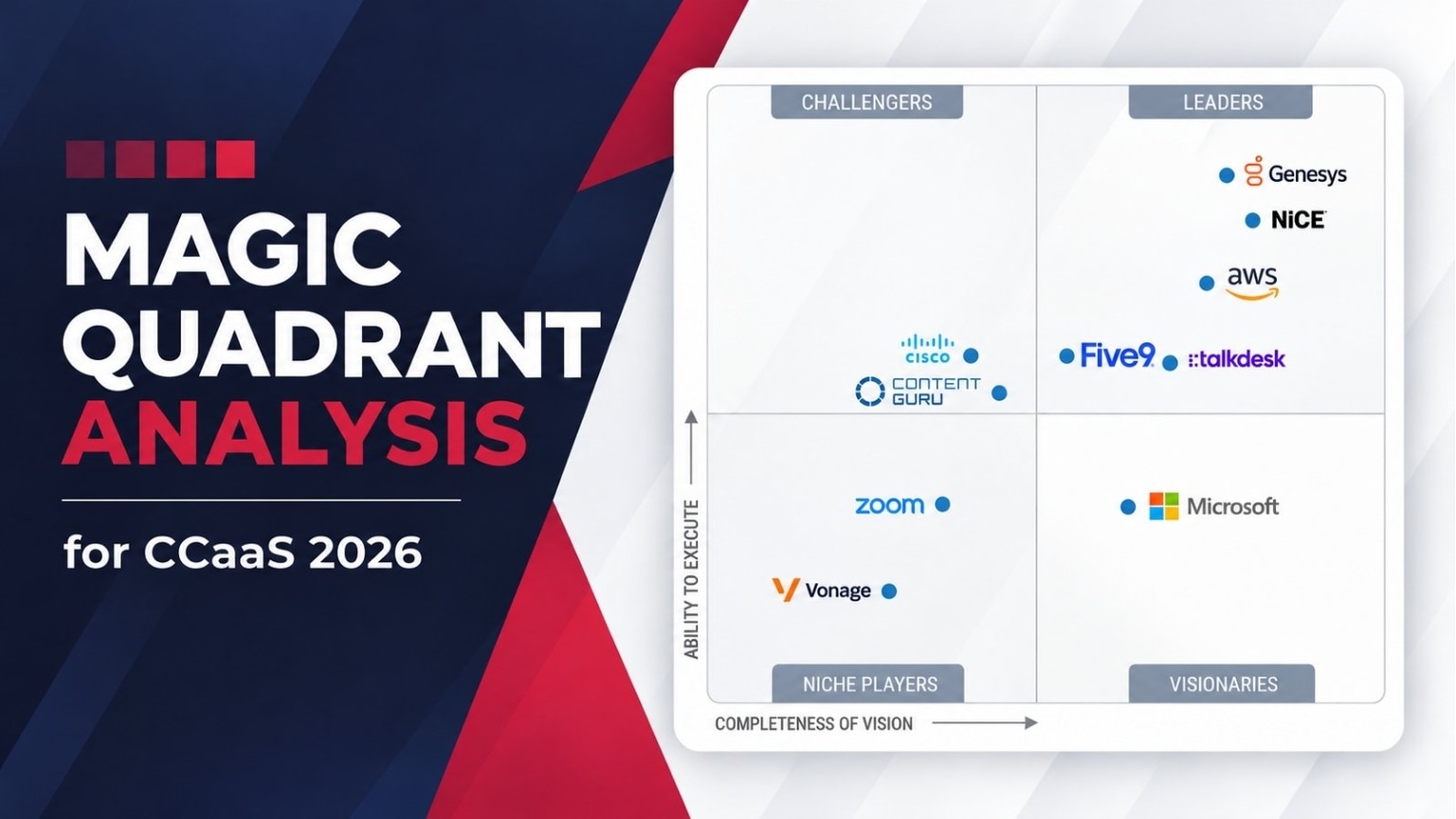
The Gartner Magic Quadrant CCaaS 2026 report follows a familiar pattern at the top. Amazon Web Services, Five9, Genesys, NICE, and Talkdesk retain their positions as Leaders. Cisco returns to the Challenger quadrant, alongside Content Guru. Microsoft enters as a Visionary. Vonage and Zoom remain Niche Players.
The headline is not that agentic AI has reordered the CCaaS market. It plainly has not, at least not yet.
“The market has spent the past year telling us that agentic AI changes everything. Gartner’s chart suggests something more prosaic: the vendors with the deepest enterprise footprint, broadest portfolios, and strongest commercial machinery still hold the most valuable real estate.”
— Rob Scott, CX Today
That is not an argument that the Leaders are undeserving. It is an argument that buyers need to understand what the Magic Quadrant does—and does not—measure.
The Dot Is Not the Deployment
The most consequential question in CCaaS is no longer whether a provider can demonstrate an AI agent. Nearly every credible vendor can do that now.
The questions buyers should ask are tougher. Can the AI resolve a real customer problem using trustworthy context? Can it take a governed action across a CRM, billing system, knowledge platform, or order-management workflow? Does it recognize when it lacks confidence? Can it transfer the interaction cleanly to a human employee? And can the organization explain why it made a decision?
A Magic Quadrant placement does not answer those questions.
“I have seen too many contact center programs where the buying decision was validated by the analyst chart, while the operational work was deferred. Then the organization discovers its customer data is fragmented, the knowledge is unreliable, and nobody has agreed who owns the outcome when the AI gets it wrong.”
— Rob Scott, CX Today
Gartner itself recognizes this gap. Its 2026 report points to rising AI adoption but also poor experiences with AI-facing capabilities, difficulty proving ROI, inconsistent data across systems of record, and a lack of AI-ready knowledge management.
Those are not minor implementation details. They are the difference between an attractive demo and a service model customers can trust.
Zeus Kerravala, Principal Analyst at ZK Research, argues that the report’s timing is another limitation in a fast-moving market:
“This industry moves way too fast for Gartner to have a six-month lag time between submissions to publication. I believe this document is already out of date.”
— Zeus Kerravala, Principal Analyst, ZK Research
Why the Leaderboard Barely Moves
The stability of the Leaders quadrant is understandable. AWS, Five9, Genesys, NICE, and Talkdesk have meaningful scale, global delivery capability, platform breadth, established partner ecosystems, and experience supporting complex enterprise environments.
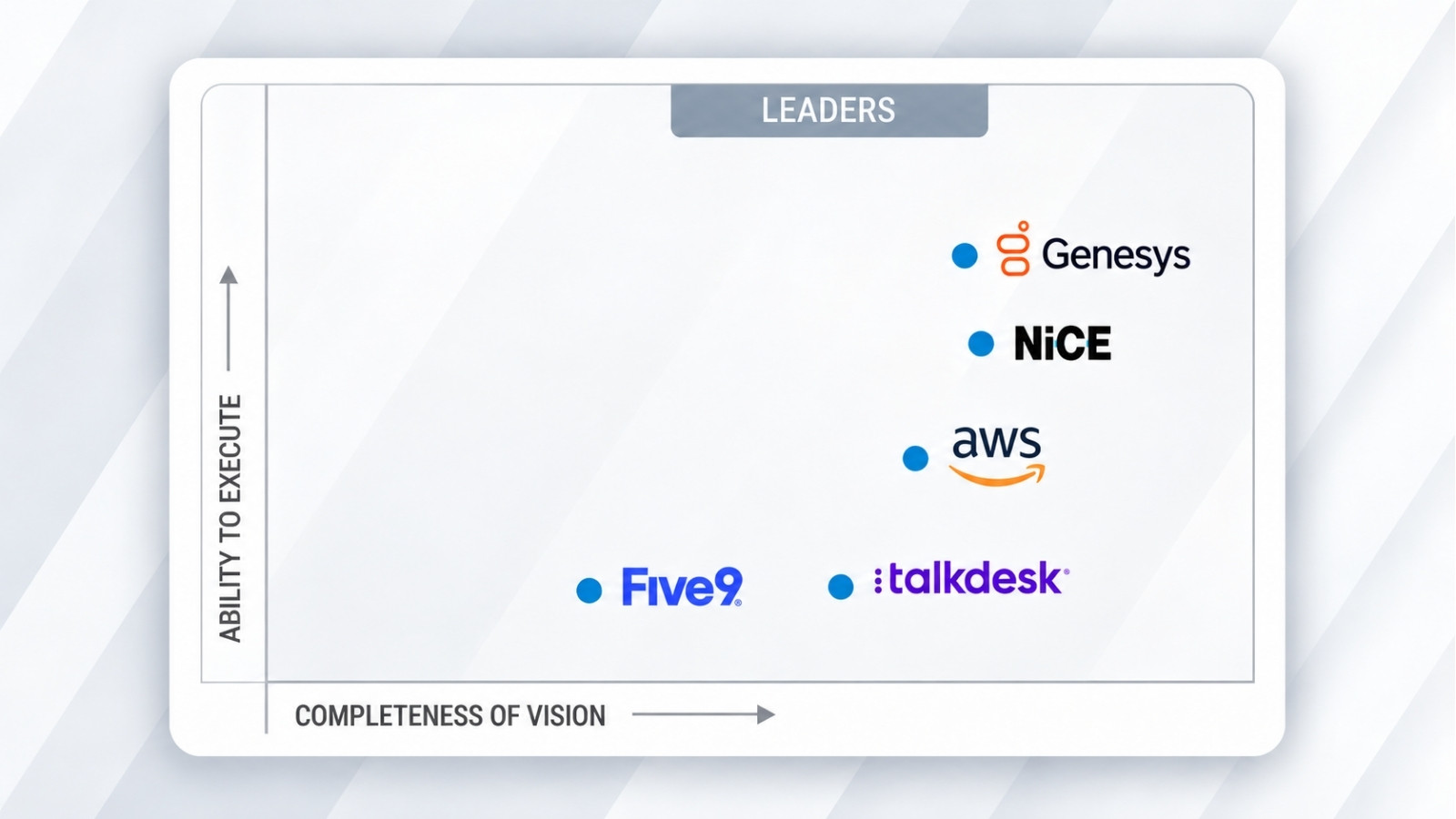
Source: Gartner, Magic Quadrant for Contact Center as a Service, 2026. Graphic adapted by CX Today.
Those attributes matter. Gartner forecasts that CCaaS will account for more than half of all agent licenses globally by the end of 2026. Buyers are not simply purchasing a routing engine or a chatbot replacement. They are making a long-term decision about customer data, workflow orchestration, workforce operations, compliance, integrations, resilience, and service accountability.
But this is also where the Magic Quadrant can exert outsized commercial influence.
“A Gartner Leader position can become a shortcut in procurement. It can reduce perceived risk before a vendor has demonstrated a single workflow against a buyer’s operating reality. That may be commercially useful for the vendor, but it is not necessarily useful for the customer.”
— Rob Scott, CX Today
The report’s inclusion criteria reinforce that point. Providers needed at least $85 million in 2025 revenue, at least 10% of that revenue from new-logo clients, and an average deal size above 100 representatives.
Those thresholds make sense if Gartner’s objective is to assess a specific segment of the enterprise CCaaS market. They are not, however, a universal test of relevance, innovation, or customer fit. They can exclude providers with a sharper industry focus, newer architectures, different go-to-market models, or specialist capabilities that may matter more to a particular buyer.
Chris Marron, Founder of CMA Intelligence, argues that sovereignty belongs within a broader compliance discussion, with global and regional providers judged against each customer’s requirements:
“For buyers with specific legal requirements around data location, access and control, sovereignty is much more than an RFP checkbox.”
— Chris Marron, Founder, CMA Intelligence
“Not in the Magic Quadrant” should never be read as “not worth evaluating.”
Microsoft’s Entry Exposes the Bigger Shift
Microsoft’s arrival as a Visionary is the most important movement in the 2026 report. It validates a broader market reality: the separation between contact center platforms and CRM-led customer engagement architectures is breaking down.
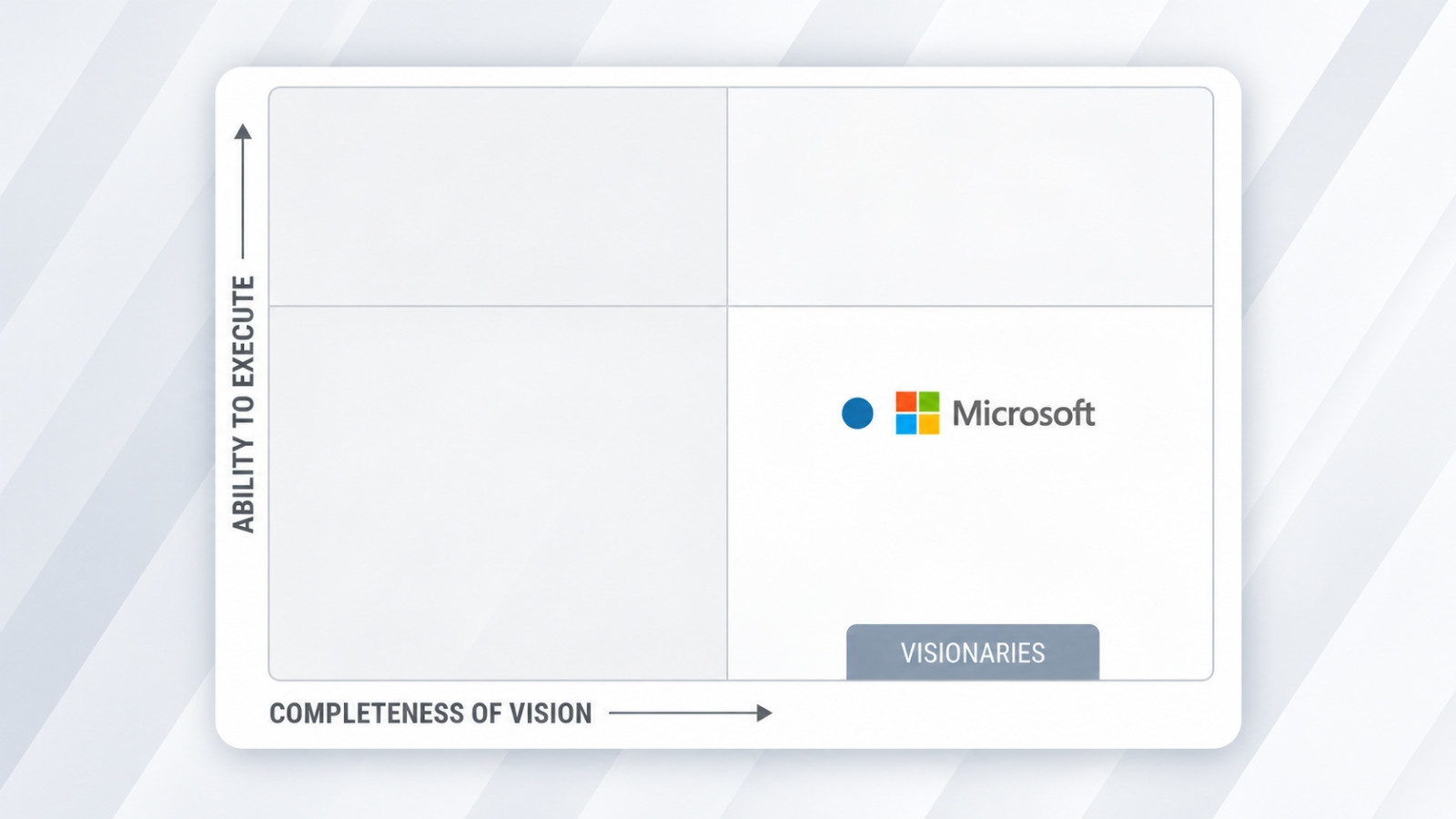
Source: Gartner, Magic Quadrant for Contact Center as a Service, 2026. Graphic adapted by CX Today.
Dynamics 365 Contact Center brings obvious advantages for organizations already committed to Teams, Dynamics, and Microsoft’s expanding AI portfolio. Gartner flags limitations around third-party CRM optimization, implementation complexity, and the maturity of core routing and reporting capabilities.
Still, the strategic question is larger than Microsoft’s current position on a graph.
“The next contact center buying decision may not start with, ‘Which CCaaS platform should we select?’ It may start with, ‘Where do we want intelligence, workflow, customer context, and AI governance to live?’ Gartner’s quadrant captures part of that shift, but the market is moving faster than the category definition.”
— Rob Scott, CX Today
Kerravala sees Microsoft’s ability to coexist with incumbent providers as a competitive advantage:
“Microsoft can backdoor its way into companies, sit alongside traditional vendors and then take share.”
— Zeus Kerravala, Principal Analyst, ZK Research
Salesforce’s status as an honorable mention after launching Agentforce Contact Center in 2026 underlines the same tension. A provider’s quadrant status may matter less than whether its platform sits at the center of a company’s customer data, employee workflow, and AI governance model.
Cisco’s Return Puts Security on the Agenda
Cisco’s return to the Challenger quadrant also deserves attention. Its value proposition extends beyond Webex Contact Center functionality into unified communications, global deployments, and an emerging AI security narrative.
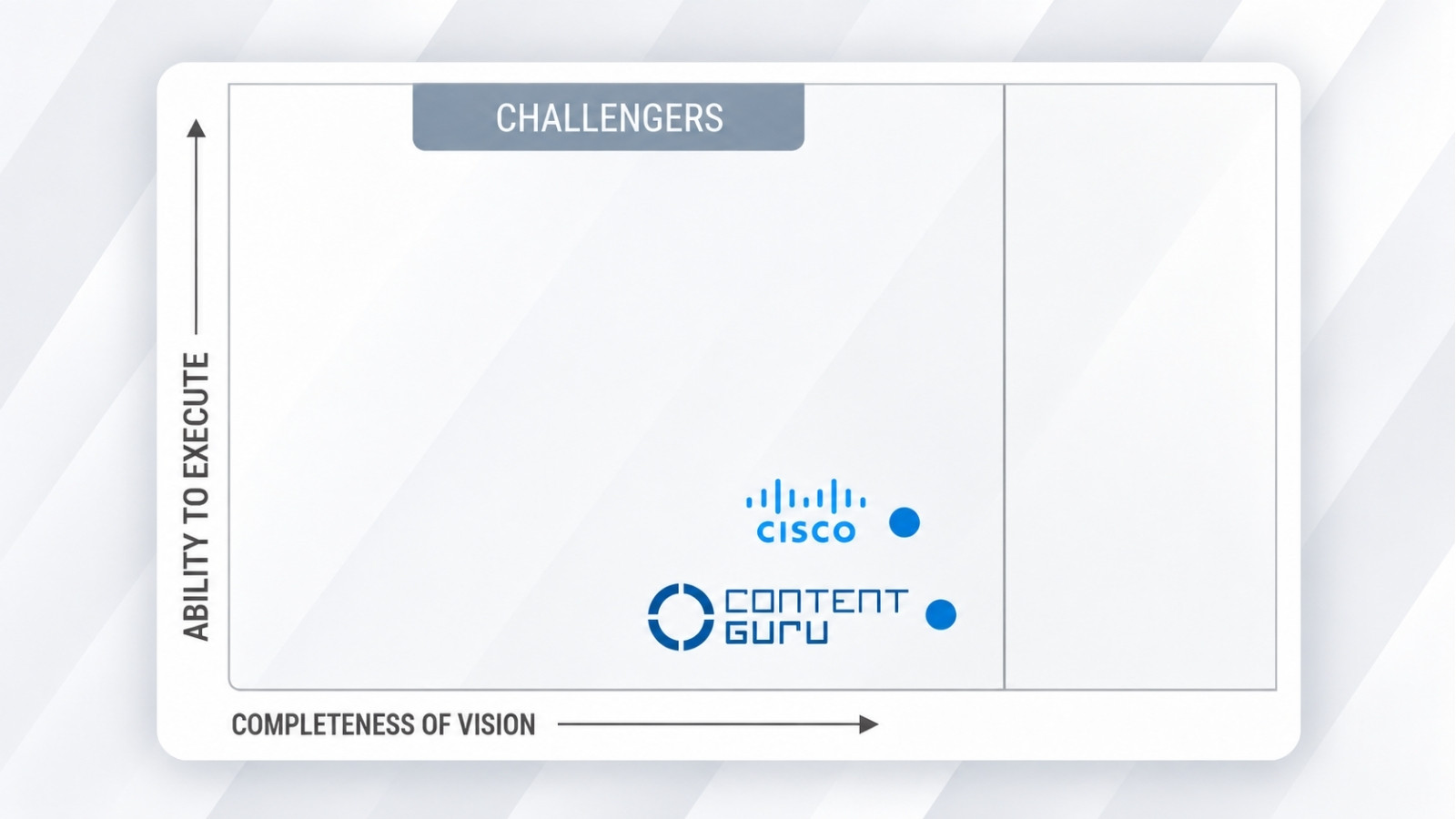
Source: Gartner, Magic Quadrant for Contact Center as a Service, 2026. Graphic adapted by CX Today.
Gartner highlights Cisco AI Defense and protections against threats such as prompt injection. As AI systems begin to act across customer interactions and connected enterprise systems, the question is no longer simply what an AI agent can do. It is who governs it, how it is secured, what it can access, and what happens when it makes the wrong call.
“For years, the contact center industry has measured innovation in terms of automation volume and containment. The agentic era should force a more serious standard: can the organization govern action, preserve customer trust, and deliver a competent human handover when the automation reaches its limits?”
— Rob Scott, CX Today
For Kerravala, the combination of communications, security and observability is particularly relevant as AI takes on more responsibility: