

For many contact center leaders, the modernization equation has become increasingly difficult.
The existing platform may be dated. Customer expectations have moved on. The business wants stronger automation, richer customer context, better quality management, and faster paths to resolution. But replacing a contact center is rarely a straightforward technology upgrade. It is a transformation program that touches telephony, routing, workforce operations, security, data, compliance, processes, and people.
Microsoft thinks there is another way.
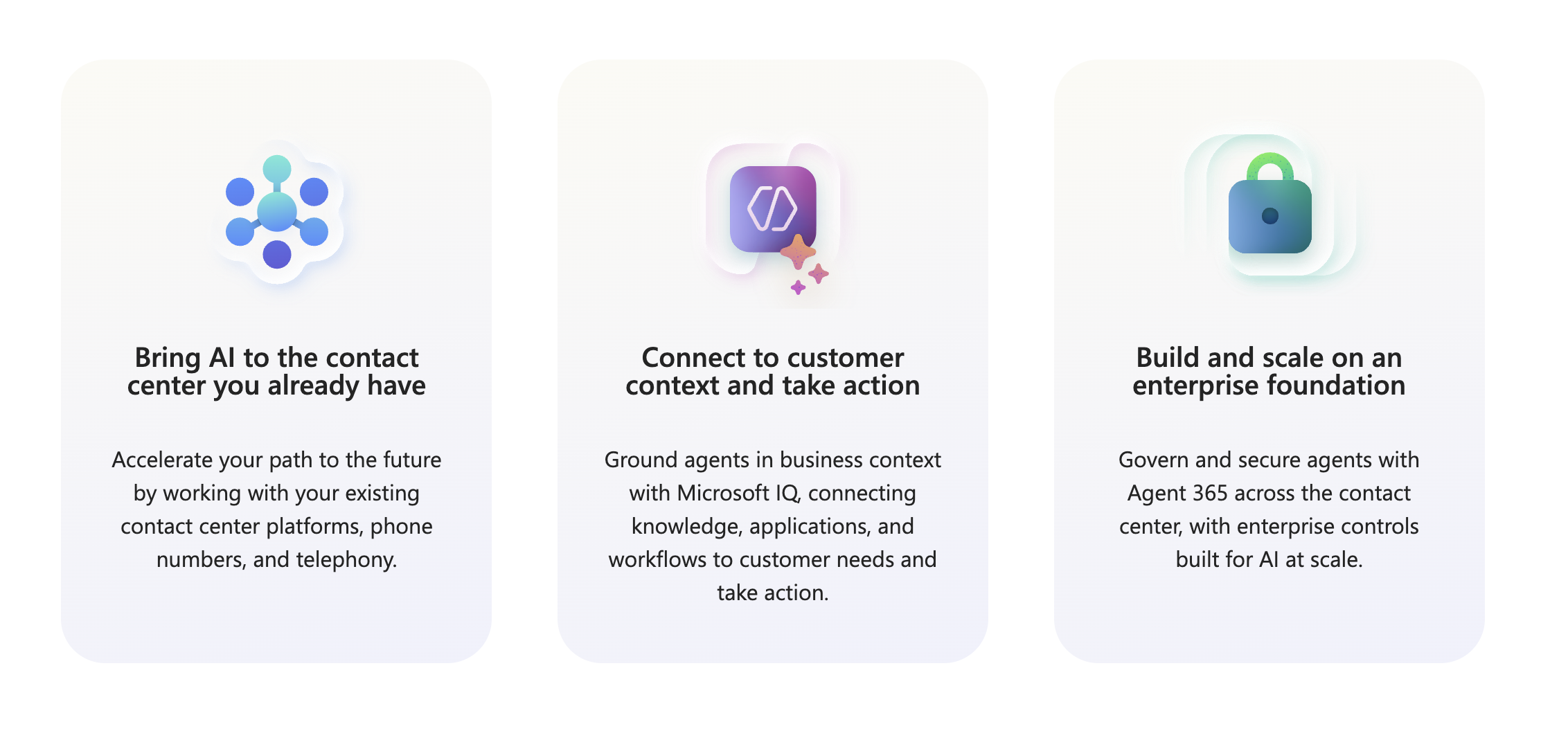
With Microsoft Contact Center Intelligence (CCI), now in public preview, the company is targeting the large installed base of organizations running contact center platforms it does not own. The proposition is clear: retain the existing telephony, routing, phone numbers, and agent desktop, while bringing Microsoft’s conversational agents, quality capabilities, analytics, biometric authentication, and enterprise workflow tools into the environment already in place.
It is a direct challenge to the long-held assumption that meaningful contact center modernization requires a wholesale platform replacement.
A Third Option for Stuck CX Leaders
The market has often presented buyers with two uncomfortable choices. They can invest in a point solution to add new capability quickly, risking another silo and another governance headache. Or they can begin a wider CCaaS migration, accepting the cost, disruption, and implementation risk that comes with it.
CCI is Microsoft’s attempt to create a third route.
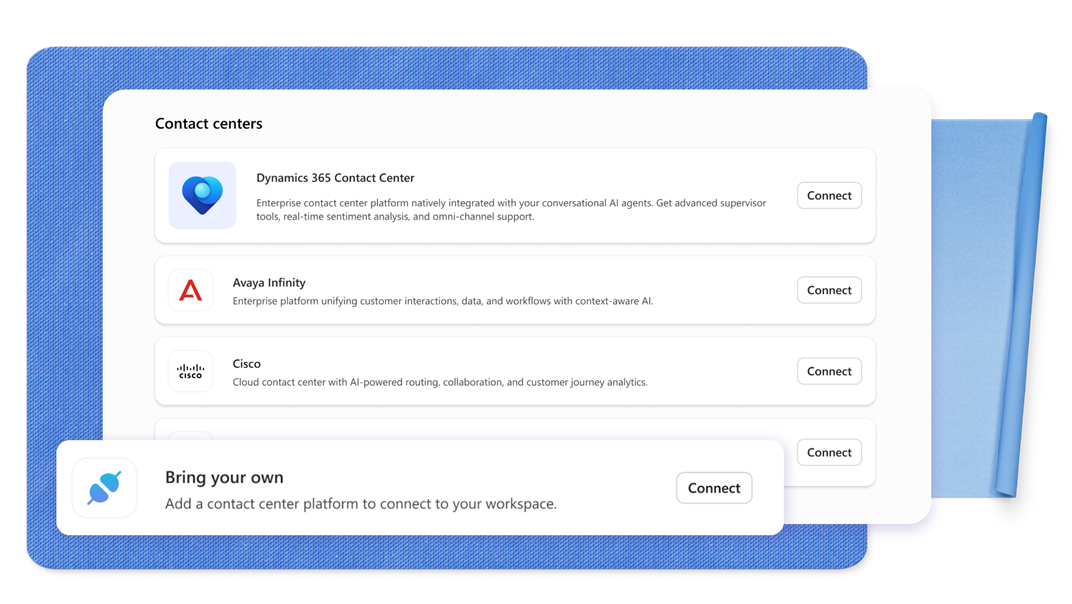
The company says its open and out-of-the-box connectors will allow organizations to integrate capabilities into existing contact center infrastructure without rearchitecting the operation first. In practical terms, that means an enterprise using an incumbent platform can explore new service, quality, and automation capabilities while keeping its core operational estate in place.
That will appeal to organizations whose transformation plans have stalled because the replacement project looks harder to approve than the problem is to tolerate.
"Organizations are increasingly adding AI on top of existing CCaaS and on-premises contact center environments, but that is not always a long-term modernization strategy. AI can extend the life of an existing platform, yet it is also becoming the first lens through which buyers evaluate their next CCaaS provider. For some, layering AI on top is a bridge; for others, it is simply a bandage on an outdated architecture.”
— Diane Myers, Senior Research Director and Principal Analyst
“Microsoft Contact Center Intelligence is about transforming how everyone on the planet engages with a brand in the AI era. And it enables this transformation without requiring any changes in infrastructure - so that the experience of every customer interaction keeps up with the pace of AI innovation.”
Omar Aftab, Vice President and Head of Product, Microsoft Contact Center Intelligence
But it also changes the competitive question. Microsoft is not merely trying to win a future CCaaS deal. It is positioning itself as the intelligence, quality, workflow, and governance layer around the contact center buyers already have.
For incumbent providers, that creates a more immediate challenge: customers may no longer need to replace the platform before they can bring in a major enterprise technology partner.
Sheila McGee-Smith sees the announcement as a broader competitive move:
“I see Microsoft Contact Center Intelligence primarily as a go-to-market expansion, rather than simply a new product announcement. Microsoft is extending AI capabilities from Dynamics 365 Contact Center to organizations using other vendors’ contact center platforms, without requiring them to replace those platforms. For Microsoft-centric organizations - particularly those invested in Azure, Dynamics 365, or Teams - this creates another opportunity to standardize on Microsoft for AI while retaining their existing contact center infrastructure. It also puts Microsoft in a position to compete for contact center AI spending even when it does not provide the underlying platform, substantially expanding its potential addressable market.”
— Sheila McGee-Smith, President & Principal Analyst, McGee-Smith Analytics
Context Is Where the Real Argument Begins
The ability to add automation is not, by itself, a differentiated story. Contact center leaders have been offered that promise for years.