
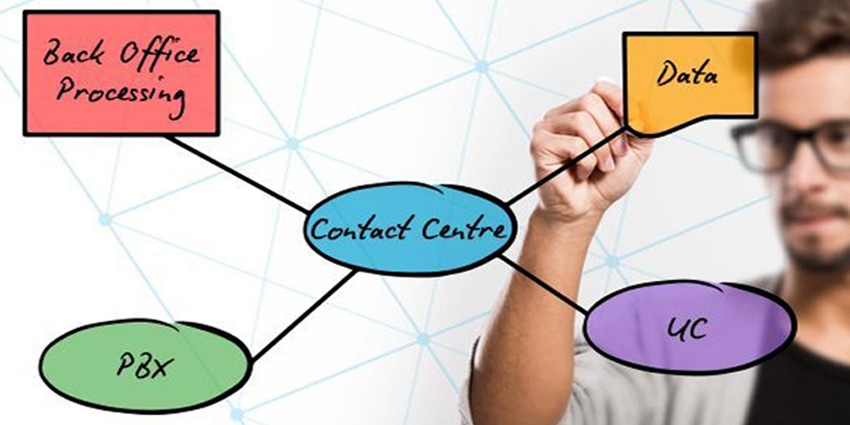
It sounds like the kind of match-up that could disrupt an entire market. Skype, the game-changing UC phenomenon, harnessed in the contact centre, opening the door to the futuristic possibilities of streamlined customer service via integrated video, voice, IM and presence.
Such omni-channel contact centre solutions are, of course, growing increasingly common and popular. But the Skype brand still has a draw, and not without good reason. It set the standard for the intuitive, user-friendly UC interfaces seen on most communications software platforms today. Plus, as an early cloud solution, it is synonymous with flexibility and scalability in deployment.
More and more contact centre operators are turning to Skype for Business for these and other reasons. According to Gartner, by 2020 one in five new contact centre seats will be run on Skype for Business. As well as ready omni-channel support in a single platform, it also provides easy integration of front and back office operations.
In other words, if your business uses Skype for Business, building your contact centre on the same UC platform means you can easily extend customer service to any department. With contact and presence information for the whole organisation at their fingertips, an agent can quickly refer a query to whoever has the answer, typing a quick IM as they talk to the customer or even adding a colleague to the call with a single click.
There is, however, a catch. When it bought the Skype brand, Microsoft spent a lot of time and effort reshaping the consumer platform to meet business requirements, using Lync as the foundation. What it did not do, however, was build Skype for Business ready for the contact centre. Specifically, the advanced multichannel routing, monitoring and reporting capabilities a modern contact centre requires are just not there.
So how is the rapid growth in Skype for Business deployment in the contact centre predicted by none other than Gartner going to happen?
Skype for Business Partner role
Luckily for the legions of Skype for Business users who would love to use their favourite cloud UC platform in their contact centre, numerous third party software developers have turned their attention to making it happen.
One of these is Enghouse Interactive. Enghouse is a Microsoft Gold Certified Partner, and for the past two years has been making the marriage between Skype for Business and the contact centre a reality with Enghouse Interactive Communication Centre (EICC), a native Skype for Business contact centre platform.
Globally, Enghouse now boasts five times as many Skype for Business contact centre customers as any other supplier.
Asked about the process of making Skype for Business compatible with the demands of the contact centre, Peter Fedarb, senior technical consultant at Enghouse, said:
“EICC makes it seem seamless and easy, however a vast amount of effort has gone into the development. Many aspects of Skype for Business, and therefore how integration is achieved, are vastly different to traditional PABXs."
“We have seen many customers try to deploy Skype for Business in their contact centre from within their own IT team. However. even though Skype for Business has the look and feel of other Microsoft products, the nature and nuisances of real-time voice is still an unknown to most IT departments.”
