Remember the last time a friend asked: “Let’s go to a restaurant. Where would you suggest?”
At that moment, you think back to previous dining experiences, adverts/reviews you've seen, or a time you walked past a fancy-looking eatery.
That concept evokes a quote from Nobel Prize Winner Daniel Kahneman:
“We actually don't choose between experiences; we choose between memories of experiences.”
Apply that to customer experience, and brands will realize that loyalty is a function of positive memories – an idea cultivated by prominent CX thinker Colin Shaw.
As such, brands must consider how they can provoke those positive memories, and this is where sentiment data comes to the fore.
Emotions At the Heart of Customer Experience
More brands are thinking about how they can create memories to drive loyalty and reflect on Kahneman’s research to do so.
That research introduces a concept known as “The Peak End Rule.” This suggests that a person remembers the peak and end emotion they feel within an experience.
Recognizing this, some CX design leaders now ask themselves:
- Where is the peak emotion in our customer journeys?
- What is the overriding emotion at the peak and the end?
- What emotions do we want our customers to feel?
- Which emotions drive value? i.e., an increase in NPS, customer spend, revenue. etc.
Unfortunately, most businesses cannot answer these questions. Yet, there is a process to follow.
That starts with a sentiment analysis exercise to spot which emotions drive value.
Then, roll out the customer journey map and uncover which emotions the business currently evokes at the peak and end of the experience.
From there, the business should consider how they can influence the journey so customers instead feel the emotions that drive value at those critical touchpoints.
Applying Sentiment Research to Customer Experiences
To understand the emotions customers feel during their experience, businesses often rely on feedback mechanisms, such as surveys, customer interviews, and focus groups.
Unfortunately, these methods are often unreliable. As Shaw recently told CX Today:
“What customers tell us and what actually drives value can be very different.”
In doing so, he discussed how Disney recognizes that when it asks customers what they want to eat at a theme park, people say they’d like the option of a salad.
Nonetheless, Disney also knows people don't eat salads at theme parks; they eat hotdogs and hamburgers.
As such, businesses must be careful when listening to their customers, as they can’t easily articulate what they want. More prudent techniques are necessary to get under the skin of the emotions that drive customers.
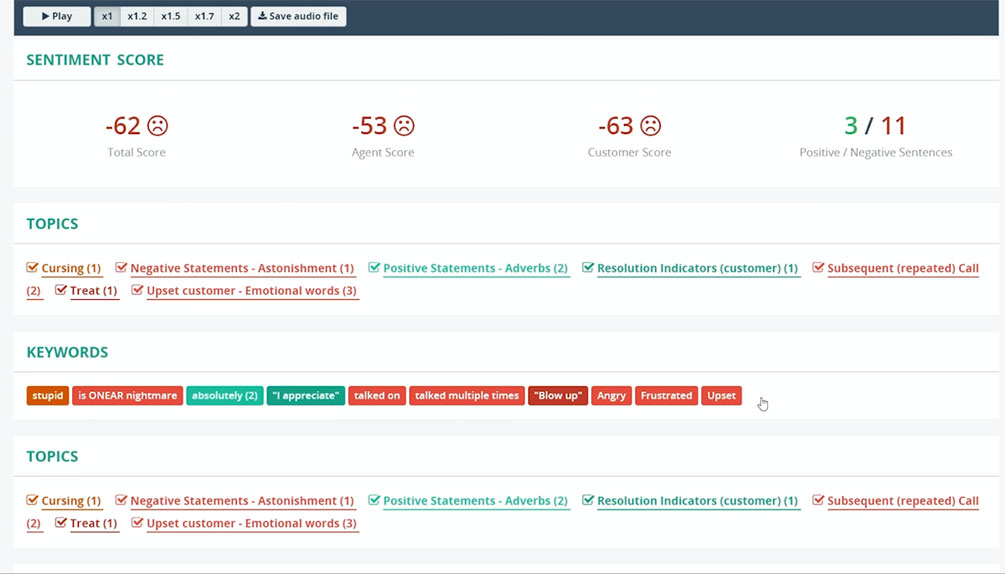
For instance, conversational intelligence tools are much better at getting to grips and quantifying the specific customer emotions that drive value.