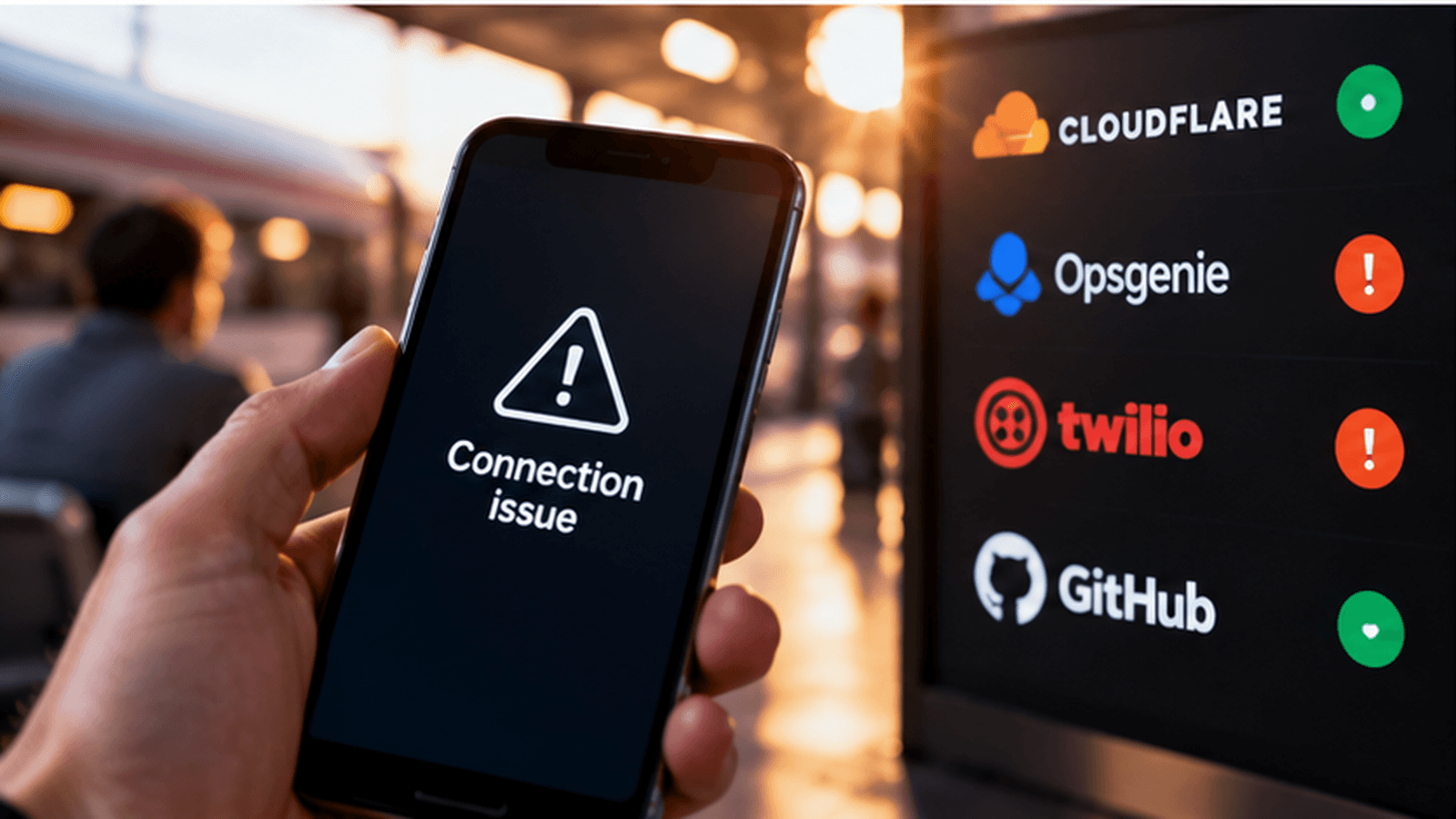
It’s becoming a familiar story: A technical glitch at Cloudflare, one of the biggest internet infrastructure providers, knocked a number of websites and services offline for a few hours on November 18, disrupting customer access and merchant payments.
X (formerly Twitter), ChatGPT, Claude, Perplexity, Spotify and payment giant Square were among those caught up in the fallout.
The trouble began just before 11:48 GMT, when Cloudflare posted that it was dealing with an “internal service degradation” causing intermittent outages across its service network. Users saw error pages, stalled logins, broken APIs, and sites claiming connections were blocked. There were a few conflicting signals about the restoration progress, as at one stage the company reported that services were beginning to recover, but then around 15 minutes later reverted to “continuing to investigate this issue.”
By 13:04 GMT, Cloudflare admitted that one of its fixes involved disabling WARP access in London entirely, temporarily cutting off users from its WARP performance-boosting and VPN service that helps secure and accelerate internet connections:
“During our attempts to remediate, we have disabled WARP access in London. Users in London trying to access the Internet via WARP will see a failure to connect.”
Cloudflare announced a fix five minutes later, but continued to receive “reports of intermittent errors” until close to 17:00 GMT.
Untimely Outage Exposes Weak Spots in Online Payments
While the broken pages and error messages got the immediate attention, the real pain from such outages often comes from the disruption to payment flows. Failed transactions, repeated payment attempts, and unclear confirmations create a backlog of problems that merchants have to untangle later.
As Monica Eaton, Founder and CEO of Chargebacks911 and Fi911, said, “When major websites hiccup, users notice. When payment processors flicker, the ripple effects get messier—and much less visible.”
When customers are unable to complete payments, or worse, the system wobbles cause duplicate payments, the chaos continues beyond the initial outage.
“What actually happens during an outage like this is messy. Customers retry purchases, cards get hit twice, confirmation pages stall, and suddenly you have a wave of confusion that turns into disputes. By the time the dust settles, merchants are left cleaning up charges they never intended to send in the first place.”
And the timing of this particular outage, during the shopping days leading up to Black Friday, caused further headaches, as Charlie Jackson, Executive Director of Gumpo Digital Marketing, pointed out:
"This is not just a typical server blip, this is a multi-million pound algorithm disruption hitting the digital marketing world at the worst possible time. With major e-commerce brands down and around 80% of our clients relying on Cloudflare, we had no choice but to immediately hit the pause button on high-spending PPC and paid social campaigns.
That will not only affect revenue on the day, but will have a knock-on effect on retailers’ performance over the Black Friday period, Jackson said, because advertising platforms like Google and Meta use machine learning. “When you interrupt high-performing campaigns, you essentially disrupt the algorithms’ constant flow of data needed to optimize budgets and target audiences effectively.”
The hours-long outage could cost the retail sector millions in disrupted campaigns and lost momentum during the biggest shopping event of the year.
“We're in the most critical 10-day scaling window before Black Friday and this outage has once again flagged the impact CDN outages can have and that though they bring benefits on the whole, they do leave sites vulnerable and at the mercy of Cloudflare to resolve these issues,” Jackson said.
Repeated Cloud Outages Are Exposing Systemic Weaknesses
Cloudflare’s stumble, coming shortly after massive outages in the past month at AWS and Microsoft Azure that caused their own waves of disruption, has given more fuel to warnings over the dependence on a small number of global infrastructure giants. As Eaton noted:
“Cloudflare going dark today should snap every merchant back to reality. We keep building bigger online businesses, yet so much of that growth depends on a few invisible services holding everything together. When one of them goes down, even for a moment, the internet feels like a house with loose wiring. Lights flicker everywhere. Payments included.”
Mike Hoy, CTO at Pulsant, has warned that the concentration of workloads in the hands of so few providers creates systemic risk. His concern is twofold: the technological fragility and the lack of practical recovery planning among businesses. “Encouragingly, many organizations are already moving away from dependence on a single public cloud provider. Recent research from Pulsant reveals that 87% of businesses plan to partially or fully repatriate workloads over the next two years—up from 43% in 2021, according to Barclays.”
But that shift isn’t simple, as regulatory constraints, data transfer costs and platform lock-in all slow the transition. These outages expose the vulnerabilities of the current model and why a more competitive and distributed cloud ecosystem is needed, Hoy said.