

On October 5, Narvar offered a fairly grim reminder of what holiday customer service looks like: 37% of US shoppers surveyed saw their delivery date change after ordering during last year’s peak. Another 23% had a package marked as delivered that never arrived.
“A date that changes without warning is where that anxiety turns into a ticket,” the company warned.
Now imagine those complaints landing in your customer community, where last year’s delivery advice is still pinned, and the one moderator who knows how to escalate an order dispute is off until Wednesday.
Narvar added another warning on October 13: split shipments can make accurate “delivered” alerts look wrong when shoppers expect their entire order. Meanwhile, the contact center has the parcel-level details that could settle the resulting complaints.
Narvar acknowledged the limit of proactive messaging, too: “No email makes a missing parcel appear.” That's where a reliable route into formal support becomes essential.
The October 20 Google Cloud disruption affected DPD shipping operations. Shippo recorded DPD UK label-generation errors while tracking and rating remained available through its integration. I'd want that distinction reflected in the community's pinned advice, with a direct route to carrier incident updates rather than leaving moderators guessing from complaints.
We’ve spent months covering community platforms’ growing use of AI and tighter service connections. The question now is whether any of that will rescue a customer who’s still waiting for help on Christmas Eve.
How Should Community Teams Prepare for Black Friday?
Start with the questions customers asked last November through January. Pull daily thread volumes, unanswered searches, and cases that reached support. Separate everyday product queries from order problems requiring customer records. Your Black Friday community management plan should reflect where the work actually landed.
One rehearsal definitely worth running right now: follow a split-shipment question from an unanswered community search to the live order-status guidance support agents see. If the answers disagree, fix the source before volunteers repeat it.
Shopping’s already picking up fast, and Adobe expects to see $275.1 billion in US online spending from November 1 through December 31, including $12.9 billion on Black Friday. So, more shopping naturally means more pressure on communities and customer service.
Narvar CEO Anisa Kumar said: “The promise matters as much as the price.” We’d take that straight to ecommerce, fulfillment, and the contact center. Who updates the pinned Christmas delivery cutoff when a carrier changes its schedule? Does the agent knowledge base match the community?
Someone needs to own every seasonal answer customers are likely to keep asking about. Give it a reliable source and a date for the next check, and get January’s returns rules published before December gets busy. Narvar found that 56% of shoppers had put off or abandoned a purchase because they couldn’t work out when they’d get their refund. If a policy changes, moderators and support agents need the new version at the same time.
Also, remember proactive alerts don’t reach everyone. SMS and push updates miss customers who haven’t opted in, so the community needs an answer for shoppers who never received the notification.
Then forecast normal, busy, and severe community support surges using your own figures and upcoming campaigns. Compare them with contact center staffing, especially evenings and weekends. Industry spending forecasts won’t tell you where your moderators could run out of cover.
What Is Peer Support Worth During Seasonal Surges?
A customer who’s already worked out which accessories fit a popular Christmas gift can be a huge help to everyone else. If dozens of shoppers have the same question, that one useful reply could spare your support team hours of work. Just be careful what you count as deflection.
Mona Khan, Head of Customer Support at Dose, put it well in September:
“Deflection tells us what happened to the contact. Resolution tells us what happened to the customer.”
On October 22, Gainsight reported that OVO estimated its customer forum deflected more than 98,300 support contacts in the first half of 2026. That’s impressive scale, although it’s a modeled estimate, not a confirmed count of calls avoided, and it doesn’t show us much about how the system holds up when seasonal advice changes daily.
Before Black Friday, ask experienced members to check your most useful product discussions. Community analytics can expose unanswered searches and show whether members found AI answers helpful. Discourse’s October 20 experiment tests when a query needs AI search versus keyword results. It’s experimental, but the holiday question is real: did someone find the current policy?
Zendesk’s Universal Connector and dedicated Helpjuice, WordPress, and ReadMe connectors offer another test. When a shipping cutoff changes, do community members and contact center agents retrieve the same approved answer?
For savings, start with verified peer resolutions and your organization’s own cost per comparable case, then account for people who’d never have contacted support anyway.
We’ve covered the full calculation in our Community ROI analysis. Here, I’d check repeat contacts against support cases wherever possible. Nobody wants a reassuring community answer followed by an angry ticket two days later.
How Do You Staff Community Moderation for Peak Season?
Start with the hours your moderators spend reviewing flagged content, then work out who’ll cover the busiest shifts. Your holiday moderation staffing plan also needs backups for decisions volunteers can’t make.
The CMX 2026 report sums up the problem: “Bigger mandate, same small team.” Holiday leave won’t help, particularly when one experienced moderator knows most of the escalation process.
Here’s a hypothetical calculation. Reviewing 240 flagged posts daily at four minutes each creates 16 hours of work. With six productive hours per shift, that’s 2.7 review-shift equivalents.
Double the volume, and you’re looking at 32 hours, or 5.3 shifts. Triple it, and you’ll need 48 hours, or eight shifts. That’s before complicated complaints. These are workload estimates, rather than total headcount requirements.
Reddit’s October 24 Mod World session highlighted Modqueue Alerts, which notify moderators through Discord or Slack when their queue crosses a threshold. Enterprise communities need similar warnings for unanswered support threads, with someone responsible for acting when an alert fires.
We’d plan separate coverage for Black Friday promotions and December delivery complaints, with January returns accounted for too. Set alerts against your own queue-age targets rather than borrowing a staffing ratio. If urgent order complaints are still waiting, someone in the contact center needs to take ownership.
Should AI Moderation Tools Handle the Holiday Spike?
Absolutely, for repetitive work. Spam filtering and first-pass flagging can spare moderators hours during the holiday rush. We’d be much less comfortable letting automation decide whether an angry customer’s legitimate complaint stays visible.
Sprinklr’s 26.10 release offers a more practical test. Its paid, generally available Intent Moderation 2.0 uses message and thread context to classify intent and route conversations toward human agents. Handy when queues swell, but somebody with access to customer records still has to resolve an order dispute.
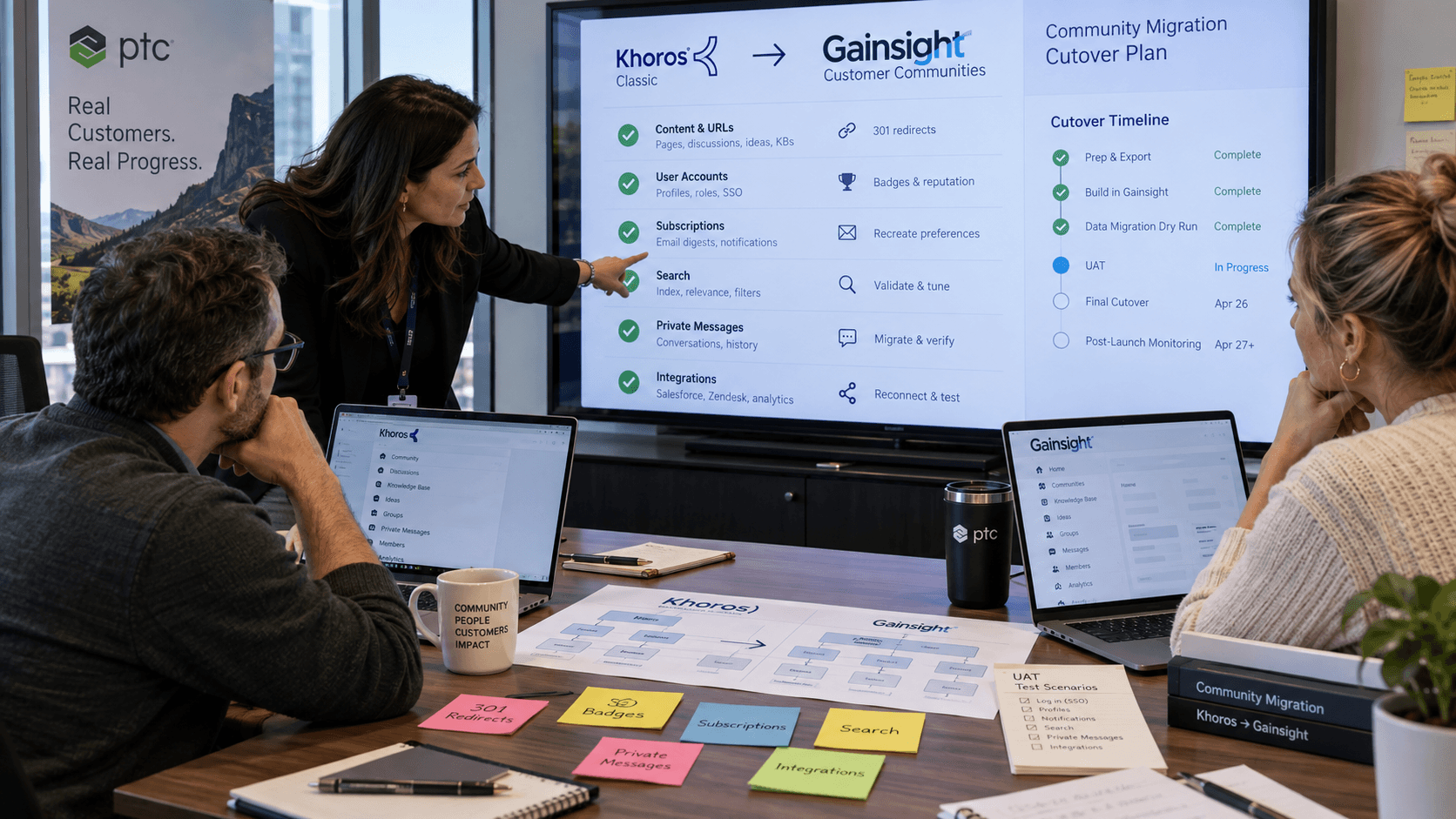
Khoros Communities 26.6 is awkwardly timed. Testing runs through November 1, with production rollout planned for November 3–4. Khoros makes the condition explicit:
“Nothing is enabled in production without your testing and an explicit request.”
That’s important because its fixes cover moderation actions that sometimes failed, scheduled knowledge-base edits, and federated-search role restrictions. Before enabling Aurora features, I’d check that a legitimate complaint stays visible, staff can reverse a mistaken decision, and an account-specific search never reveals another member’s information.
Gainsight’s October 19 Community MCP release gives authorized moderators ways to inspect queues and prepare replies for review. Useful, provided role permissions hold up and sensitive answers still need human approval.
Khoros 26.6 also improves keyboard navigation, screen-reader announcements, and search-status messages. Test whether someone using assistive technology can tell when a search found nothing. An answer isn’t much use if the customer can’t reach it.