Engagement strategies are evolving as businesses attempt to pull themselves closer to customers.
Yet, customer experience stacks shouldn't become more convoluted as these strategies grow new arms and legs. The design must stay simple.
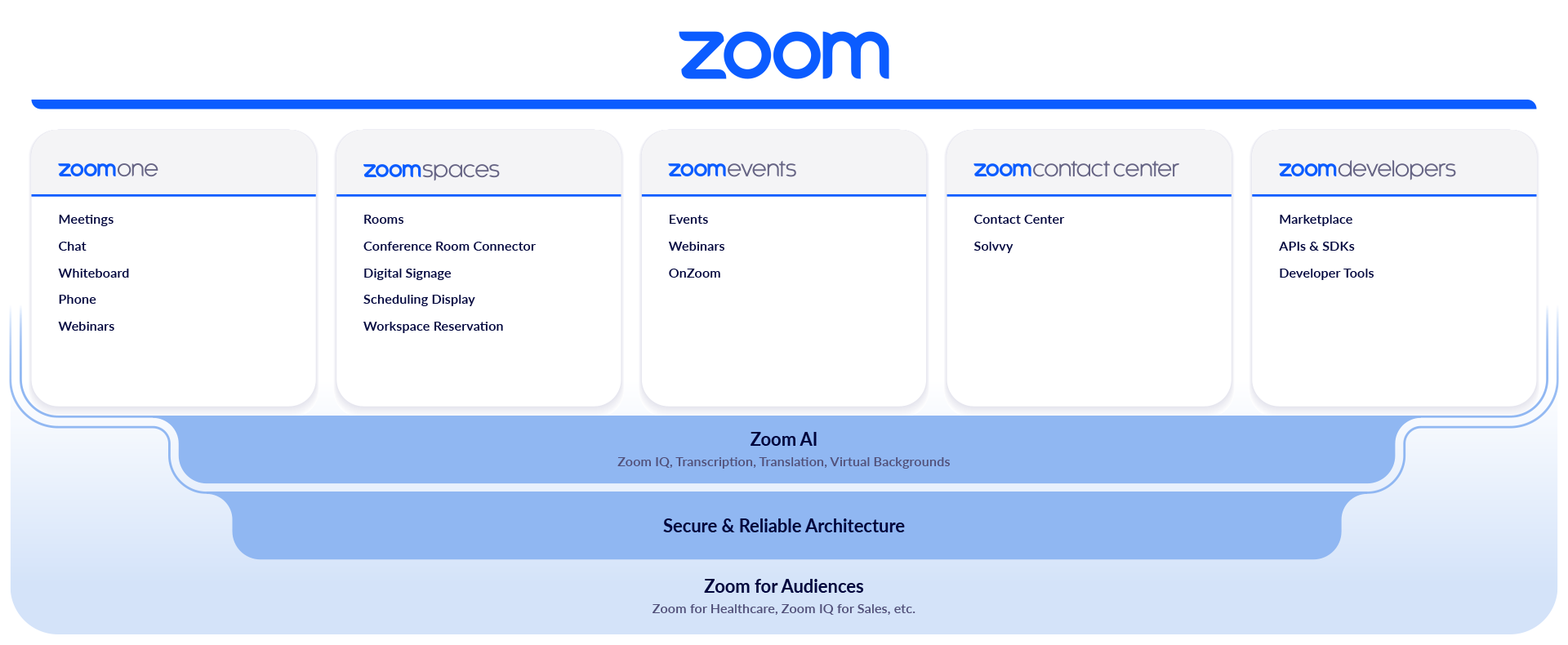
Guided by this philosophy, Zoom aims to redefine omnichannel customer engagement, properly equip customer-facing employees, and change how businesses harness AI.
Ted Yoshikawa, Head of Contact Center Product at Zoom, shared this aim and more in the recent CX Today webinar: Transforming Contact Centers for the Next Generation. Here are the top takeaways.
1. CX Tech Follows the Path of Consumer Solutions
“I’ve never bought into the old paradigm that enterprise tech needs to be complex - especially when IT admins, as consumers, use products designed to be simple and intuitive,” said Yoshikawa.
As such, Yoshikawa and his team have adopted a divergent approach to software design, building systems to fit around the ideal workflows instead of vice-versa. He continued:
“Our philosophy is to figure out the job that needs to be done and make it as easy as possible to perform that task.”
Expect many customer engagement providers to adopt a similar approach in the future. After all, such composability and intuitiveness are often lacking in enterprise software – and that lies at the heart of several customer experience issues.
Take the contact center as an example. It’s common for a professional service organization (PSO) or channel partner to deploy contact center solutions without considering how easy it will be to change workflows in the future. They’re focused on the here and now.
Then, over the next six months, another new hire will likely join the IT team and will have to work backward and pick up a lot of the slack while managing several other systems.
Thankfully, Zoom is challenging this troubling trend. Yoshikawa stated:
“It’s part of our DNA to say: It doesn't matter if you’re at day zero or ninety; changing the customer experience must be simple.”
“That simplicity-first design philosophy flows across every one of Zoom’s product lines, whether it’s targeted at businesses or consumers,” he concluded.
2. Omnichannel Goes Beyond the Contact Center
Finding a company rep in-store with the know-how to solve their issues is often a real challenge for consumers.
Indeed, a 2017 retail study revealed that 83 percent of shoppers think they know more than store associates, despite 79 percent stressing the importance of engaging with knowledgeable staff.
But times are changing. Businesses now arm their in-store teams with contact center tools like knowledge bases, CRM, and UCaaS software to bridge the knowledge gap and assist customers on the spot.
Meanwhile, Zoom's new CCaaS packages make proliferating such software cheaper and simpler. Yet, the vendor is also innovating on the in-store touchscreen experience to go the extra mile.
Yoshikawa and his team at Zoom recognized this development by introducing the Zoom Contact Center Kiosk. This physical device allows in-store customers to engage with business experts worldwide via video.
“We have a customer in the finance industry with rural branches that handle basic cash and banking transactions,” he said. “However, its financial advisors all reside in the main city or remotely.”
“It has now implemented our kiosks and is expanding its capability to build those relationships with customers who want to have face-to-face, expert interactions in the branches.”
As such, omnichannel expands beyond the conventional contact center confines. Moreover, by leveraging the kiosk and video for these interactions, businesses may gain additional first-party data to fuel conversational intelligence and hyper-personalization initiatives.
3. Specialist Contact Center Agents Come to the Fore
Zoom has over 700 contact center customers, spanning SMBs and large, global enterprises. That includes internal helpdesks through to internal and oubound customer support.
"Our solutions support many types of new users alongside traditional agents," said Yoshikawa. "They include everyone from healthcare workers to financial advisors."