
the voice of customer experience technology
Front page
InterviewCRM & Data3 Jul 2023 · 3 min read

Siloes: Your No 1 Enemy to Customer Experience... or Are They?

Silos. They're the dreaded beasts lurking in the corners of many organizations, often seen as the primary enemy of a unified, cohesive customer experience. B...

Chess board game concept illustrate Business strategy idea planing to checkmate the enemy and defeat opponent for achieve the target by intelligence idea

Silos. They're the dreaded beasts lurking in the corners of many organizations, often seen as the primary enemy of a unified, cohesive customer experience.

But let's take a moment and consider something: What if silos aren’t the demons they’re made out to be?

[caption id="attachment_57040" align="aligncenter" width="336"]Silo Diagram Source: Chantel Botha[/caption]
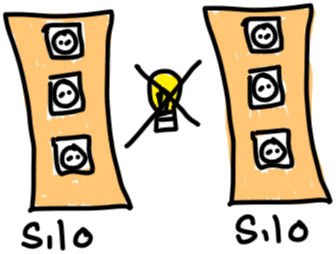
Yes, it's a bold claim, and a contrarian view in an era when "break down the silos" has become a mantra in the corporate world. Don't get me wrong - I'm not suggesting silos aren't problematic, but rather that the solution is not to destroy them, but to connect them.

You see, specialized teams or 'silos' are an efficient way to structure a business. They offer accountability, focus, and the beauty of specific expertise. They allow us to have the right people doing the right jobs, leading to heightened productivity. When a group of specialized individuals focuses on a shared objective, they can achieve it faster and more effectively. The problem arises when these silos don't communicate or collaborate with each other, causing a disconnect in the customer experience.

This brings us to the heart of the matter. Instead of trying to tear down these silos, what if we focus our energies on building bridges between them?

Let's start by clarifying what we mean when we say 'silos.' In an organizational context, silos refer to situations where different departments or teams operate in isolation from one another. They don't share information, knowledge, or resources effectively, often leading to inefficiencies, a lack of innovation, slow decision-making, inconsistent processes, and sadly, an inadequate customer experience.

This silo mentality can lead to various negative symptoms, such as a lack of communication, duplication of effort, resistance to change, and unhealthy internal competition, to name a few. It can be a result of a range of factors, including poor communication, competition for resources, lack of trust, organizational structure, leadership styles, and incentive structures that promote individual performance over teamwork.

But enough about the problems. Let's shift gears and focus on the solution.

[caption id="attachment_57041" align="aligncenter" width="544"]Silo Diagram Source: Chantel Botha[/caption]
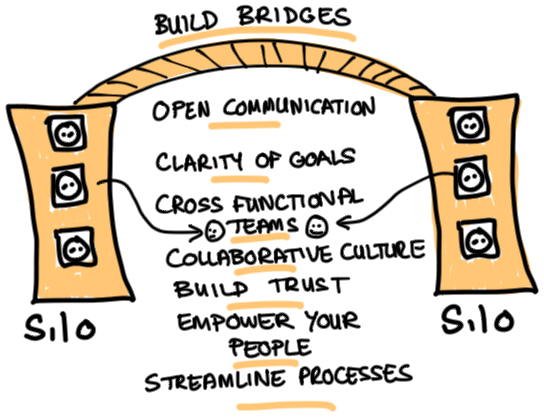
How do we build bridges between silos? Here are some key strategies:

1. Promote Open Communication: Fostering an environment of open and transparent communication is fundamental. Regular interdepartmental meetings, shared communication channels, and a culture of openness can significantly reduce the silo mentality.

2. Clarify Goals and Objectives: Each department or team should understand its role in contributing to the organization's overall goals. Shared purpose and vision can diminish the focus on individual objectives.

3. Establish Cross-Functional Teams: Encourage different teams to work together on projects. This fosters collaboration, promotes knowledge exchange, and ultimately, breaks down barriers.

4. Foster a Collaborative Culture: Celebrate teamwork. Reward collaborative efforts and successes to reinforce the value of interdepartmental cooperation.

5. Build Trust: Trust is the foundation of any relationship, and interdepartmental relationships are no exception. Encourage open feedback, recognize achievements, and promote respect to build a culture of trust.

6. Empower Your People: Providing employees with the necessary autonomy, resources, and confidence can inspire a sense of ownership and accountability, which goes a long way in breaking down the silo mentality.

7. Streamline Processes: Identify and remove any unnecessary steps or bureaucracy causing delays or frustrations.

By effectively building bridges between silos, you can unlock numerous benefits, such as increased efficiency, improved problem-solving, enhanced innovation, improved morale, and most importantly, a better customer experience.

So, rather than viewing silos as the enemy, let's shift our perspective. Let's treat them as individual islands of expertise, each with a unique contribution to make. Then, let's focus on building bridges to connect these islands, fostering an environment of collaboration and communication to deliver the best possible experience for our customers.

rate this story
helps rank stories across uc today
The discussion0 takes · attributed & checked

Does this reflect your experience?

opening the room…
Read nextordered by techtelligence · every pick explained
same beat · CRM & Data

Why Claudeforce Indicates CRM Complexity Is Breaking Customer Experience

23 Sept 2026
matches this topicFrom Notifications to Revenue Drivers: Turning Support Channels into Growth Engines24 Sept 2026matches this topicThe Weakest Security Link in Customer Data May Be Hiding Outside the CRM22 Sept 2026