

For healthcare organizations, customer experience doesn’t begin with patients. It begins with the employees who support them.
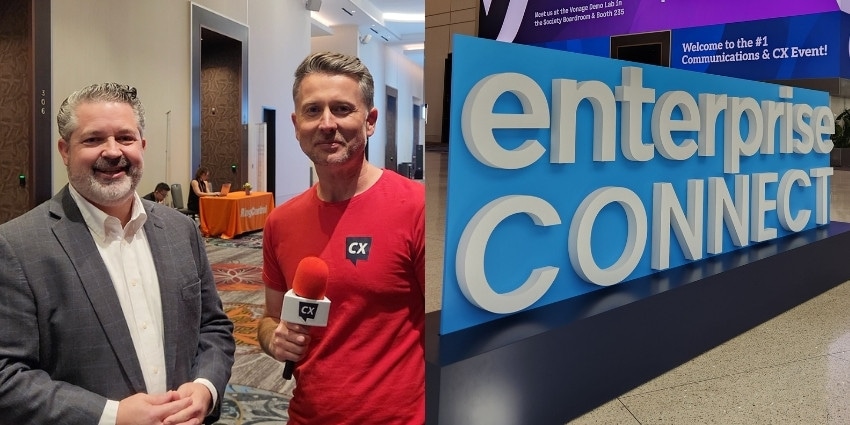
That reality sits at the heart of Sun River Health’s contact center transformation story — and it’s why the organization’s experience stands out amid the AI‑heavy conversations dominating Enterprise Connect 2026.
In a recent CX Today interview, Eric Brosius, Vice President of Technology Services at Sun River Health, shared how internal IT friction, not technology limitations, became the catalyst for meaningful change — and how a focused investment in contact center modernization delivered measurable outcomes across employee experience (EX) and patient experience (PX).
Watch the Full Interview
The Business Problem: Internal Friction Was Hurting Care Delivery
Sun River Health, one of New York’s largest Federally Qualified Health Centers, supports dozens of clinical and administrative sites across the state. Like many healthcare organizations, it operates in a high‑pressure environment where downtime, delays, or inefficiencies quickly cascade into patient impact.
Before its transformation, Sun River Health faced several interconnected challenges:
- Clinicians and staff struggled to get timely IT support
- Help desk teams were overwhelmed and reactive
- Managers lacked visibility into call quality and sentiment
- Complaints increased, but root causes were difficult to pinpoint
The issue wasn’t a lack of effort. It was a lack of insight.
IT leaders spent excessive time listening to call recordings, manually reviewing interactions, and trying to reconstruct what went wrong — long after the fact. Agents were frustrated. End users were frustrated. And leadership knew the model wasn’t sustainable.
As Brosius explained, when providers can’t get help quickly, patients ultimately feel the impact. Fixing CX meant fixing EX first.
The Investment Driver: Efficiency, Visibility, and Scale
Rather than chasing a new vendor, Sun River Health looked to its existing UC partner: RingCentral.
The organization had already standardized on RingCentral for communications. The next step was extending that investment into the contact center, with a specific goal: reduce friction and improve visibility without increasing complexity.
Key drivers behind the investment included:
- Reducing manual quality monitoring and management overhead
- Accelerating agent onboarding and training
- Improving first‑call resolution
- Lowering agent turnover driven by frustration and inefficiency
- Creating a more consistent, measurable support experience
The organization implemented RingCentral RingCX, with a strong emphasis on AI‑driven quality management (QM) and sentiment analysis.
The Approach: AI as a Visibility Tool, Not a Replacement
Importantly, Sun River Health didn’t deploy AI to replace agents or automate away human interaction.
Instead, AI was used as a visibility and insight layer.
RingCentral’s AI‑powered QM capabilities allowed managers to understand what was happening across interactions without manually reviewing every call. Sentiment analysis highlighted problem areas, surfaced patterns, and enabled leaders to intervene earlier — before frustration escalated.