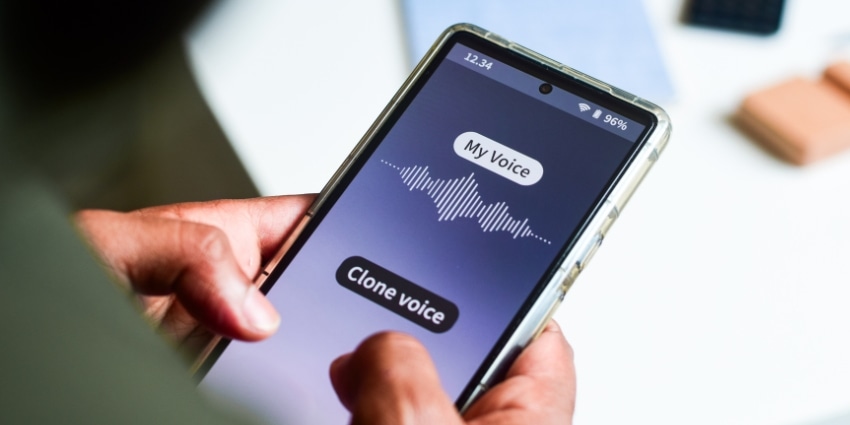
Listen, I had this wild thought the other day while on a conference call. What if the person I was talking to wasn't actually... real? As someone who's spent years covering security related tech news, I've seen my share of digital threats, but voice cloning is hitting different. It's keeping me up at night, and it should probably keep you up too.
Picture this: It's a regular Tuesday afternoon. Your phone rings, and it's your CEO's voice, asking you to urgently wire $50,000 to a "new supplier." The voice is perfect – that slight Boston accent, the way they rush through technical terms, even that weird laugh they do when they're in a hurry. You make the transfer. Except your CEO was actually in a board meeting the whole time, and you just sent fifty grand to a scammer who used AI to clone their voice from their latest earnings call podcast.
Funny, right? Well, not so much if you're the one explaining to the board why the company's money is now funding someone's crypto shopping spree.
The Dark Comedy of Modern Authentication
The absurdity of our current situation would be hilarious if it wasn't so terrifying. We've spent decades perfecting voice biometrics for security, and now we're watching them crumble faster than a cookie in a coffee cup. Contact centers are particularly vulnerable – imagine the chaos when scammers can perfectly impersonate customers to access their accounts.
"Hi, this is Margaret, and I'd like to transfer my life savings to this totally legitimate account in the Cayman Islands." Sure, Margaret. Sure.
But here's where it gets really interesting – and by interesting, I mean dystopian. We're rapidly approaching a reality where every voice call will need to be treated with the same skepticism as that email from a Nigerian prince. The finance team that once trusted a senior executive's voice for wire transfers? They'll need to start asking security questions that would make a CIA interrogator blush.
Trust Falls: The Corporate Edition
Strip away the jokes, and we're facing a fundamental shift in how human trust operates in the workplace. Voice has always been our most intimate form of remote communication – it carries emotion, nuance, and authority in ways that text simply can't match. When we can no longer trust the voices we hear, we're not just looking at financial risks; we're looking at the erosion of basic human interaction in business.
Think about future generations growing up in a world where every voice call begins with a cryptographic handshake to prove human authenticity. Where your children might need to verify their identity to their own grandmother over the phone. Where "Sorry, I need to verify you're really you" becomes as common as "Hello."
Reinventing Business Communication From Scratch
Contact centers will need to completely reinvent their authentication processes. Finance teams will require multi-factor authentication for even the smallest transactions. But more fundamentally, we're looking at a shift in how authority and trust function in organizations. When a voice on the phone can no longer be trusted, every remote interaction becomes suspect.
The irony isn't lost on me that we're using AI to solve problems that AI created. Companies are already developing "anti-spoofing" technologies and "voice watermarking" solutions. But we're in an arms race, and right now, the cloners are winning.