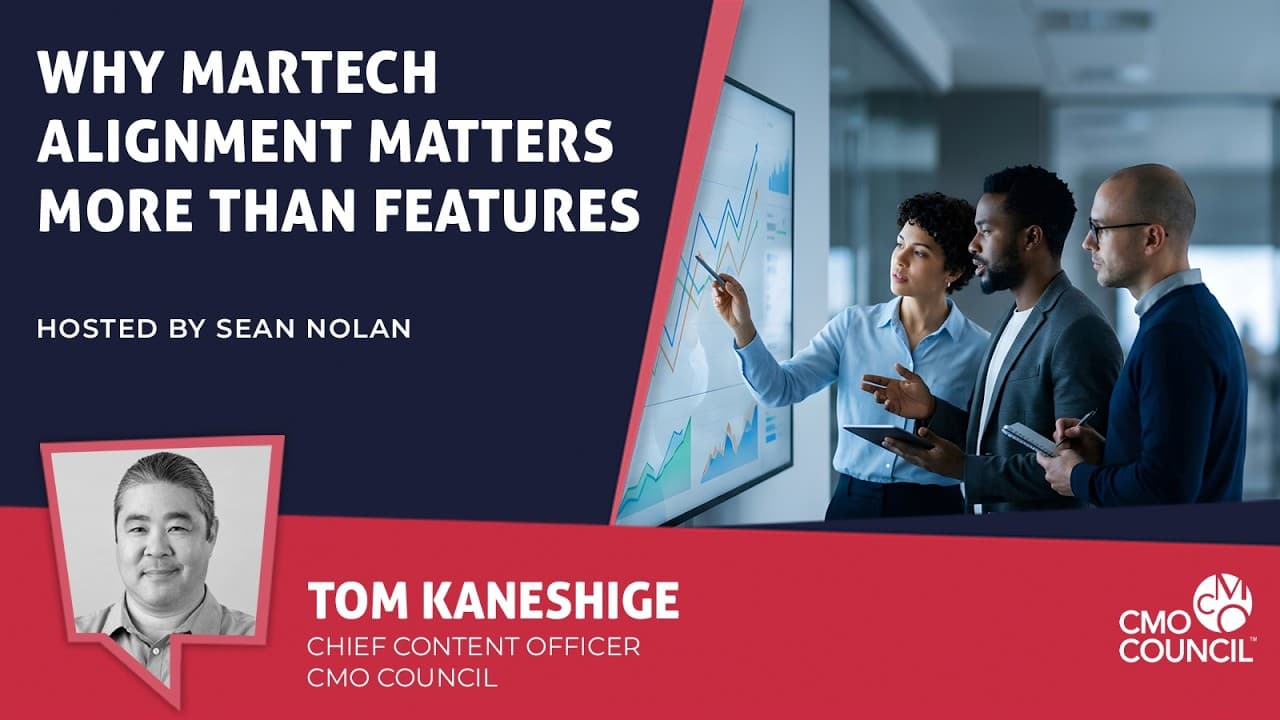
View on YouTube.
Francesca Roche joins Robin Emiliani, Co Founder and Chief Growth Officer at Catalyst Marketing, to discuss the findings of OptiMove’s 2026 Marketing Fatigue Report. The conversation focused on the report’s central claim that marketing fatigue is not driven by volume alone, but by a failure to deliver relevance, context, and timing.
Robin Emiliani agreed with this position and explained that brands often treat audiences as a single group rather than as individuals with different needs and moments of intent. She described inbox overload and repeated cross channel messaging as common symptoms of poor coordination rather than excessive communication.
Robin Emiliani emphasized that the primary risk for brands is becoming irrelevant. She warned that high unsubscribe rates and disengagement signal that audiences have been trained to ignore a brand. According to her, poorly timed messages erode trust, reduce open rates, and waste marketing budgets. She argued that real time orchestration is now a competitive requirement, and that brands which align message, moment, and audience are the ones building lasting relationships and conversions.
On personalization, Robin Emiliani drew a clear distinction between helpful relevance and invasive targeting. She stated that the difference comes down to context and consent. Personalization becomes problematic when it relies on data consumers did not knowingly share or when retargeting continues long after a single interaction. She said the issue is not personalization itself, but surveillance. Customers value useful reminders, price alerts, and relevant updates, but disengage when brands send generic promotions or repeat the same message across channels without regard for engagement signals.
The discussion also explored the role of AI in reducing or amplifying fatigue. Robin Emiliani described AI as a multiplier that improves strong strategies but accelerates weak ones. She noted that AI can enhance targeting, optimize in real time, and trigger timely behavioral messages, but can also scale bad data, poor assumptions, and excessive frequency. She advocated for guardrails such as frequency caps, suppression rules, clean data, and human oversight.
Looking ahead, she predicted that trust will become the primary competitive differentiator. As AI driven personalization becomes widespread, brands that respect boundaries, provide transparency, and honor customer preferences will stand apart from those that simply increase message volume.