

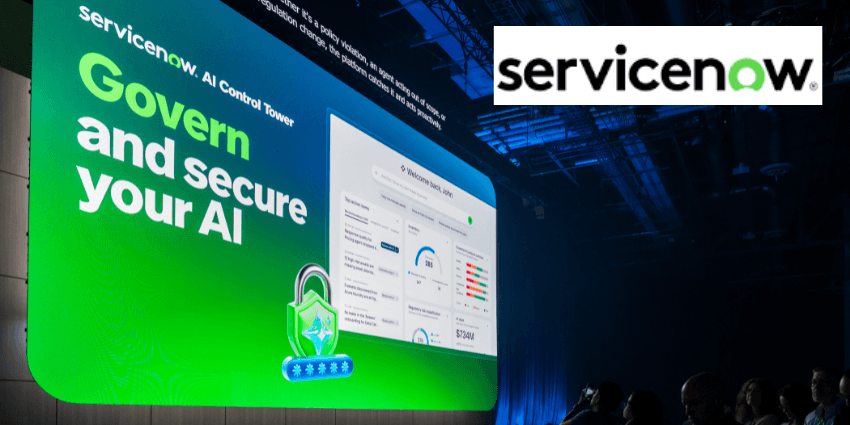
Agentic AI is the buzzword at ServiceNow's Knowledge 26. It signals a shift from AI that answers questions to AI that takes action.
That shift matters most in customer experience, CX teams live and die by trust. They also carry the operational risk when automation makes a wrong call at scale.
In an interview, Heath Ramsey, GVP Product Management, AI Platform at ServiceNow warned:
"...the promise of AI is the value. Promise is the transformation, but the the gap is the governance and the visibility, especially within the CX space. Because it's such an important part to make sure that you get the experience right the first time."
Ramsey’s point is pragmatic. AI can unlock creativity. It can reshape workflows. But CX leaders still have to align that power with the experience they want customers to have.
Why Visibility Becomes a CX Requirement, Not a Nice-to-Have
Governance starts with knowing what is running. Ramsey frames AI Control Tower as a way to inventory generative AI services across an enterprise, then bring that view back into a system teams can manage.
For CX, that matters because AI often enters the business in fragmented ways. Different teams adopt different tools. Vendors deliver different agentic capabilities. Without visibility, CX leaders can’t confidently assess risk or performance.
Asked what visibility and control organisations have over AI Control Tower, Ramsey emphasized:
"we clearly inventory and understand the generative AI state across the enterprise. It's not just control tower. Is not just for ServiceNow. I can automatically discover lots of different things that are happening across Microsoft, across Amazon, all the different services that are available, and bring it back into the platform, so that you have, this visibility overall."
That 'discover and bring it back' idea is central. Ramsey is arguing that enterprises need a single operational view of AI, not a scattered set of pilots.
Audit Trails and Accountability Once Agents Start Acting
As agentic AI moves from supporting humans to executing tasks, the accountability question gets sharper.
If an agent changes a customer record, triggers a fulfillment action, or influences the next-best step in a journey, someone still has to answer for the outcome. Ramsey keeps returning to traceability, and to the importance of connecting AI actions to deterministic workflows and processes.