

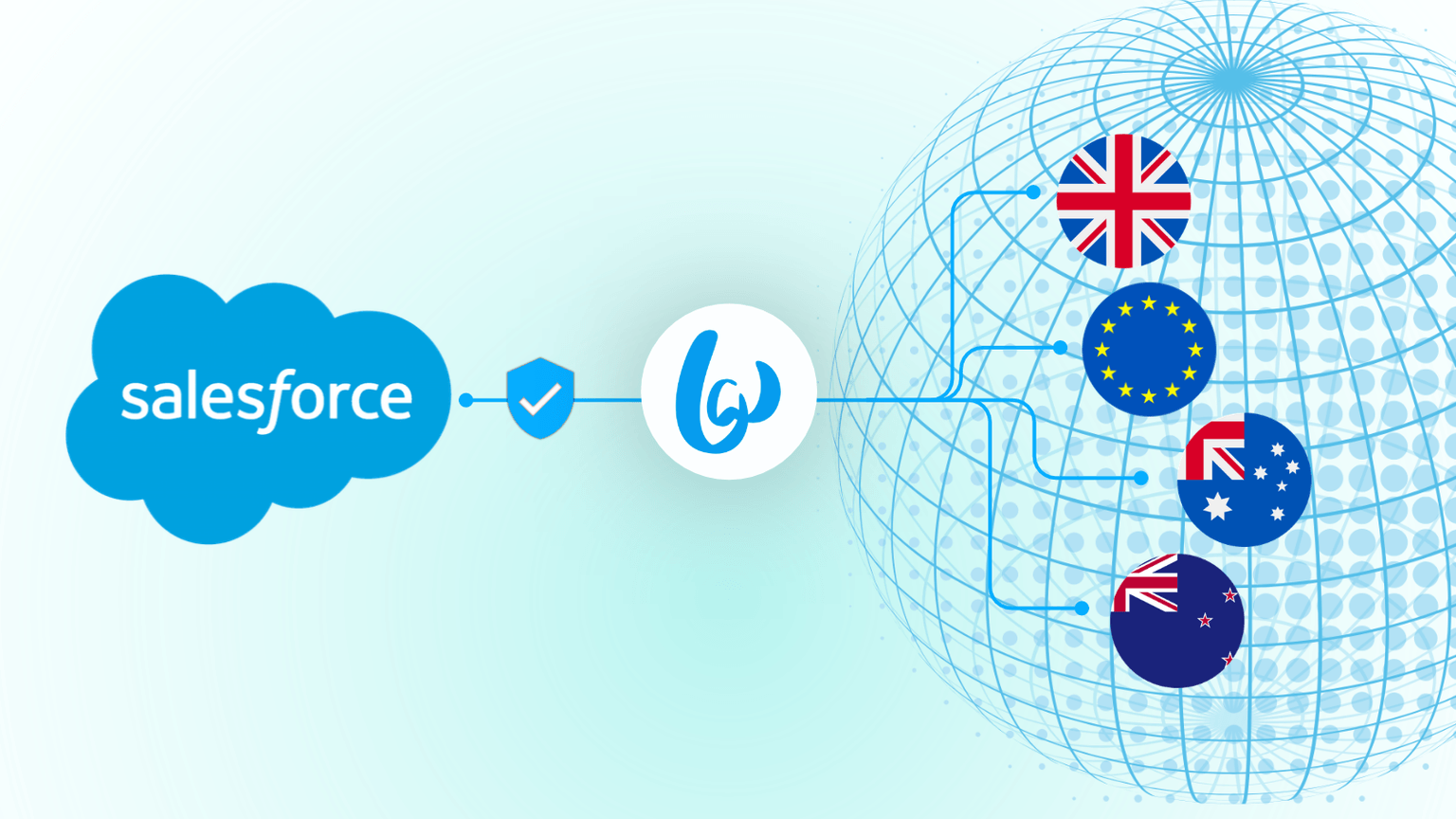
Salesforce’s native contact center became generally available in the UK and Europe last week, with the likes of Australia and New Zealand set to follow.
The CRM giant’s platform combines voice, digital channels, customer data, and AI into a single environment.
For enterprises with established contact center operations across these regions, the availability of Salesforce’s solution represents a new option. However, it also raises a practical question:
How easily can enterprises connect the new platform to telecom?
This process can actually be remarkably straightforward, particularly when working with Salesforce’s certified carrier, Bandwidth. The bigger challenge is coordinating a smooth transition across existing numbers, systems and markets.
What Should Enterprises Plan for Before Adopting Salesforce's Native Contact Center?
Organizations will be weighing a new platform against a web of existing phone numbers, local routing requirements, IVR flows, virtual agents, carrier contracts, and legacy systems that have accumulated over time.
The operational work can be substantial. But a carrier with the right integration, network infrastructure, and local expertise can take much of that complexity off the enterprise's plate.
Unfortunately, many organizations overlook the importance of this, as Pritom Roy, Senior Director of Product Management at Bandwidth, explains:
“Teams plan the platform migration carefully, then treat telephony like a line item. This is despite telephony being a make-or-break infrastructure decision as country-by-country differences emerge.”
That is why enterprises considering Salesforce's native Contact Center need to think about the communications layer at the same time as the application itself. Fortunately, that doesn't necessarily mean rebuilding their underlying telephony infrastructure.
How to Connect Salesforce's Native Contact Center to Your Existing Telephony
In markets beyond Salesforce’s native calling plans, enterprises can connect through a Bring Your Own Carrier (BYOC) model. The term can sound technical, but the premise is relatively straightforward: Salesforce runs the contact center platform, while the carrier provides the local telephony connection, phone numbers, and call delivery.
Bandwidth is Salesforce’s first certified carrier for the global rollout. The company says that its integration allows enterprises to connect Salesforce's native Contact Center to their existing telephony environment without deploying or managing a separate session border controller (SBC).
For enterprises expanding beyond Salesforce’s native calling plans, a certified BYOC connection can provide a more direct route to local telephony. Rather than introducing more hardware or rebuilding existing telecom infrastructure, teams can focus on deciding which numbers, markets, and channels should move first.
Bandwidth's coverage footprint, where Salesforce's native Contact Center is available, gives enterprises a way to extend that approach across the markets they select. Still, a straightforward connection does not mean a global rollout is frictionless.
How do You Roll out Salesforce's Native Contact Center Across Multiple Countries?
The practical challenges vary by country.
Number types differ; some markets require documentation before numbers can be issued; emergency calling rules are not uniform; and local routing, data handling, and operational responsibilities also need to be understood before customers start calling.
An experienced global carrier can help navigate those country-specific requirements, reducing the burden on enterprise teams. That makes carrier planning a key business decision, not simply a telecom task delegated to the end of a project.