the voice of customer experience technology
Front page
NewsService Operations54m · 12:01 BST · 14 min read

PSTN Switch Off 2027: 15 Weeks Left to Find the Analogue Line

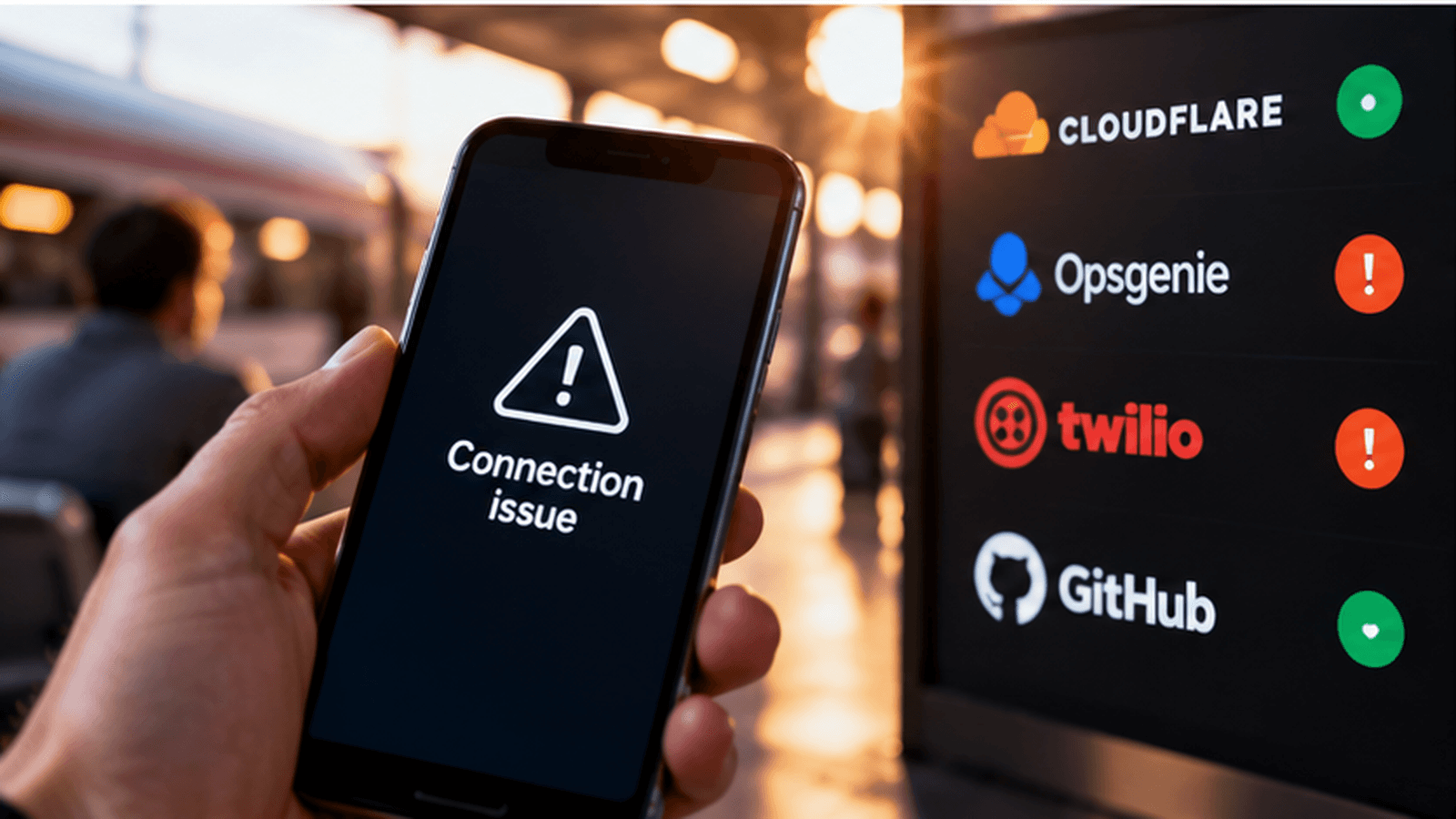
The UK’s PSTN switch-off is just 15 weeks away, but some businesses face earlier supplier deadlines and higher charges already. Contact centers need to track down forgotten call routes and connected devices, then test every replacement before a customer depends on it.

PSTN openreach

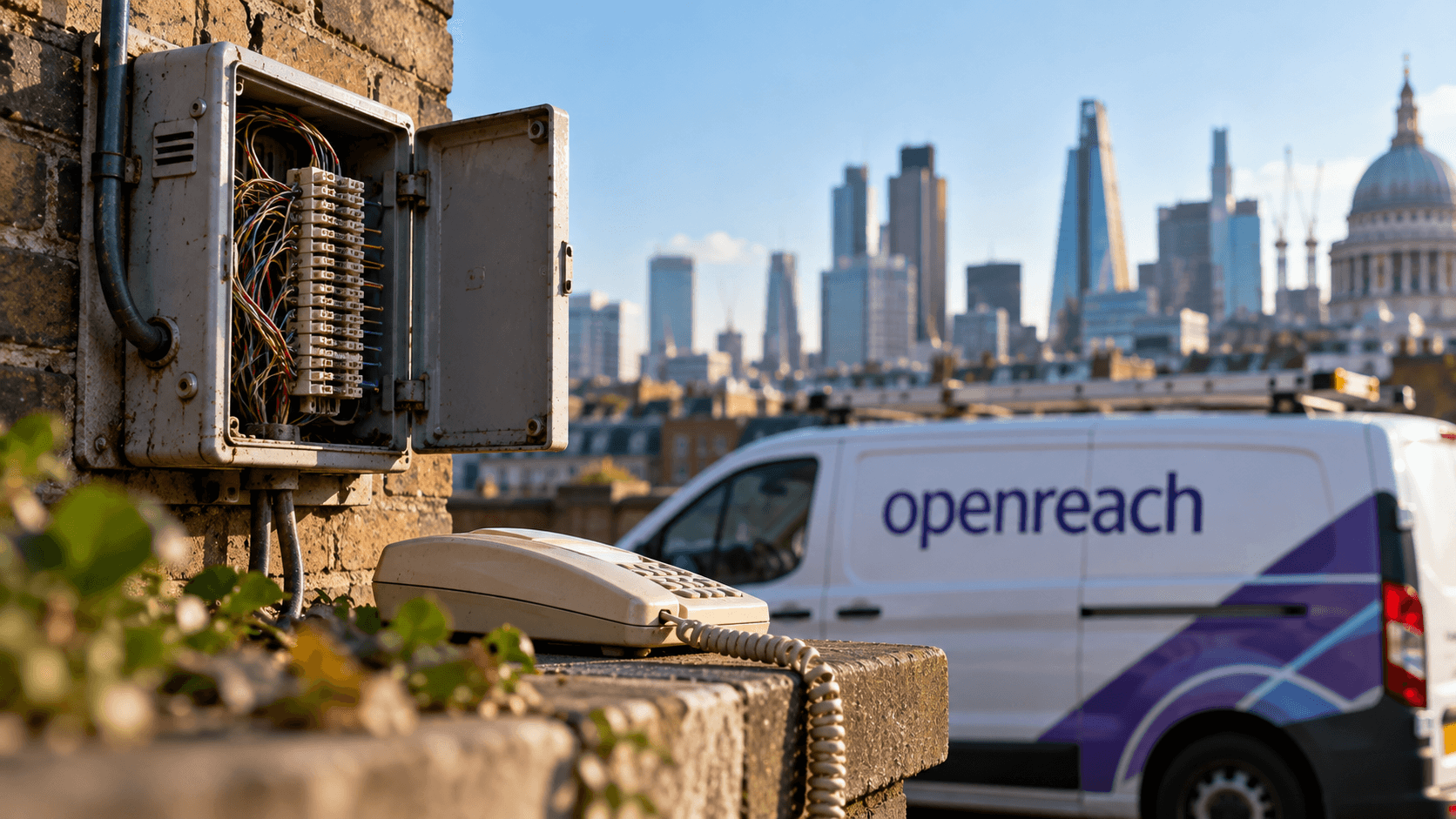
Openreach has found a pretty effective way to get businesses interested in the PSTN switch-off in 2027: make the old lines expensive. On October 1, its final scheduled WLR price increase pushed basic wholesale analog-line rental to roughly twice its 2025 level. That doesn’t mean every customer’s bill doubled, but I suspect a few finance teams will suddenly be asking what they’re still paying for.

They’d better ask quickly. In its September 24 update, Openreach counted around 1.2 million remaining analog lines, including connections serving approximately 350,000 business premises. It says roughly 15 million lines have migrated since 2017, but the final stretch looks tricky. On October 15, it warned that 35,000 customers in Northern Ireland still needed to migrate. Openreach’s James Lilley warned:

“The final migrations are likely to be the most complex and business-critical.”

I’d take that seriously. A contact center might have upgraded its agent platform while leaving an old inbound number or emergency route dependent on legacy infrastructure. Good luck explaining those impressive uptime figures when customers can’t get through.

The risk extends well beyond contact centers. Government guidance published October 8 estimated that roughly three-quarters of grouped-living telecare alarms in a sample of alarm-receiving centers were still analog. A failed connection there deserves considerably more attention than another missed SLA.

We’ve already explored why the network layer is a CX problem. Now there’s an expensive deadline attached. BT Wholesale closes new WLR Bulk Migration orders on October 31. That’s a cutoff for one wholesale service, rather than every business migration, but I’d be asking suppliers for their own dates. More importantly, has anyone actually tested the customer-facing connections they’re replacing?

When Is the UK PSTN Switch-Off Date, and Will It Be Delayed Again?

January 31, 2027 remains the UK PSTN switch-off date, and Openreach hasn’t given businesses much reason to expect another extension. Personally, I wouldn’t enjoy explaining to a contact center director that we’d left an important call route untouched because we thought the deadline might change.

There is some history behind that optimism, though. The original end-of-2025 deadline slipped after serious concerns about telecare and vulnerable customers. Understandable, given what was at stake. But treating that decision as a promise of another extension seems rather optimistic.

Openreach’s Juliette Scott did offer an interesting qualification in June, saying there

“won’t be a big bang on 1st February 2027.”

September’s continuity measures explain why. Some eligible connections may survive temporarily, while others face disconnection. I’d be particularly nervous about forgotten inbound numbers or emergency overflow routes.

VodafoneThree offers another warning. Wholesale partners were told migration orders placed after September 30 couldn’t be guaranteed to finish before legacy services were ceased. Formal withdrawal and cease notices were due to begin in October, subject to contracts and customer safeguards. That’s a wholesale-partner timetable, not Vodafone’s consumer deadline. I’d check which provider actually owns each connection.

The Openreach deadline retires PSTN voice and associated WLR services, although copper broadband such as SOGEA can continue. A working router doesn’t guarantee the voice connection survives.

The government’s voluntary telecoms modernisation charter asks signatories to give direct customers at least 60 days’ notice of relevant changes, but existing PSTN programs count as already announced. I wouldn’t bank on another warning letter. I’d want the actual cease notice, supplier cutoff and named owner.

What Happens If a Business Hasn't Migrated Before 31 January 2027?

February 1 might arrive with some old lines still working. I can imagine businesses taking that as permission to relax. I’d be less comfortable if one handled customer calls.

Openreach’s September plan allows some eligible business and residential lines onto Emergency Voice and Access Continuity (EVAc). Wholesale rental is £35 monthly for WLR3 Basic and £38.60 for WLR Premium, not necessarily what customers pay. Linked ADSL, FTTC and G.fast broadband may also survive where technically possible.

Sounds reassuring until you reach the conditions. EVAc is temporary, capacity is limited, and nobody can reserve a place. Openreach also plans to cease single lines that can’t be transferred in batches. It may also drop calling features businesses depend on. I’d ask providers to confirm exactly which numbers, routes and features survive, rather than treating a dial tone as proof of success.

BT Business offers protective migrations, but ISDN, Featureline, multiline services and certain broadband connections are excluded from its automatic process. Those need separate planning and testing. I’d check the products on the carrier contract before assuming every customer-facing line is covered.

There was an uncomfortable reminder about essential connectivity on October 5, when BT acquired TalkTalk and PlatformX out of administration, involving services used by around 2.5 million customers. Ministers intervened over risks to emergency calls, medical alarms and public services. The CMA submitted its report on October 19, but its findings weren’t publicly available as of October 20. It’s a separate issue from PSTN retirement, though the continuity concern feels familiar.

For contact centers, I’d still test every published support number and overflow route. A temporary line surviving February doesn’t prove the replacement works.

Why Did Openreach Raise WLR Prices in October 2026?

Openreach isn’t being particularly subtle about the WLR price increase in October 2026. It wants businesses off the old network, and apparently making the old option more expensive is part of the persuasion. Fair enough, although I’d prefer contact centers to be spending that money on reliable connections they’ll still be using next year.

WLR Basic cost £10.65 a month wholesale in 2025. After staged increases in April, July and October, its basic wholesale rental is now effectively £21.30. Your provider sets the retail price, though, so that doesn’t mean every business’s October bill doubled.

There’s some encouragement on the other side, too. Openreach has extended wholesale migration discounts through January 31, giving providers a financial incentive to move customers before the PSTN switch-off in 2027. Whether those savings reach businesses is another question I’d be putting to the supplier.

Openreach has offered more help on the migration side, too, including free or discounted SOGEA connections for providers and free connections when they move legacy voice-only lines. These are wholesale offers, so I’d still check the business quote, but they do give providers ways to get customers off older services without simply adding another charge.

I actually think the increased charges could do contact centers a favor. Telecom bills have a habit of accumulating mysterious line rentals, especially across multiple sites. Finance might see an easy saving. I’d want IT to establish whether that supposedly redundant circuit still supports a customer service number or backup voice connection before anyone cancels it.

Paying twice as much for an obsolete line is irritating. Losing an important call route because procurement thought it was unnecessary would be considerably worse.

What Business Systems Still Depend on PSTN Analog Lines?

I wouldn’t be surprised if a few contact centers discover their supposedly modern voice setup still has an ancient ISDN trunk doing something important behind the scenes. Perhaps it’s feeding an old PBX, handling overflow calls, or supporting a number nobody thought to include in the last migration.

That’s the trouble with the PSTN business impact. The connections most likely to cause embarrassment aren’t necessarily the ones anyone remembers installing.

Older payment terminal PSTN setups are another concern. Some card machines and EPOS systems still dial out over analog lines. Picture an agent successfully resolving a customer’s order problem, only for the payment to fail because the business forgot to upgrade the terminal. I’d imagine the customer would have a few opinions about that.

I’d also get the payment provider involved in the line audit. IT might own the connection, while the retailer or finance team owns the terminal. A successful network cutover isn’t much use if nobody’s tested a live authorization, a refund and the fallback connection.

Then there are lift emergency phones, alarm signaling, door entry and building-management systems. Openreach has specifically warned businesses to investigate these dependencies before the UK analog phone switch-off. Its September 17 update also identified CCTV backhaul, cash handling and ATM monitoring, lone-worker call points and industrial telemetry. They’re easy to miss in a standard phone inventory.

I’d want to hear the IVR behaving properly, the transfers reaching the right agents, and the fallback route taking calls when the main connection is unavailable. Otherwise, what exactly has the migration achieved?

What Can Telecare Teach Contact Centers About Reliability?

I’d send you to look at Telecare if you still think a completed telecom migration ticket means the service is working. Alarm-receiving centers handle calls people may desperately need answered, and there’s very little room for assumptions about connectivity.

Openreach says more than 70,000 customers have completed its Prove Telecare process, which checks alarms after migration. Encouraging, although Ofcom’s September 14 intervention found potential weaknesses in BT’s protections. As they put it, providers “must identify, protect, and support vulnerable customers.”

BT agreed to improvements, with remaining changes due by November; Ofcom made no formal finding of non-compliance.


October 8 brought some useful figures from the Department of Health and Social Care. Its guidance estimates that around half a million people use grouped-living telecare. Drawing on research with a sample of alarm-receiving centers, it also estimates that about three-quarters of grouped-living alarms remain analog. Separately, it records more than 2,600 major PSTN network incidents during 2024–25, each affecting at least 500 customers.

The same October guidance explains why these changes can be tricky: one analog master alarm can cover as many as 40 flats and may share equipment with fire detection, lifts and door entry. Grouped-living alarms also usually rely on business, rather than residential, phone lines, something an ordinary asset list can easily miss. Replacing the telecare device without accounting for those connections can leave another essential service exposed. That’s a useful lesson for any service team dealing with shared infrastructure.

What Should ITSM Teams Borrow From the October Telecare Guidance?

What interested me more was the government’s commissioning advice. It recommends ITIL-based service management, 24/7 fault reporting and backup connectivity. Its suggested minimum is 99.9% annual availability, covering the supplier’s platform and required connectivity, with service-affecting faults fixed within four hours. Crucially, the clock stops when the provider accepts the fix, not when a supplier closes its ticket. They’re non-statutory telecare procurement recommendations, but I’d welcome similarly clear terms in a contact-center voice contract.

The October 8 guidance has another requirement I’d like to steal for contact center contracts: suppliers should flag faults proactively, say exactly which services are affected, and give regular updates without making the customer chase a carrier or mobile operator. For significant telecare faults, hourly updates are expected. The alarm-receiving center gets clearer accountability than plenty of enterprise voice buyers do.

There’s proof migration can improve the service, too. The Guinness Partnership’s broadband-based system, with cellular backup, reduced alarm connection times from minutes to seconds. More than 5,700 residents across 216 schemes were consulted.

I’d borrow that thinking for contact centers. Can customers get through during a power cut? Does the backup actually work? And who owns the fault when it doesn’t?

How Should Businesses Audit Analog Lines Before the PSTN Switch-Off?

I’d start an analog line audit with the telecom bills. Someone may have paid for an old overflow number for years without knowing what it still does.

Clarion Housing shows how complicated it all gets. It surveyed around 200 LiveSmart schemes involving different manufacturers, fire panels and door entry systems. More than 120 schemes serving over 5,000 residents had been upgraded by October. That’s rather more coordination than a quick phone-line swap.

The BT Wholesale cutoffs deserve an entry in the change calendar, too. New WLR Legacy Survey orders have already closed, and new WLR Bulk Migration orders stop on October 31. These apply to specific wholesale services, not every business migration. I’d ask each supplier which order deadlines, engineer dates, and cease notices apply to our connections.

I’d want seven answers:

  1. Which legacy numbers, circuits and WLR charges are we still paying for?

  2. What does each connection actually support, including inbound calls and IVR overflow?

  3. Are old PBXs, ISDN trunks or analog dial-out devices still involved?

  4. Which failures could interrupt payments, emergency calls, or vulnerable customers?

  5. Have we tested number ports, IVR menus, transfers, out-of-hours routing and failover using real calls?

  6. Does backup connectivity work when broadband or local power fails?

  7. Who owns the engineering appointment, ITSM change record, rollback plan and service owner’s final acceptance?

Power backup deserves a proper test, too. A new October 8 Uswitch/Opinium survey of 2,000 adults found that 42% of respondents who had experienced a broadband outage blamed a power cut; 32% of digital-landline respondents apparently didn’t know power cuts could interrupt the phone. It’s consumer research, not a contact-center failure rate, but I’d certainly pull the plug on a test router before signing off an emergency route.

Is the UK PSTN Switch-Off Part of a Wider Legacy Network Shutdown?

Unfortunately, the UK analog phone switch-off is only one retirement contact centers need to worry about. Replacing one aging backup network with another doesn’t sound like much of an upgrade.

Ireland offers a warning. Eir began phasing out 3G on October 1, with ComReg flagging older payment terminals and monitored care alarms. Eir’s schedule puts Dublin, Meath and Louth in the October 21 phase and southern counties on October 28. Those are planned dates, not confirmation that every device has migrated. Imagine upgrading your voice infrastructure, then discovering an emergency cellular dialler still depends on a disappearing network.

UK providers can have different retirement timetables too. An October 14 report on Trooli’s planned FTTC withdrawal in a Kent village prompted Openreach to clarify that its own local services weren’t being ceased. I’d check each notice against the provider and circuit rather than assuming every “copper switch-off” means January 31.

There’s another UK deadline approaching. Mobile operators expect to retire 2G between 2029 and 2033. EE plans to start its nationwide shutdown in May 2029, followed by Virgin Media O2 in summer 2029 and VodafoneThree in spring 2030. Local trials could happen sooner. I wouldn’t approve a cellular backup without written confirmation that it’ll remain supported for years.

On October 8, Openreach named 112 exchanges covering 619,724 premises for its full-fiber priority program. That’s a separate copper-product stop-sell process, with at least a year’s notice, not an October disconnection or a change to the PSTN deadline.

I’d put these dates in the service-management calendar alongside renewals and continuity checks. January’s PSTN deadline is the immediate headache, but nobody wants replacement equipment with another retirement date hanging over it.

The Countdown Isn't the Story Anymore

I suspect a few contact centers will get through January 31 feeling rather pleased with themselves. New voice platform installed, migration tickets closed, uptime looking respectable. Then a customer tries an old support number that nobody remembered to move.

That’s the scenario I’d be worrying about as the PSTN switch-off 2027 approaches. Openreach has made hanging onto legacy lines expensive, and regulators have given businesses plenty of reasons to check what they’re replacing. There’s not much room left for claiming nobody saw this coming.

For me, the real measure of success is whether customers can still get through when they need help. I’d want someone to have tested the awkward stuff too, especially the overflow routes and out-of-hours numbers that might go untouched for weeks before anyone discovers they’re dead.

We’ll keep tracking the next network retirements, from copper to 2G and 3G, and the legacy devices that still connect customers to businesses. January’s PSTN deadline is the first major test. It won’t be the last time a service team has to prove that everything depending on an old network made the move.

Come February, I’d rather hear customers complaining about how long they spent on hold than wondering why their contact center’s number has stopped working altogether.

FAQs

Will card machines stop working after the PSTN switch-off 2027?

Some older terminals can. A payment terminal PSTN connection that still dials over an analogue line needs replacing or migrating before January 31, 2027. The same warning applies to older EPOS equipment. If you’re unsure what connection a terminal uses, test it now rather than waiting for a failed transaction to answer the question.

Do digital landlines work during a power cut?

Usually only while the equipment supplying the service has power. Digital voice depends on local equipment such as a router or hub, so critical services need backup. Ofcom requires providers to offer at least one hour of emergency-call resilience for eligible customers who rely on their landline and don’t have a workable mobile alternative.

What is Openreach EVAc?

Emergency Voice and Access Continuity is Openreach’s temporary fallback for some lines that remain after the Openreach migration deadline. Eligible business and residential lines can be moved onto EVAc, with linked broadband preserved where technically possible. Capacity is finite, businesses can’t reserve it, and Openreach intends it as a short-term measure.

Can businesses keep their existing numbers after the UK analogue phone switch off?

In many cases, yes. Businesses moving to a digital voice or VoIP service can usually port existing numbers, provided the migration is arranged before the old service is ceased. I’d want the losing carrier, gaining provider and contact center owner to agree exactly when each customer service number changes hand

rate this story
helps rank stories across CX Today
The discussion0 takes · attributed & checked

Does this reflect your experience?

opening the room…
Read nextordered by techtelligence · every pick explained
same beat · Service Operations

One Queue? The ITSM and Customer Service Convergence Nobody Can Ignore

17 Oct 2026
matches this topicThe Reliability Stories CX Leaders Can’t Afford to Miss10 Oct 2026same beat · Service OperationsAI Agent Observability Just Changed Again, What Next?14 Oct 2026