In essence, a customer journey map is really quite a simple concept: an illustration that details all of the touchpoints at your organisation that a customer comes into contact with as he/she attempt to achieve a goal, and the emotions they experience during that journey.
But the process of building the map is not so simple.
The mapping process demands rigorous research and a meticulous understanding of the customer. If the map is to be truly reflective of what the customer experiences at a human level, corners cannot be cut.
To complicate matters, no two maps will be exactly the same, with the design varying according to the business, product, service and customer being mapped out.
Having said that, there are best practices that organisations should adhere to during the mapping process, and these represent useful pointers for those that are creating a map for the first time.
So with that in mind, let’s take a look at some sample customer journey maps and examine what we can learn from them and apply to our own mapping efforts.
1. Make sure you have done your research
The data that will be used to inform that map should not be based on guesswork.
Organisations should firstly identify their best customers (or the customers that they would like to attract), and make sure they thoroughly understand them, building a buyer persona for these customers, and any other customer group that is important to the business.
To aid this process, it is best practice to interview these customer groups about their journeys to ensure that you understand their motivations, goals, purchasing habits and pain points.
Businesses shouldn’t make the mistake of assuming they know what customers want.
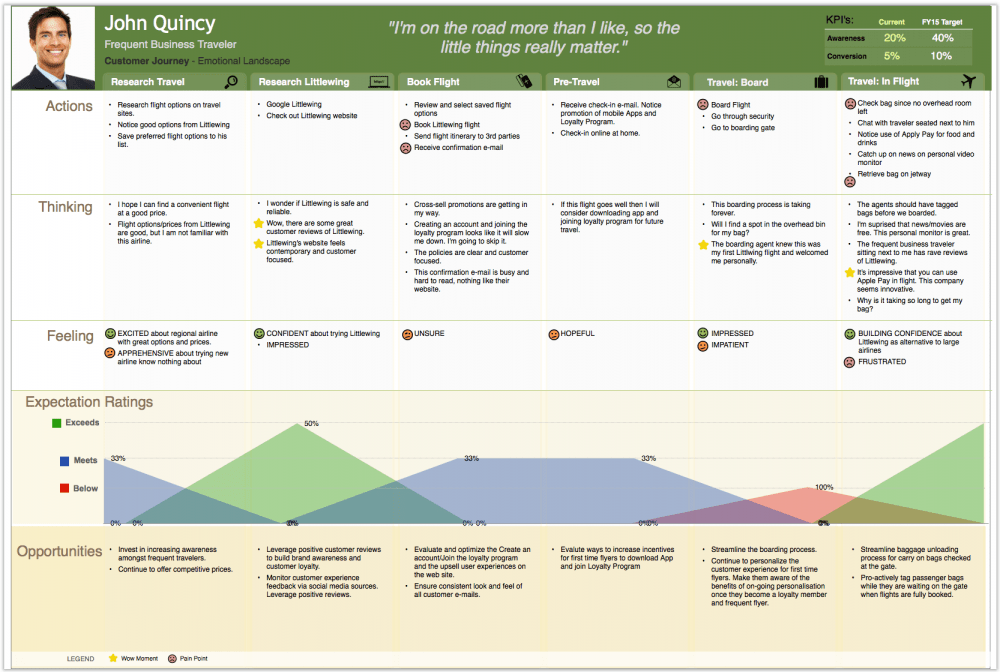
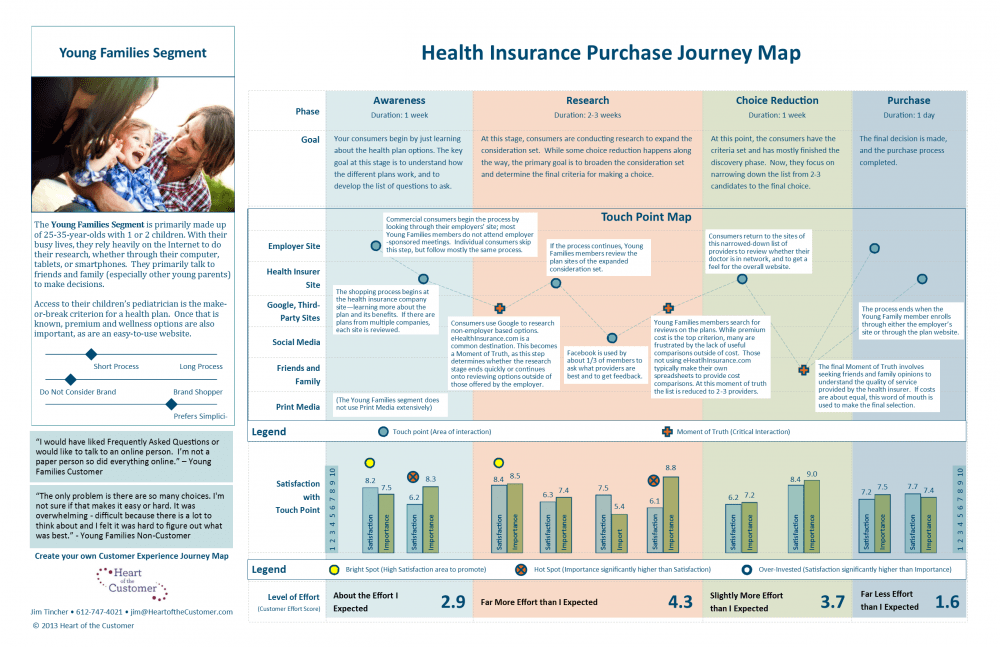
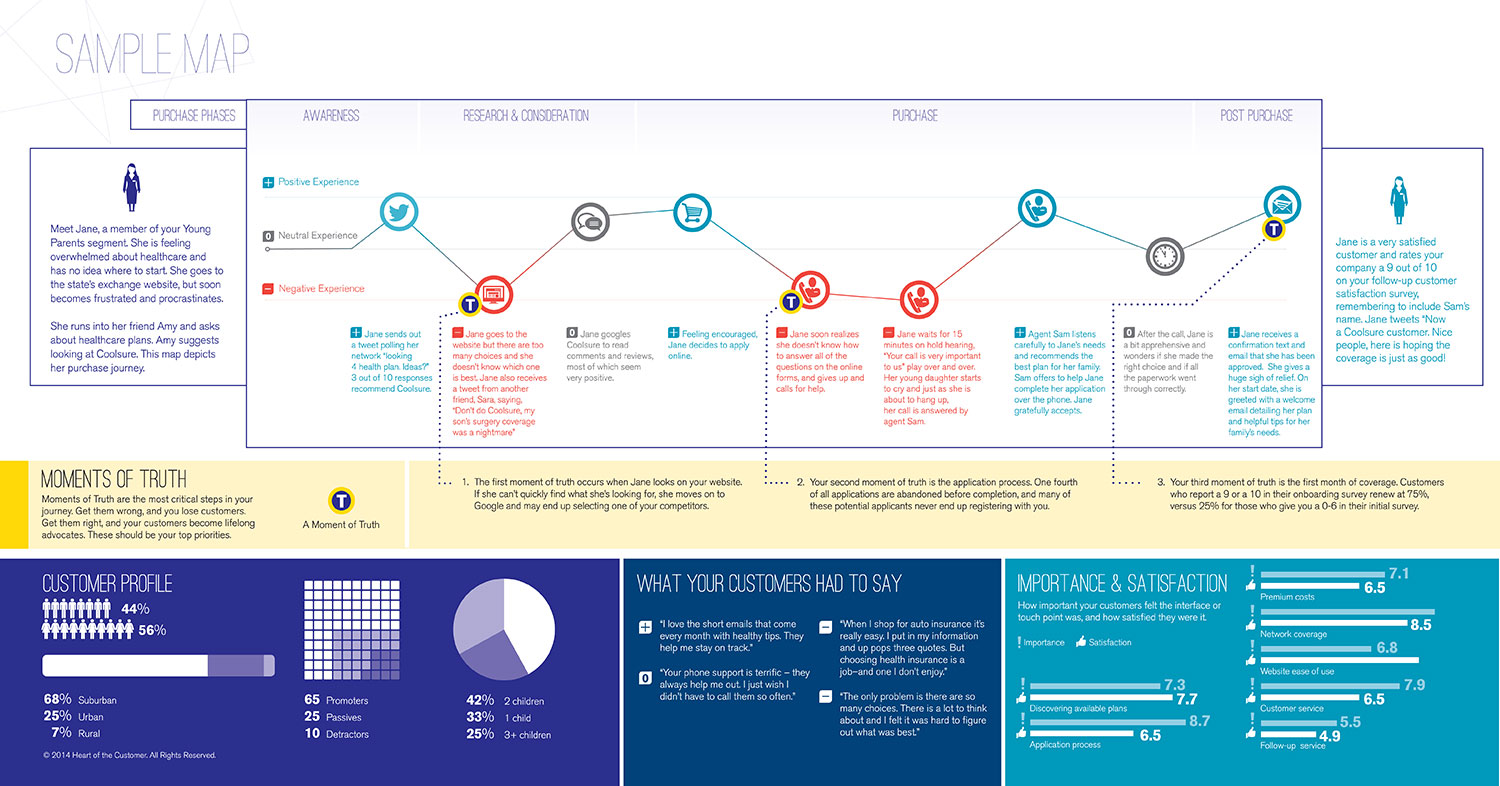
This map from Heart of the Customer demonstrates how the buyer persona informs the entire map, ultimately concluding how successfully this particular demographic’s journey has been.
The research process should also cover your own organisation. It is important that you know how successfully each of your channels is proving, so you should also interview your frontline staff and teams that work on the touchpoints, to identify any issues or pain points that should be factored into the map.
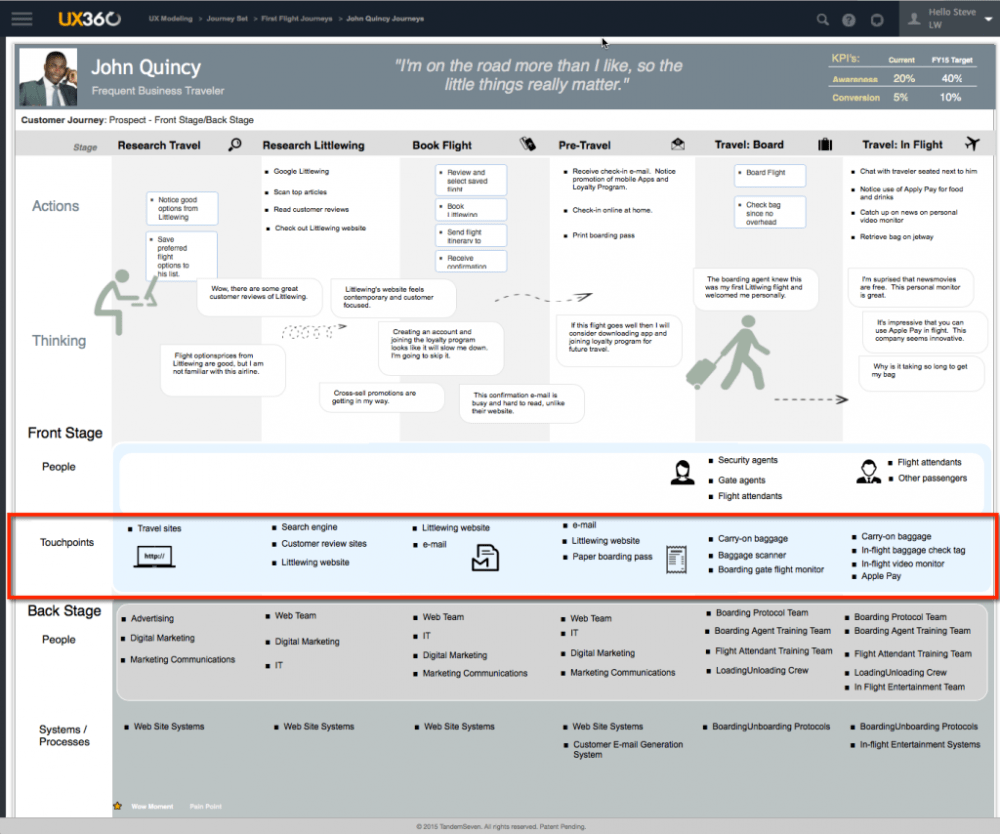
UX/digital design agency Adaptive Path begins the mapping process by first building a touchpoint inventory, based on qualitative and quantitative research. This ensures that when it comes to detailing how the customer moves through interaction and what he/she experiences, it is an accurate representation.
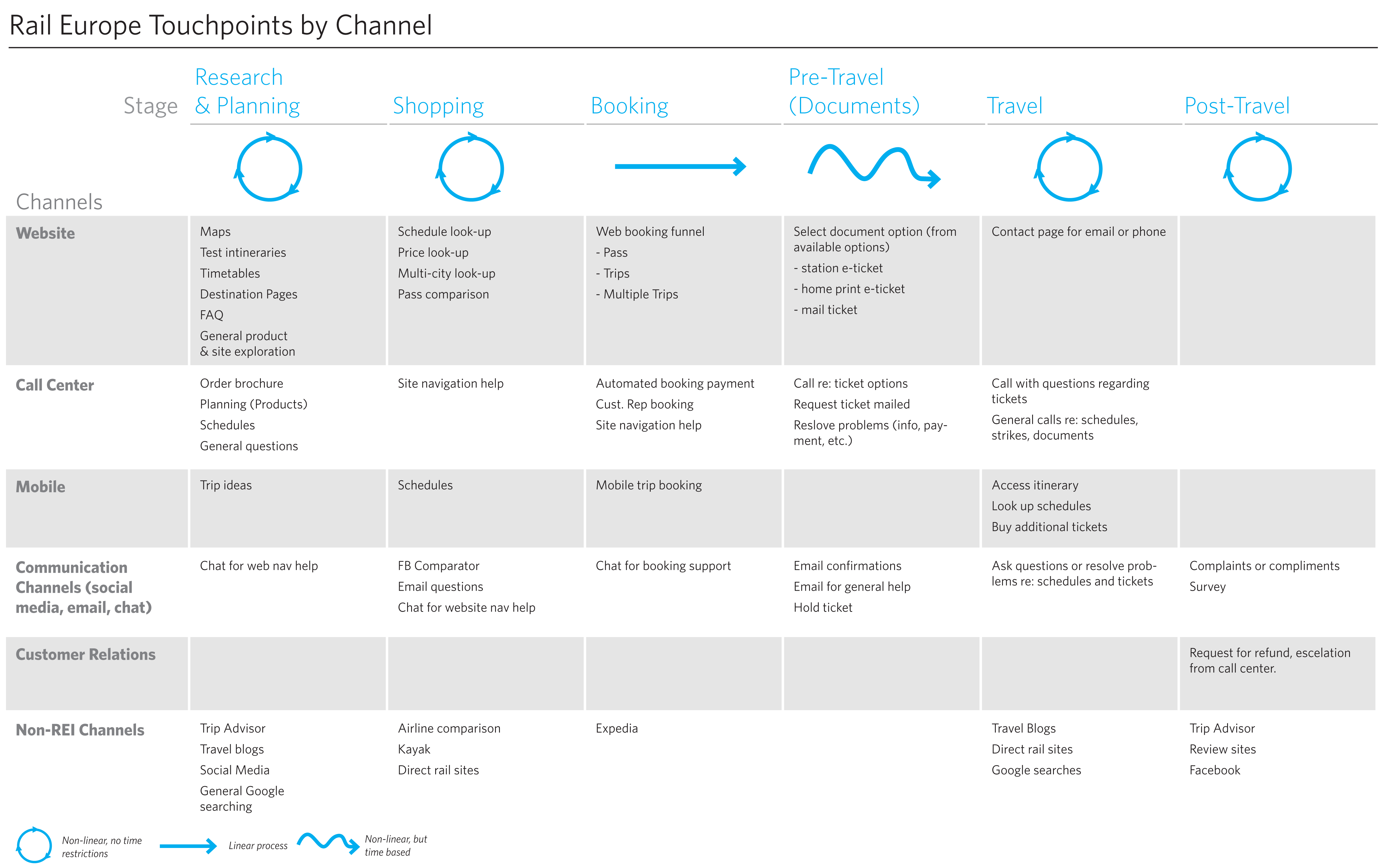
With a comprehensive foundation of data, organisations are ensuring that they are best placed to deliver an accurate visual representation of each customer’s journey, and to identify the potential problems that can be experienced on the path to purchase.
2. Define behavioural stages from the customer’s perspective
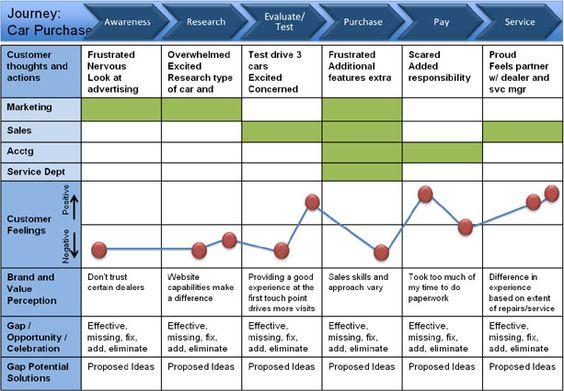
Having done your research, you should have a pretty clear idea of the processes that each of your personas go through on their path to purchase and beyond. When it comes to building a map, it is important that it is organised by stages that reflect the major goals your customer is trying to achieve, rather than organising it by stages that reflect your own internal processes. Think about what your customer is trying to achieve at every step, and use the data you have from your customer interviews to inform this.
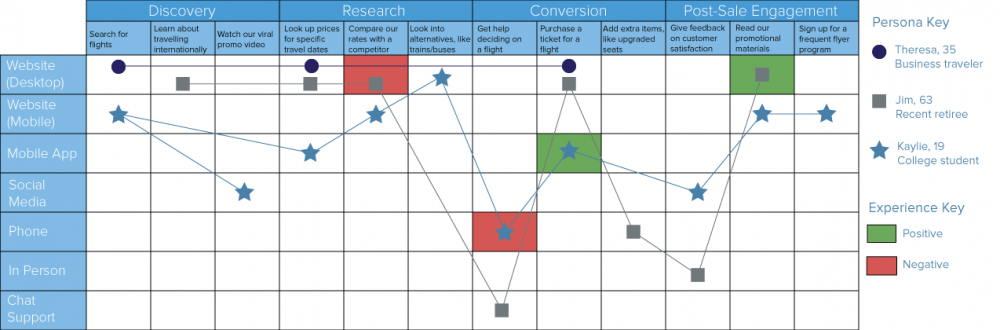
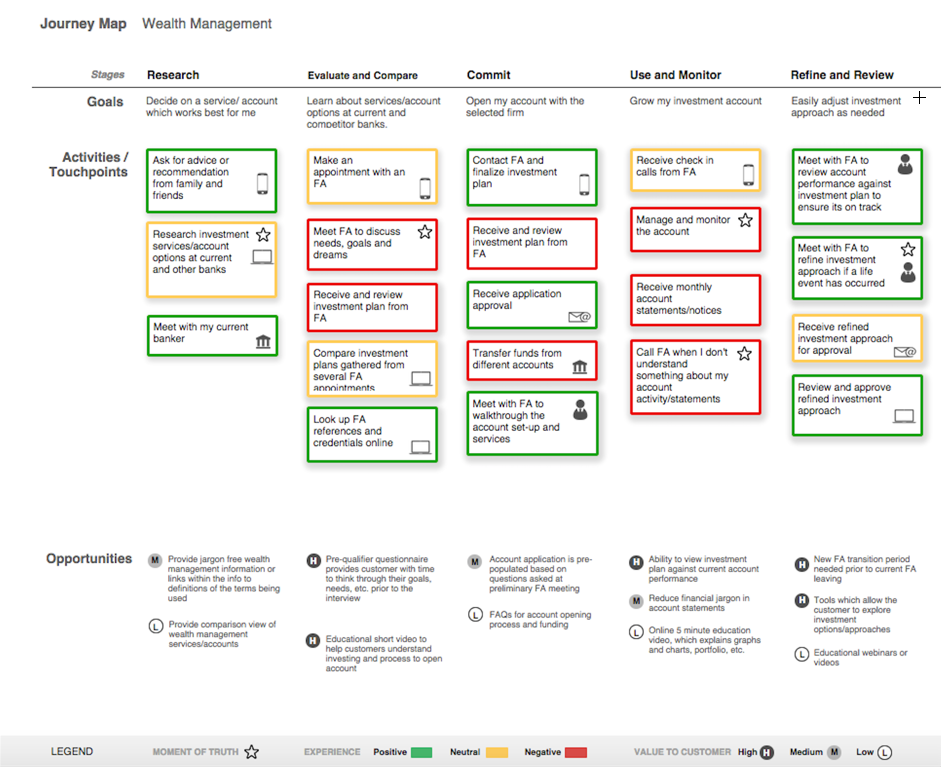
This journey map from Rightpoint clearly details the goals.
3. Capture your customer’s considerations
As well as capturing the major goals, which characterise the stages of the map, the journey map should also try to detail more specific goals and considerations that the customer might have along the way.