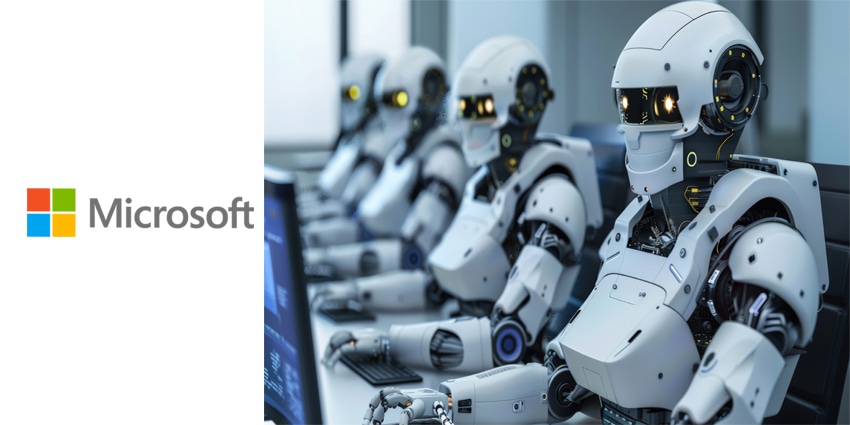
Microsoft has revealed that the company has implemented "thousands" of external and internal AI agents.
The news was confirmed in a post on LinkedIn by Microsoft’s Corporate VP of Business and Industry Copilot, Charles Lamanna.
Lamanna claimed that the vendor is "making big strides with Copilot and agents," which is allowing Microsoft to help companies reshape business operations, enhance employee workflows, and gain better access to AI development.
In expounding on how the agents are delivering, the Microsoft man explained that the Copilot landing page includes an AI agent to assist with product inquiries.
Moreover, on Azure.com, the tech firm has developed an AI agent that enhances customer support and product discovery, leading to a 70 percent boost in page visits per session and a 21.5 percent rise in conversions.
Similar agents are live on Microsoft Fabric and Power Platform landing pages.
Lamanna also highlighted how the tech was being utilized within his own department:
On my team, we use agents to assist with product development, business planning and HR needs.
"I also have an agent that I use before every customer meeting to get ready and catch up on past conversations."
In total, over 160,000 organizations have used Copilot Studio, creating more than 400,000 custom agents last quarter alone.
Amongst these organizations, Lamanna namechecked the likes of Dow, Holland America Line, and Pets at Home.
The Microsoft-Salesforce War of Words Continues
Interestingly, Lamanna chose to post these remarks less than two days after Salesforce’s latest earnings call, where CEO Marc Benioff once again took shots at Microsoft.
During the call, Benioff was asked a question relating to recent remarks made by Microsoft CEO Satya Nadella, where he had suggested that AI agents could make traditional business applications obsolete.
Speaking on a podcast at the end of last year, Nadella argued that SaaS applications – which are a crucial part of Salesforce’s offering – are essentially CRUD databases with business logic, which AI agents may eventually handle independently.