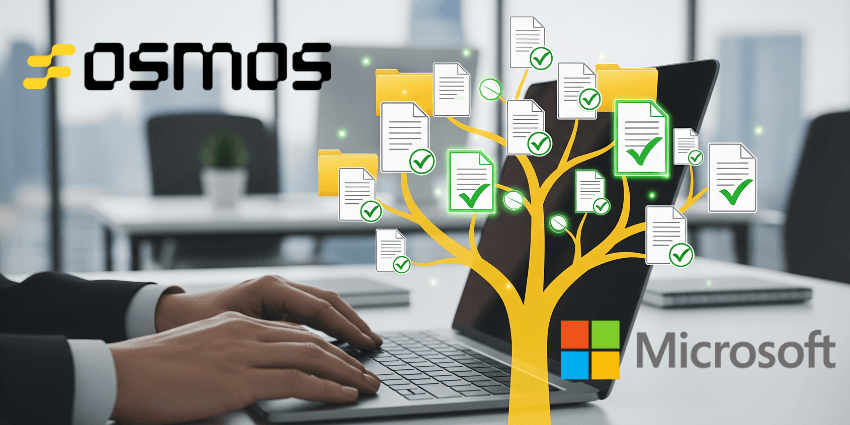
Microsoft has announced its decision to acquire Seattle-based startup Osmos.
Osmos utilizes autonomous AI to transform raw data into analytics-ready and AI-ready assets as part of its broader data unification strategy.
Microsoft revealed that it would be integrating Osmos into its unified data and analytics platform, Microsoft Fabric.
By embedding autonomous capabilities directly into Microsoft Fabric, customer enterprises can reduce time spent on data engineering to focus on proactive strategies.
This acquisition is rooted in Microsoft’s strategy to improve data engineering automation inside Microsoft Fabric.
As data engineering plays a large role in providing data analytics, this requires a significant amount of time to produce this, meaning analysts tend to spend more time preparing data rather than using it.
As service expectations grow, so does the volume of data, being sourced from various systems, devices, and external feeds.
When manual pipelines aren’t able to scale as expected, errors in complexity rises. This becomes an issue when enterprises are relying on this data to keep up with competitive pressure, by acquiring Osmos into Fabric, Microsoft will be able to stay relevant in the data preparation space.
As a unified analytics platform, Fabric can use the engineering platform to enhance its capabilities in data productivity, speeding up implementation so organizations can begin using analytics to improve services.
With the help of Osmos, Microsoft will utilize its agentic AI to work alongside users, shifting routine tasks toward automation.
Automatic clean data will allow analysts to work effectively with fewer constraints, by reducing chances of errors and inconsistencies, these teams are unlikely to receive incorrect data conclusions.
This acquisition will also allow Microsoft to automate slow data action, by reducing manual labor for engineering and data teams, enterprise customers can receive more value from their data without involving additional manual data.
As a step toward its long-term goal of data and analytics unification, Osmos’s technology will become a key part of this strategy.
By also bringing along its engineering team, Microsoft will be able to speed up productivity in data experiences and further advance its strategy.
Attracting Enterprise Customers
Integrating Osmos’s engineering tools into Microsoft Fabric will allow customer enterprises to automate various tasks such as file cleaning, mapping schemas, and preparing data for analysis. This removes routine data preparation so teams can focus on presenting analytic-heavy insights to CX leaders.
This acquisition will also benefit customers of both Osmos and Microsoft as it removes tool switching friction by introducing all automation features inside the platform.