

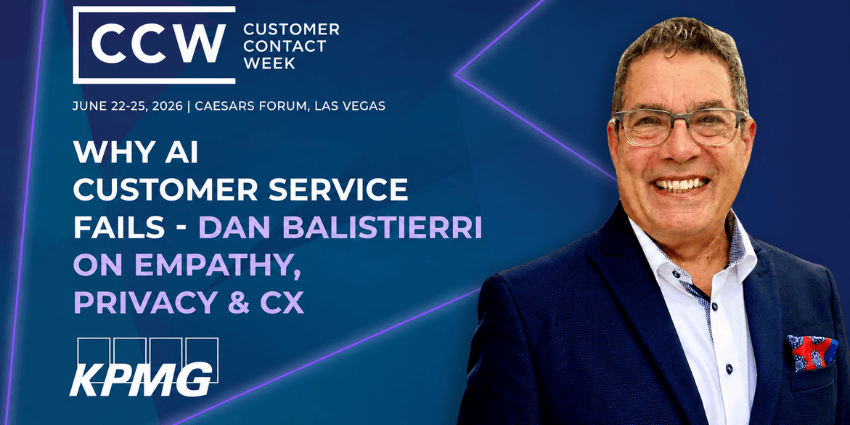
AI is giving enterprises extraordinary power to personalise customer experiences. But according to Dan Balisteri, Director of Service Transformation at KPMG, that power comes with serious risks most organisations aren't managing well enough.
The Line Between Helpful and Intrusive
Personalisation, done right, adds genuine value. Balisteri's concern is what happens when enterprises cross into over-personalisation - and more critically, what's driving it.
"The biggest problem is how much private data is being captured without people's knowledge or consent,"
The analogy is sharp: over-personalisation feels like being followed around a grocery store. Uncomfortable. Excessive. And often built on data used far beyond its original purpose.
His advice to CX leaders is straightforward - honour opt-in permissions strictly, and only use customer data for the specific purpose it was granted. When organisations begin repurposing consented data for unintended use cases, trust breaks down fast.
The Empathy Deficit Nobody Has Solved Yet
The rise of agentic AI has changed how customer service systems look and feel. But Balisteri is direct about where they fall short - reading genuine human emotion.
"If my wallet's been stolen, my driver's licence has been stolen, and the police have called me because I supposedly committed a crime - machines have yet to capture that kind of emotion."
The result is what he calls an empathy deficit - a gap between what AI can process and what distressed customers actually need.
He believes the industry is two to three years away from machines truly capturing caller emotion. Until then, the deficit remains a real vulnerability in any AI-led service model.