
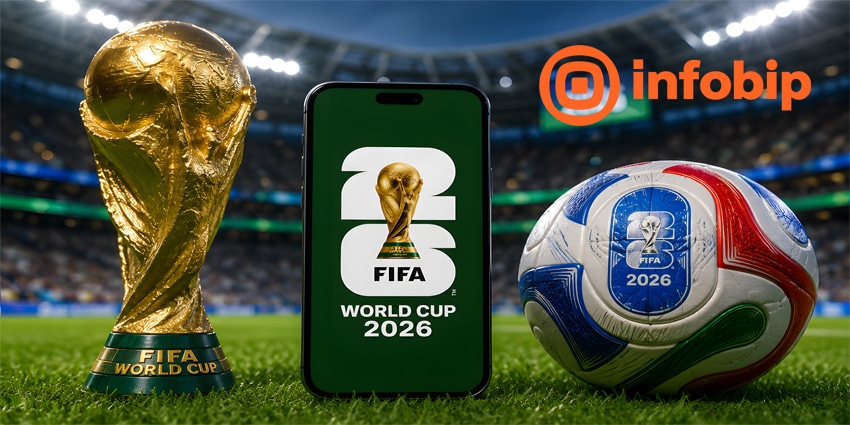
This month, all eyes are on the football World Cup and its many intriguing storylines.
Will FIFA’s 48-team gamble pay off? At 39, can Lionel Messi still play at an elite level? Is the newly implemented hydration break just a money grab? And how will the US perform at home?
Beyond the sporting storylines, there’s also a technology story worth watching. This is the first World Cup where AI will be used to enhance the fan experience, and there’s a lesson here for IT and CX professionals across all industries.
This week, Infobip announced its new PitchMate AI “fan companion,” which brings agentic, omnichannel AI that can turn passive audiences into engaged participants.
PitchMate, launched as the tournament got underway, is a personalized AI companion built for global football fans. Delivered via mainstream messaging channels such as WhatsApp and RCS, it brings fixtures, stats, and interactive experiences into the same threads fans use to chat with friends and family.
I know many hardcore football fans hate the integration of technology into the sport, believing all eyes should be on the pitch. But this is the reality we live in, and sticking one’s head in the sand is the wrong approach.
The question for CX and IT leaders is simple: if an AI can keep a distracted global audience engaged throughout an entire tournament, what could similar agents do for your most critical customer journeys?
Inside Infobip’s AI Fan Playbook
PitchMate follows Infobip’s earlier rollout of RaceMate, an AI companion for the TGR Haas F1 Team, ahead of this year’s motorsport season.
RaceMate runs on WhatsApp and Apple Messages for Business and is designed to make fans feel part of the team rather than spectators. It delivers real-time race data, team radio highlights, trivia, and native multilingual support, all delivered through natural conversations.
The engagement metrics from F1 are notable. Since launch, RaceMate has reached fans in more than 60 countries, generated tens of thousands of messages, and achieved a healthy return-user rate, with top fans returning dozens of times and exchanging hundreds of messages. This fosters an ongoing, conversational relationship between the Haas team and its fans.
PitchMate applies the same pattern to football but leans into tournament dynamics. Fans choose their favorite team and receive a fully tailored experience, including personalized schedules and fixtures, match statistics via a “Match Central” hub, quizzes and gamified features in “Fan Arena,” and flexible match reminders across time zones in the “Back Office” component.
Cross-session memory and optional match-day alerts turn the World Cup from a series of isolated matches into a continuous journey from kickoff to the final whistle.
From Fan Engagement to Customer Engagement
The World Cup context makes the story headline-friendly, but the underlying design problem is universal. In football or F1, the journey spans a season or a tournament. In enterprise CX, it might be:
- A multi-step onboarding for a new customer
- A renewal cycle for a subscription or managed service
- A complex buying journey involving multiple stakeholders
In each case, the challenge is the same: keep someone engaged across a series of moments that matter, in real time, across channels, without forcing them into a new app or portal.
Infobip treats engagement as an agentic problem, not a channel problem. Rather than rolling out yet another static app or FAQ bot, the company uses its AgentOS platform as a single orchestration layer to power autonomous, goal-driven AI agents.
AgentOS combines generative AI, conversational data intelligence, and omnichannel messaging, enabling brands to build agents once, connect them to live data sources, and deploy them wherever customers spend their time.
With RaceMate and PitchMate, WhatsApp, RCS, and Apple Messages for Business become the front door to rich, personalized experiences.
Fans don’t need to download a new app or remember a portal. Engagement happens in everyday messaging threads, while the AI manages context, personalization, and orchestration behind the scenes.
For CX and IT leaders, the “no new app” principle is crucial. If your customers must change their behavior to get value, you’ve already lost a significant share of your audience.
The future of CX is about bringing the experience to the customer, not asking the customer to come to the experience.