
British e-commerce businesses are facing a pressing challenge: a shortage of warehouse operatives and the associated cost inefficiencies. Brands selling online are therefore looking at the best ways to improve productivity, future-proof themselves against staff shortages, and preserve the customer experience in order to maintain a healthy sales pipeline.
For large retailers running their own warehouses, and for 3PLs (third-party logistics partners) fulfilling orders on behalf of smaller retailers, automation and robotics have been the go-to solution for many years.
By implementing cutting-edge technology, companies can enhance productivity, reduce stress on warehouse teams, and create a more satisfying work environment, therefore attracting and retaining talent and optimising operations for postal and e-commerce fulfilment.
An example of this is the use of automated sorting and over-labelling technology in parcel distribution centres, which are particularly effective at combatting labour shortages during peak times.
The technology allows companies to scale up to the required capacity without a scramble to hire seasonal staff – something that has become increasingly difficult in recent years.
Why e-commerce delivery CX matters
Here’s a bit more background to explain the context. The UK has one of the most mature e-commerce markets in the world. High demands from customers – who tend to want their parcels yesterday – are heightening the need for greater efficiencies in fulfilment centres and warehouses.
In 2020, the warehouse automation market size in the UK amounted to over US$1.3 billion, according to Statista. In that same year, the UK was the leading spender in warehouse automation.
In 2020, the warehouse automation market size in the UK amounted to over US$1.3 billion.
While the Covid-driven boom in e-commerce orders has flattened out, retailers and their logistics partners continue to invest in automation and robotics for supply chain efficiency and to overcome the issue of labour shortages post-Brexit.
This technology can significantly increase the speed of operations and enhance both customer experience and customer satisfaction, as big players such as Amazon and Ocado have demonstrated in recent years with their advanced picking and packing solutions.
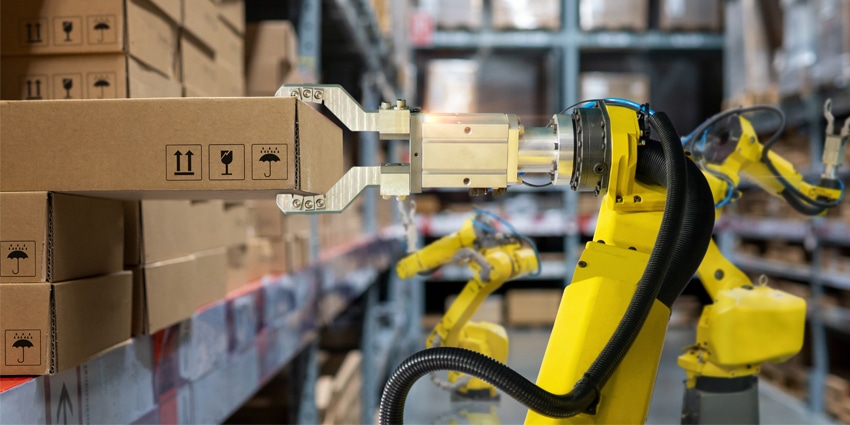
Conveyor belt improvements mean belts and chutes can accurately sort multiple items every second. Articulated robotic arms can pack goods into boxes and apply labels with speed and precision. These innovations are already helping companies manage costs, deal with hiring shortfalls, and improve safety and service levels.
Scalability is another advantage. Businesses can use robots to increase warehouse capacity and manage larger volumes, making it easier for businesses to flex their operations in line with real-time demand.
All of these innovations benefit the customers. Improvements in efficiency and accuracy mean customers will be receiving their orders more quickly and with fewer errors, which could play a big part in improving companies' CSAT scores.