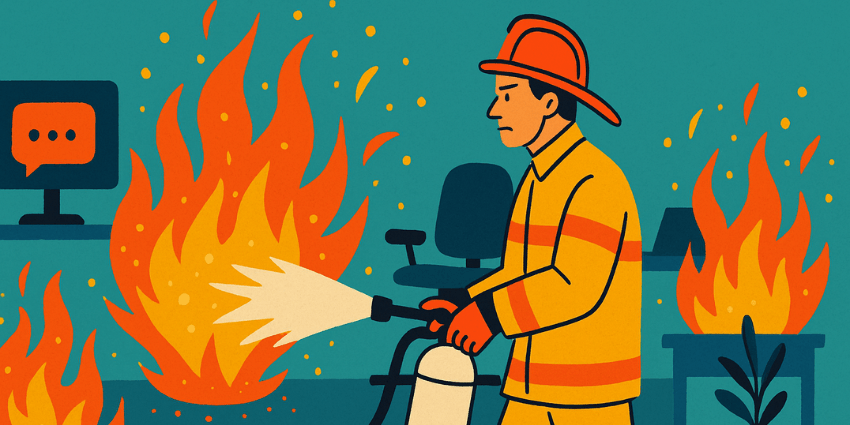
With customer expectations sky-high, standing still is no longer an option. Brands that are still “firefighting” quietly pay a much bigger cost than they realise. Predictive customer experience (CX) isn’t a bonus anymore - it’s the backbone of customer retention and profit.
Why Staying Still Hurts Customer Retention
When companies stick to reactive customer experience strategies, the cost of customer churn begins to mount. Research finds that 32% of consumers will cut ties with brands after just one bad customer service experience, so maintaining a high retention rate demands more than just firefighting when problems surface. Reactive support doesn’t just lose customers; it inflates costs with longer calls, repeat issues, and compensation efforts.
By contrast, a proactive model intercepts issues before escalation, reducing the amount of support required and increasing the efficiency with which issues are resolved. In fact, organizations that adopt a proactive support strategy see ticket volumes drop by 20–30% over 12 months, and 25% lower support operating costs.
The Cost of Reactive Customer Service
When your business' customer service strategy remains reactive, the hidden costs include:
Rising churn: Customers who feel unsupported or undervalued will quietly drift away.
Lost lifetime value: Retention is cheaper than acquisition; every percentage drop-in retention rate is revenue left on the table.
Higher support costs: Fixing problems after they’ve occurred is often more expensive than prevention.
Reputation damage: Negative experiences spread; poor service becomes part of your brand story.
Innovation stagnation: A reactive model focuses on “putting out fires” rather than designing better journeys.
What Can Predictive CX do for my Business?
A proactive approach to CX means anticipating needs, spotting friction points ahead of time, and intervening early.
Anwesha Ray, CX Today:
“Stay one step ahead of your customers’ needs … rather than waiting for them to contact you.”
That kind of mindset shift matters for three inter-linked metrics: customer satisfaction, customer retention, and customer retention rate.
- By anticipating and preventing friction, you keep customers happier (higher satisfaction).
- Happier customers are more likely to stay (higher retention).
- Maintaining a higher retention rate reduces the churn cost and boosts lifetime value.
When companies move from reactive to proactive service, they see fewer support escalations, lower costs, and stronger brand reputation. Organizations prioritizing proactive strategies achieve up to a 13% higher return on investment from their contact center.
How Does AI Predict Churn and Customer Needs?
Artificial intelligence has become the backbone of modern predictive customer experience. More than 50% of contact centers are already using GenAI to auto-generate customer replies, and 45.5% of businesses are investing more in GenAI for customer service than any other CX function.
Furthermore, by analysing patterns in customer behaviour, sentiment, and interaction history, AI enables brands to anticipate issues before they arise. Predictive CX analytics can identify when a user is likely to churn, when a product might fail, or when satisfaction levels begin to drop - allowing businesses to intervene early with tailored solutions.
These capabilities not only boost customer satisfaction but also improve customer retention by transforming reactive support into pre-emptive engagement. AI-driven insights give organisations the foresight to act with precision rather than urgency, helping them deliver value faster while reducing the cost of customer support.
How Can I Implement Predictive CX?
Implementing predictive customer experience doesn’t mean starting over - it’s about improving your strategy and mindset. Here’s how to make the change, step by step.
- Map the customer journey: Identify the key touchpoints where customers are most at risk of frustration. Create a “living” map, not just a static diagram.
- Leverage customer data: Use feedback, behaviour analytics and support ticket trends to spot warning signals. That gives you the early warning system you need.
- Empower your teams: Equip frontline employees with the tools, metrics and authority to act before escalation. Proactive culture matters.
- Embed proactive outreach: Automated reminders, maintenance alerts, and tailor-made suggestions are effective ways to strengthen retention.
- Track the right metrics: Beyond support volume or resolution time, monitor rising or falling retention rate, churn cost, customer satisfaction trends. These provide the business case for change.
Act Now or Pay Later
If you’re evaluating whether to adopt predictive customer experience, it’s important to keep one hard truth in mind - the cost of inaction isn’t often visible until damage is done. Ignoring the shift from reactive to proactive may preserve the status quo today, but it risks higher costs, lower customer satisfaction, and weaker retention tomorrow. Thankfully, AI can help you predict customer issues before a ticket is ever raised.
Ready to stop firefighting and start future-proofing your CX?
FAQs
What is predictive customer experience (predictive CX)?
Predictive CX uses AI and customer data signals to anticipate needs or issues before they happen, so brands can take proactive action that improves outcomes.
What is customer churn prediction?
Customer churn prediction uses data and AI models to identify customers likely to leave.
How does predictive CX reduce customer churn?
It identifies early warning signs of dissatisfaction (like repeated friction, drops in engagement, or negative sentiment) and triggers timely interventions that prevent customers from leaving.
What data do you need to run predictive CX analytics?
You typically need unified customer data across touchpoints—service interactions, purchase/usage history, digital behavior, and feedback signals like CSAT/NPS and sentiment.
What are the best predictive CX use cases in customer service?
High-impact use cases include churn prediction, next-best-action recommendations, proactive outage/service alerts, predictive routing, and preventing repeat contacts.
How accurate are AI churn predictions?
Accuracy varies by data quality and model maturity, but churn models can be highly effective when trained on clean, unified data and continuously monitored and retrained.
How accurate are churn prediction models?
Advanced models can achieve high accuracy by analyzing behaviour patterns and engagement data.
What data helps predict churn?
Customer usage patterns, support interactions, purchase history, and sentiment analysis are common indicators.
How can companies reduce churn using AI?
AI identifies at-risk customers so businesses can intervene with targeted offers, support, or engagement.
Why is churn prediction valuable for CX teams?
It allows organizations to proactively retain customers rather than reacting after they leave.