

It’s not too far-fetched to suggest that no one really enjoys calling a customer service department.
That isn’t to say that they don’t value the work of the agent, it’s more to do with the rigmarole that comes with navigating multiple IVRs and waiting for an unspecified amount of time before they can even speak to an agent.
This is where machine customers come in.
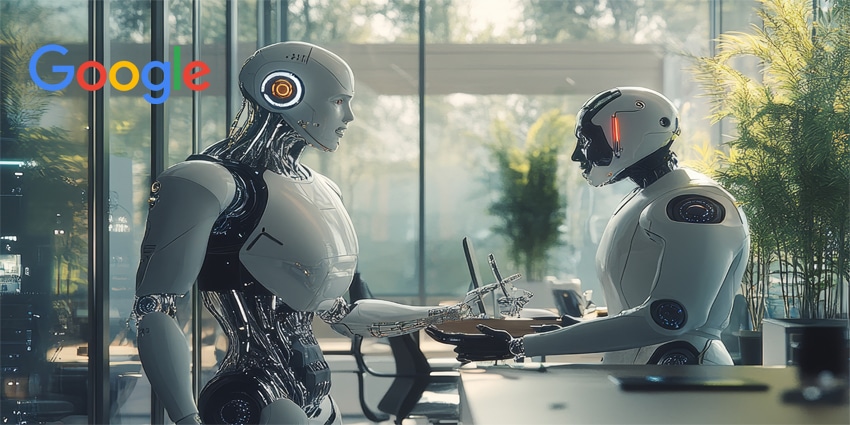
Machine customers are AI-powered digital assistants that carry out service tasks on behalf of human users, such as calling customer service channels.
While this tech has been around for quite some time, recent advancements in AI have significantly enhanced its suitability for the customer service and experience sector.
Although exact figures are not publicly available, the adoption of machine customers certainly appears to be on the rise, with Google’s ‘Ask for Me’ feature being the latest high-profile exponent of the tech.
Announced last month, the feature allows users of Google’s search engine to have an AI agent make inquiries on their behalf by calling businesses.
Currently available through Search Lab, the tool is still in its experimental phase and is limited to mechanics and nail salons, but the company is considering expanding the feature to more industries and potentially making it a permanent part of the search experience.
Interestingly, Google followed up the announcement of ‘Ask for Me’ with plans to launch a chatbot that answers calls on the user’s behalf, marking an important step on the journey towards machine-to-machine customer service.
The chatbot will automatically answer calls, process requests, and respond on the user's behalf, handling most aspects of the call independently and only involving the user for important decisions.
But what does all of this mean for the future of customer service?
Transformational or Uninspiring? Analysts Share their Thoughts
Machine-to-machine customer service was recently discussed on an edition of the Big CX News Show.
During the chat, Derek Top, Senior Analyst at Opus Research, described the announcement as “interesting but nothing new.”
Top pointed to Google Duplex, which launched back in 2022, and had already introduced the idea of an AI assistant making calls for users.
The Opus man sees the recent releases as an “incremental step” in Google’s ongoing research and development strategy, rather than the start of a machine-to-machine revolution.
“There's lots of challenges when it comes to authentication and identification,” he explained.
What if your assistant makes the wrong decision or orders something that you didn't want? What are the ramifications around that?
“So, there's a bunch of challenges that come with this idea of a personal assistant.”