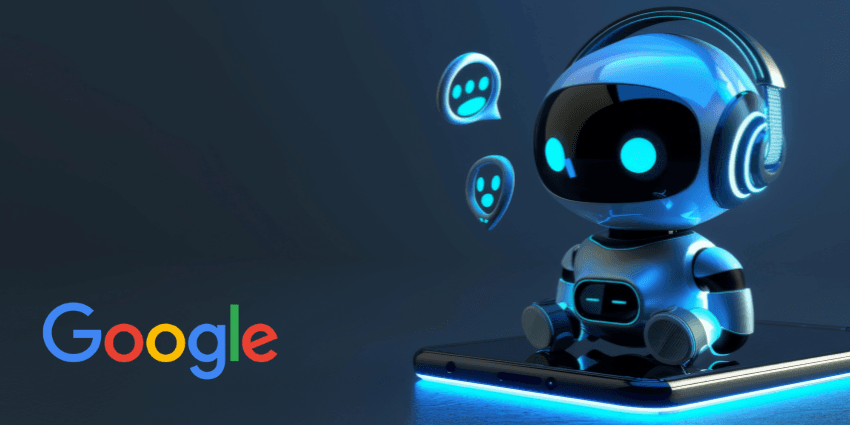
Google is creating a personalized AI-powered chatbot that sits natively on its suite of devices, which includes its smartphones, laptops, and tablets.
There, the chatbot will automatically answer calls, understand requests, and respond on the user's behalf.
In doing so, the chatbot will autonomously decide how to handle aspects of the call, only involving the user when they must make important decisions.
Alternatively, it won't interfere with a call. Its course of action will be dictated by the user’s preferences.
The news stems from the tech giant's latest patent filing, which highlights how the chatbot may also feature on wearable computer devices - such as smartwatches - and even car systems.
The Use Case Is Clear: On-Device AI to Make People’s Lives Easier
Ultimately, the chatbot will aim to automate routine calls, answering quick and easy questions.
That includes responding to outbound communications from companies.
For more complex conversations where the user may need to make a more nuanced decision, the chatbot can disseminate the information and offer the user a choice.
As an example here, consider a call from a business regarding a damaged parcel. In this scenario, the bot may send the user a choice of ‘re-order’ or ‘refund,’ keeping them in control.
Additionally, preferences can be set so the chatbot doesn't interfere with calls from particular people or businesses.
Google Taps Into the Trend of Edge AI With On-Device AI
Tapping into the trend of edge AI, the patented bot is small enough to fit on-device, with computer chips sufficiently powerful to handle processing.
Google said it uses an on-device machine learning model engine that can include automatic speech recognition (ASR), a natural language understanding (NLU) engine, a fulfillment engine, and a text-to-speech engine.
This will inevitably improve the effectiveness of the AI chatbot by reducing lag, ensuring more privacy, and managing access to personal data.