Vyopta, the Collaboration Intelligence Company, has shared results of a study on the real-life consequences of remote and hybrid work, which revealed nearly a quarter of businesses have fired employees working from home on the spot over audio or video call errors.
When asked what percentage of your staff do you fully trust to be able to correctly navigate the remote technology needed to make remote work successful, the average response in the study by Wakefield Research among executives was just 66%. That means that executives do not fully trust a full third of their staff to effectively perform when working remotely.
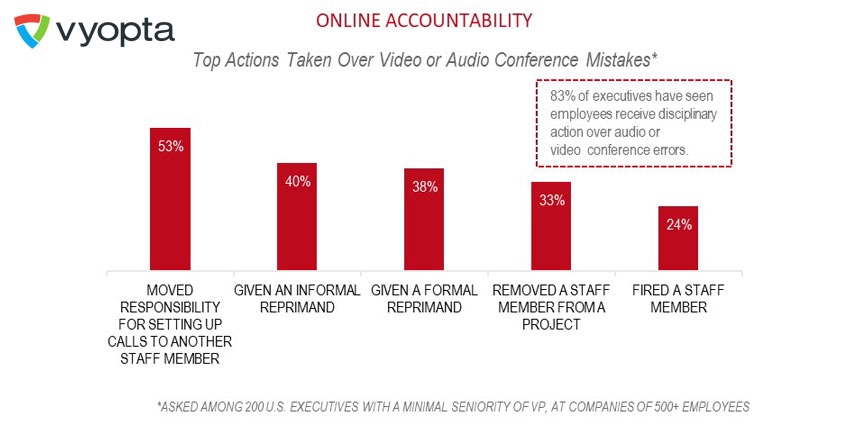
In addition, nearly a quarter of those surveyed reported they have seen an employee fired because of video or audio conference mistakes. It seems that business leaders expect employees to figure it out — or pay the price.
83% have seen an employee receive some disciplinary action. Top actions executives have seen enacted over a call or video conference error include moving the responsibility of managing/facilitating meetings or calls to another staff member (53%); Giving an informal (40%) or formal (38%) reprimand; and Removing a staff member from a project (33%).
Nearly three in five business leaders (58%) responded that it is the company’s responsibility to ensure remote collaboration technology is working smoothly. But the other 42% say the burden is on employees to keep collaboration technology up and running.
It might seem harsh to punish someone over a videoconference mix-up, but executives know that when these things don’t go smoothly, they pay a price. Nearly a third (32%) have lost a client or business opportunity because of technology or connection issues. Another 41% have missed a project deadline.
A massive 97% of executives said they are currently offering or are planning to offer hybrid work options; this new mode of work is not going anywhere. Nearly three out of four executives (72%) plan to maintain or expand the number of employees allowed to work a hybrid schedule in the next 12 months—including 29% who say that number is expected to grow.