Ahead of CCW Nashville, CX Today explored what to expect from the event, including the growing focus on AI, CX and human oversight. Were those predictions right? Read on to find out.
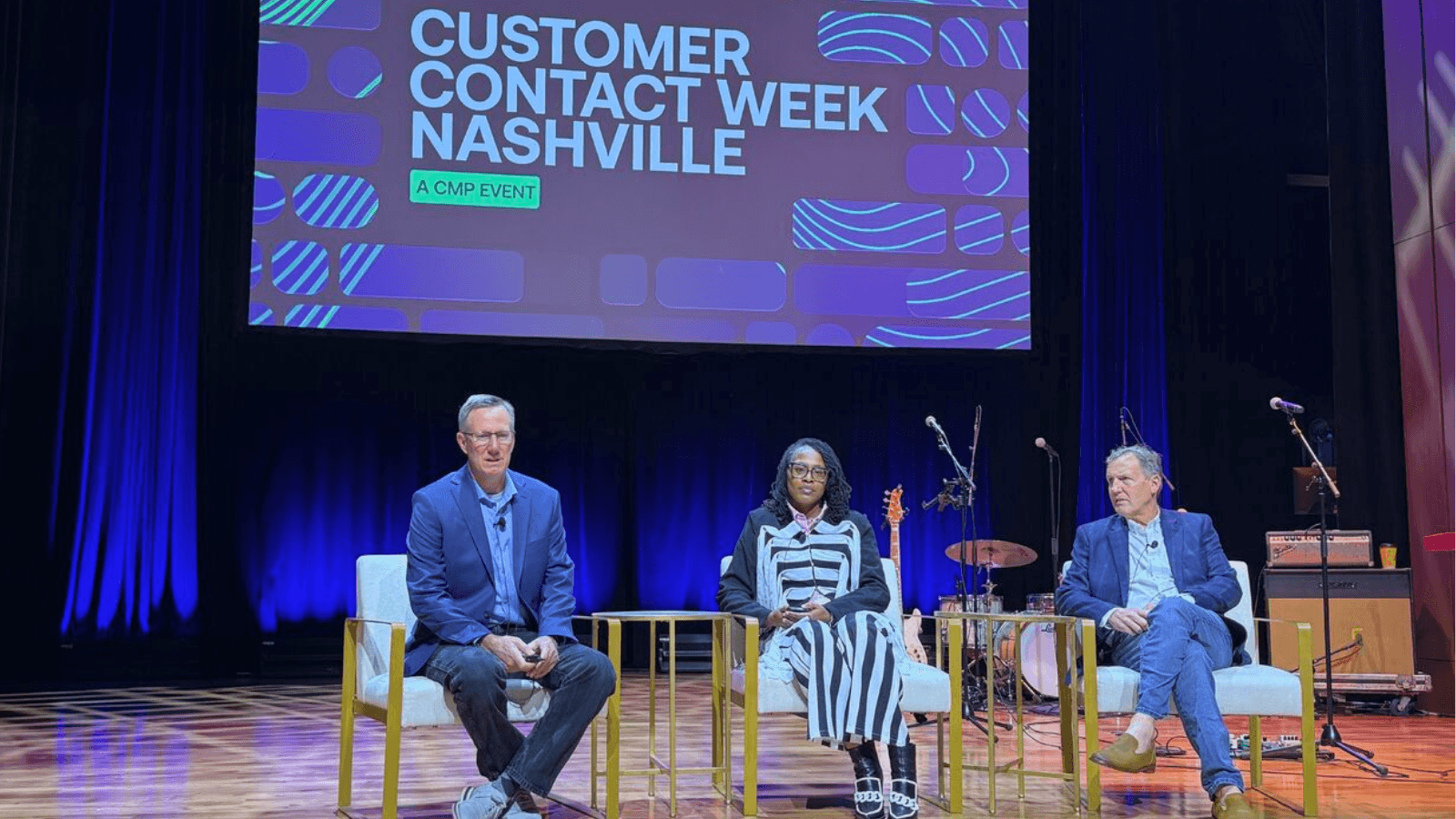
CCW Nashville 2026 put artificial intelligence at the center of the contact center conversation, as expected. Yet the most valuable discussions did not focus on how quickly organizations can deploy AI. They focused on whether customers trust it, whether leaders can understand its impact, and whether frontline teams have the support to make it work.
Across panels, interviews, and conversations on the expo floor, one message came through clearly: AI can expand capacity, but it cannot compensate for fragmented journeys, weak customer insight, or an employee experience that leaves agents overwhelmed. The expo floor was open throughout the event, creating plenty of opportunities to speak with vendors and see new technology developments firsthand.
TL;DR
-
CCW Nashville’s core tension was the gap between widespread AI investment and uneven customer trust.
-
CMP findings showed customers still face familiar friction, including long wait times and repeated information requests.
-
Leaders increasingly see observability as a way to turn customer interaction data into action across CX, product, marketing, and revenue teams.
-
Sanas’ Supervised AI launch reflected a growing focus on human oversight, transparency, and continuous customer conversations.
Why Is AI Investment Not Yet Closing Longstanding CX Gaps?
AI investment has accelerated, but many customer frustrations remain unchanged. Audrey Steeves, Senior Content Analyst at Customer Management Practice (CMP), said CCW Nashville repeatedly returned to the gap between what customers expect and where organizations are investing.
Customers increasingly expect personalized, proactive, and predictive experiences. However, long hold times, repeat contacts, and the need to repeat information remain familiar pain points. The issue is not simply a lack of technology. It is the failure to apply technology in ways that remove effort.
Steeves explained that organizations often have abundant customer data but struggle to turn it into meaningful action.
Steeves said:
“There’s so much information out there. There’s so many different ways to listen to people, but there is a really… absence of acting on that in a productive way.”
A business can add a chatbot, deploy an AI agent, or collect more interaction data without improving the experience. Better outcomes require leaders to identify the friction customers actually face, align teams around it, and then use technology to solve it.
Watch the full interview with Audrey Steeves here:
What Were CMP’s Key Findings at CCW Nashville?
CMP’s findings emphasized that customer choice and trust still shape whether automation feels helpful or restrictive. Steeves said customers can perceive self-service not as added convenience, but as a barrier placed between them and the help they need.
-
Customers still want personalization, but brands must use it carefully. Personalization becomes intrusive when customers cannot see a clear benefit or feel uncomfortable with how much a company knows.
-
Familiar friction has not disappeared. Long waits, repeated questions, and disconnected interactions remain major sources of dissatisfaction despite new CX investments.
-
Self-service cannot become forced service. CMP shared that 89% of customers feel brands shepherd them toward self-service before they can reach a live person.
-
Orchestration matters more than raw AI capability. The question is not whether AI or humans should handle every interaction. It is how organizations route the right moment to the right resource.
-
Agent roles are becoming more complex. Organizations now expect frontline employees to use more systems, apply judgment, and handle emotionally demanding conversations.
For Steeves, the practical starting point is simple: define the business problem before choosing the technology. That means CX leaders need agreement across departments on the issue they are trying to fix, rather than starting with a vendor capability and searching for a use case afterward.
How Can Observability Create a Unified Customer View?
Data collection and the ability to use that data more effectively formed a wider discussion throughout CCW Nashville. Contact centers capture some of the most direct and valuable customer feedback available to an organization, across calls, chats, self-service journeys, complaints, sentiment, and repeat contacts. Yet many businesses still hold that information in separate systems or review only a small sample of interactions.
The opportunity is not simply to collect more data. It is to build a connected view that shows what customers are trying to achieve, where they encounter friction, how they feel during an interaction, and whether an apparent resolution actually held.
That is why observability featured so strongly in the event’s conversations. Ivy Holt, VP of AI Enablement at Parloa, described observability as an end-to-end view that helps leaders connect signals across the customer journey, rather than assessing isolated incidents.
Holt said:
“Having observability from end to end is where you’re going to be able to connect the dots and make those insights.”
Holt noted that contact centers historically reviewed and quality-assured only a small portion of customer conversations. AI gives enterprises a chance to analyze interactions at far greater scale, including voice conversations, sentiment shifts, unresolved issues, and moments where customers struggle to get an answer.
This is also where employee experience and customer experience meet. When organizations give agents clearer context, better tools, and better escalation paths, agents can spend less time navigating disconnected systems and more time resolving complex needs. The contact center can then contribute insight to product, marketing, and revenue teams instead of operating only as a cost center.
Watch the full interview with Ivy here:
What Does Sanas’ Supervised AI Launch Signal?
Sanas used CCW Nashville to launch Supervised AI, a model designed to keep a human supervisor in command of AI-led customer conversations. The company says one supervisor can oversee up to four live conversations, with the ability to listen in, guide the AI, take over, and hand control back without forcing the customer to restart.
The announcement reflects the event’s broader concern with trust. According to Sanas, the platform discloses that the customer is speaking with AI and that a human supervisor is in command. It can also alert supervisors when sentiment drops, AI confidence falls, or a customer asks to speak to a person.
Saurabh Sodhani, Chief of Staff and Product Lead of the project at Sanas, described the company’s goal as scaling AI while preserving human judgment.
Sodhani said:
“We can deploy AI at scale, but still have the human in control of all the conversations AI is having.”
Sanas says the product is available by invitation, with broader availability planned for December 2026. Its promise of managing multiple conversations per supervisor remains a vendor claim that enterprises will need to assess against their own complexity, risk requirements, training capacity, and customer satisfaction results.
CCWomen Put People First in AI CX
CCWomen added an important people-focused dimension to CCW Nashville. While the broader event examined how organizations can use AI, automation, and data to improve customer outcomes, the CCWomen Summit asked what those changes mean for the leaders and employees expected to make transformation work.
The program opened with a leadership discussion on navigating uncertainty, followed by a panel on the experience of being the only woman in the room. The conversation addressed representation, double standards, bias, and the practical resilience required to lead through rapid change.
AI featured prominently in the summit’s future-focused leadership session, titled AI Is Happening and We Get to Shape It: Your Next Steps as a Future-Proof Leader. Speakers from Lockton, the American Bankers Association, and Inbenta explored how real-time assistance, automation, and trend analysis are reshaping contact center roles. The session also considered how leaders can respond to employee concerns about job security and position their teams as a source of business intelligence rather than a cost center.
That idea connected directly with the wider CCW discussion around customer data. Contact center teams hear directly from customers every day. Leaders need the influence, systems, and executive support to turn those conversations into insight that product, marketing, and revenue teams can use.
The summit also did not overlook the human cost of customer-facing work. Its Cost of Caring session focused on emotional labor, workplace stress, and burnout. Participants discussed the often-unrecognized work involved in managing team stress, navigating personalities, and maintaining a constructive experience for customers and colleagues.
What Are the Key Takeaways From CCW Nashville 2026?
-
AI scale is not the same as AI success. Customer trust, choice, and resolution quality remain the real tests.
-
Self-service needs an escape route. Customers should not feel trapped in automation when they need human help.
-
Data has to become connected intelligence. AI creates more interaction data, but its value depends on whether teams can combine it into a usable view of customer journeys and sentiment.
-
Unified insight requires observability. Leaders need to see the full journey, including frustration and failure points that standard reporting misses.
-
Employee experience remains a CX priority. Agents need stronger training, better context, and systems that support more complex work.
-
Human oversight is becoming a differentiator. Sanas’ launch showed how vendors are positioning supervision, disclosure, and auditability as essential to responsible AI deployment.
-
Start with the problem. The strongest advice from the event was to diagnose operational and customer issues before buying technology.
What Should CX Leaders Do Before Scaling AI Further?
CCW Nashville made the next phase of CX AI clear. Organizations must move beyond asking what AI can do and ask where customers experience effort, where employees lack context, and where human judgment remains essential.
AI can help organizations analyze more interactions, reduce waiting, and make service more responsive. But the businesses most likely to win customer confidence will use it to create continuity, preserve choice, and ensure that customers do not have to fight their way to a resolution.
Frequently Asked Questions
What were the biggest themes at CCW Nashville 2026?
The biggest themes were customer trust in AI, self-service choice, unified customer data, contact center observability, agent experience, and human oversight of AI-led conversations.
What did CMP find about customer self-service?
CMP shared that 89% of customers feel they are being pushed toward self-service before they can reach a live person. The finding highlights the need to preserve customer choice and clear access to human support.
What is contact center observability?
Contact center observability is an end-to-end view of customer interactions and operational signals. It helps leaders identify frustration, unresolved issues, sentiment changes, and journey friction that narrower monitoring may miss.
What did Sanas announce at CCW Nashville 2026?
Sanas launched Supervised AI, a platform designed to let a human supervisor oversee multiple live AI customer conversations and intervene without requiring the customer to restart the interaction.
Why does employee experience affect customer experience?
Employees need context, training, and effective tools to resolve increasingly complex customer needs. Better-supported agents can make stronger decisions, reduce customer effort, and improve service outcomes.