the voice of customer experience technology
Front pagesponsored · Centrical
Agent Experience1h · 13:31 BST · 6 min read

Are CX Leaders Ready for the Hybrid Frontline?

After Centrical’s Big Game event, Gal Rimon argues that AI success now depends on whether CX leaders can prepare people, managers, AI agents, and even customer-owned AI agents to work toward shared goals, clear accountability, and measurable outcomes

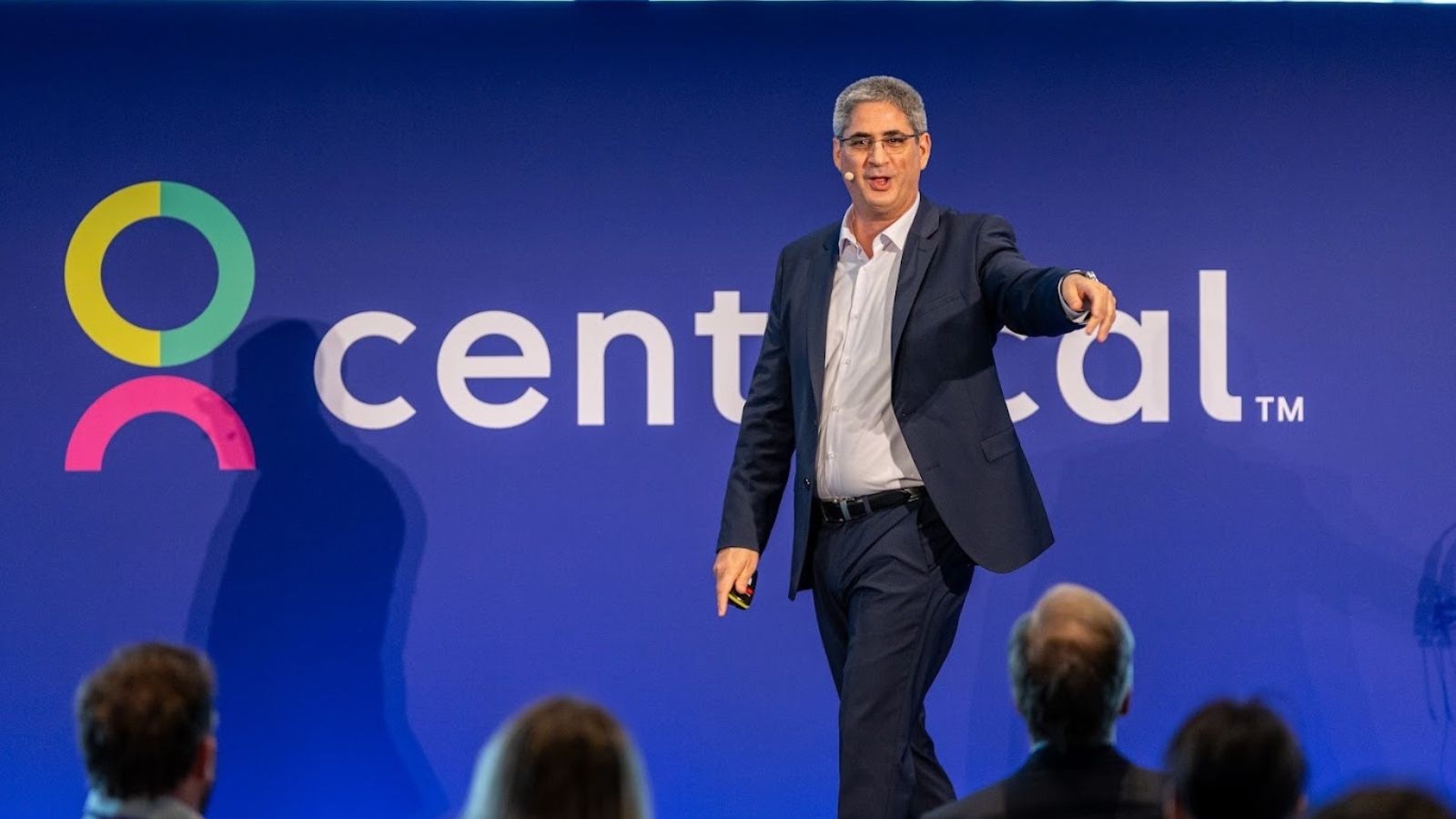
Gal Rimon, Founder & CEO of Centrical, walks across the stage gesturing towards the audience at Centrical’s Big Game event in London, in front of a large blue backdrop showing the Centrical logo

Workforce Orchestration is becoming a sharper priority for CX leaders as AI agents take on more operational work and human agents handle more complex, emotional, and judgment-heavy interactions. 

Centrical used its Big Game event in London to launch its Workforce Orchestration System for the hybrid frontline. The system turns a business goal into a running performance program across people and AI agents, including KPIs, learning, coaching, role-play simulations, certifications, and challenges. 

The launch builds on our two-part interview series with Gal Rimon, CEO and Founder of Centrical, which first explored why the Agent Zoo creates a performance problem, then examined how CX leaders should own AI agent performance. 

For Rimon, AI success should not be judged by deployment alone. It should be judged by whether organizations can connect strategy to frontline behavior and move business outcomes faster. Rimon framed the launch as a response to the execution gap facing frontline leaders: 

“Organizations don’t need more information; they need execution.” 

Rimon said Centrical’s Workforce Orchestration System is designed to build and run the performance programs needed to achieve a business goal, while keeping people in control of the decisions that matter. 

AI Is Expanding the Human Frontline Role 

The Big Game event focused on a central question for CX and operations leaders: how should people and AI agents work together as one hybrid frontline? 

That question now matters because AI is changing, rather than simply removing, frontline work. Gartner research cited by Centrical found that 85% of service leaders are expanding human agent responsibilities. 

As AI agents handle simpler and more repetitive tasks, human agents increasingly pick up complex cases, emotional customers, and judgment calls.  They also handle more complex handoffs. In some cases, a customer may move from an AI agent to a human agent mid-interaction. In others, a customer’s personal AI agent may begin the interaction on their behalf, creating new machine-to-machine moments before a person ever steps in. 

That raises the readiness question for CX leaders: can their teams manage context, accountability, and service quality when the customer journey may involve human agents, company-owned AI agents, and customer-owned AI agents? 

Rimon described that shift as a moving target for service teams. A new AI agent can change a person’s role quickly, which means skills, coaching, and goals need to move at the same pace. 

The issue is not only the work AI takes on. CX leaders also need to account for the work that changes around it. 

Workforce Orchestration Starts With the Business Goal 

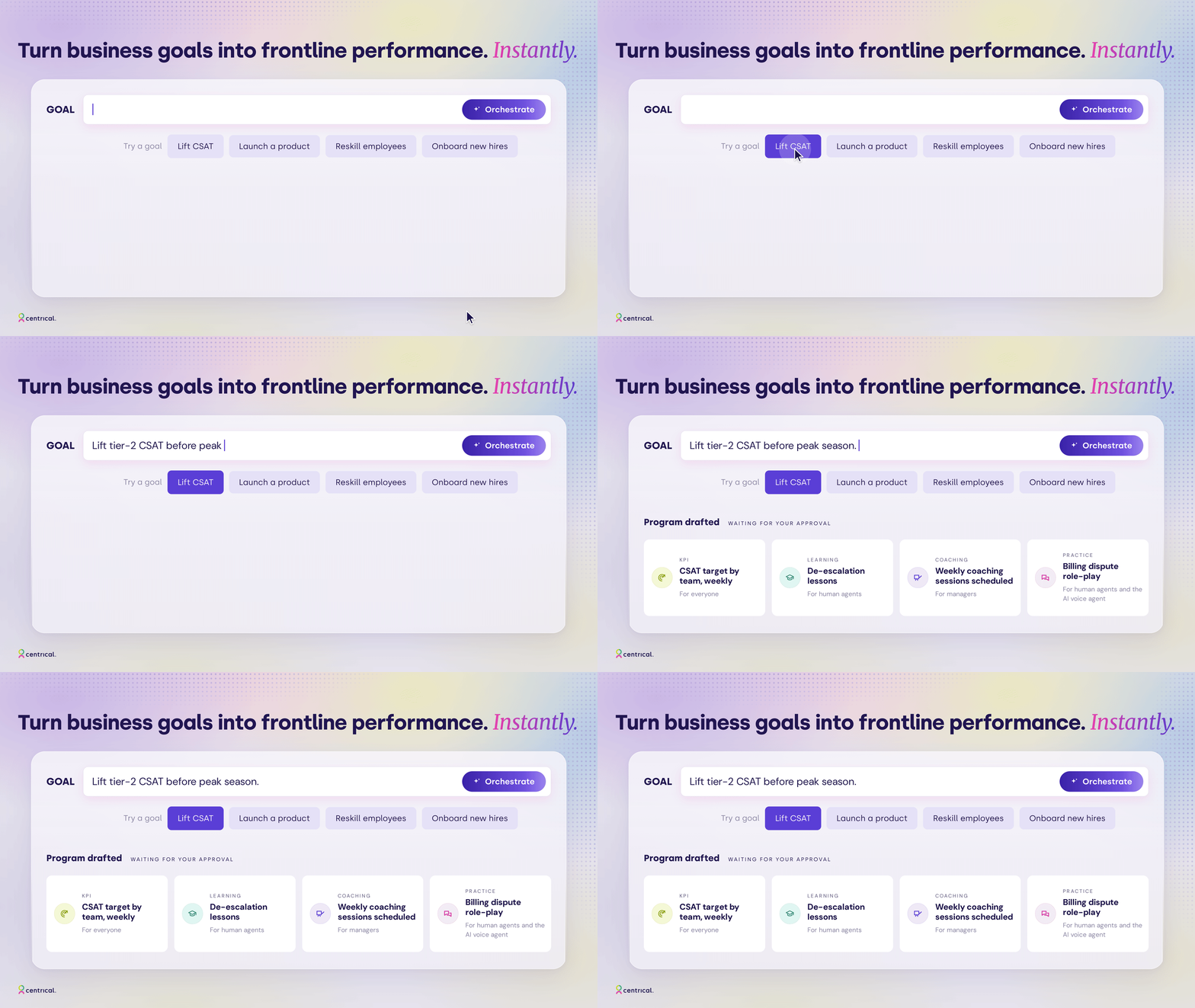
Centrical’s new system starts with a declared business goal and desired outcome. Leaders describe that goal in plain language, and the system builds the program needed to deliver it. 

 That program can include objectives, KPIs, audiences, learning, coaching, simulations, and challenges. Performance data can flow in from CRM, contact center, and HR platforms, while AI agents in other systems share context or take on delegated work, such as creating training content or videos. 

The system also keeps people in control. Leaders set the objectives, priorities, and key decisions, and approve recommended programs or changes before they go into effect. 
That model reflects a wider shift in how customer service technology is being evaluated. Jim Davies, Analyst and Executive Partner at Actionary, argued that measurement alone is no longer enough: 

“The real opportunity is to connect strategic intent directly to the behaviors, capabilities and actions required to deliver it.” 

Davies framed Centrical’s approach as a shift from reporting and training toward continuous execution, where performance programs are built around the business outcome leaders need to move. 

The distinction matters for CX leaders. More insight does not guarantee better execution. Better execution comes when goals, behaviors, coaching, and outcomes sit in one operating loop. 

Managers Need Faster Routes to Behavior Change 

Rimon’s advice to CX leaders is to start with the business goal and work backward from there. 

He cited another Gartner finding referenced in Actionary’s research: 60% of service agents do not promote self-service, even when it is a strategic priority. That example shows how easily leadership intent can fail to reach frontline behavior. 

A business may decide that more customers should use self-service. Yet if agents do not promote it during the right interactions, the strategy stalls. 

Rimon described the measure that matters as “time to behavior,” or how long it takes from a decision to real change on the frontline. 

In practice, that means identifying the agents who are not promoting self-service, coaching them on that specific behavior, and using short AI role-plays to help them practice before the next shift. That principle separates program design from human leadership. The system can build training, coaching prompts, simulations, and performance programs faster, but managers still need to handle the conversations and judgment that shape behavior. 

AI Is Becoming an Operating Model Issue 

Centrical’s Big Game event extended the discussion beyond a single product launch. 

Gal Rimon’s session, The Future of Performance Orchestration: A First Look, introduced the system and its role in connecting business goals to frontline execution. 

Other sessions explored the operating model behind that shift. They included The Human and AI Operating Model, What to Measure in a Hybrid Workforce, Building an Academy That Sticks, and Standing Up a Center of Excellence. 

The session lineup reflects a practical reality for CX leaders. AI adoption changes roles, skills, measurement, governance, and coaching, not only technology architecture. 

The launch also introduced Centrical’s Frontline Codex, a dynamic context for how each business works. It brings together roles, skills, KPIs, policies, operational requirements, and a context graph connecting goals, departments, behaviors, program elements, and outcomes. 

Rimon also warned that AI returns remain uneven because many companies underestimate the human cost of rollout. 

AI business cases often count the cost of the technology. They may leave out training, coaching, management time, and the productivity dip that comes with change. 

Rimon argued that the human cost belongs in the ROI model from day one. Without that view, AI programs can look successful on paper while the frontline absorbs unmanaged complexity. 

Accountability is the next requirement. CX leaders need to name an owner for AI agent performance, decide how much each AI agent can do independently, and ensure a clear audit trail. 

People and AI agents also need one scorecard. Performance cannot sit in separate systems if customers experience one journey. 

Business Impact Becomes the Test for AI Success 

The post-event message from Big Game is that AI success should be judged by business impact, not deployment. 

Centrical said one leading retailer achieved an eight-point increase in customer satisfaction score in one month after launching a campaign through the system. That proof point shows the type of business outcome CX leaders will increasingly need to demonstrate. 

For leaders planning the next phase of AI adoption, the operating principle is direct: prove impact on one business goal before scaling it across the organization. 

The hybrid frontline will include people, managers, and AI agents working around shared outcomes. Human agents need new skills, managers need faster coaching systems, and AI agents need governance, measurement, and clear accountability. 

Workforce Orchestration gives CX leaders a way to connect those pieces. It moves the conversation from AI adoption to execution, behavior change, and measurable business outcomes. 

The discussion0 takes · attributed & checked

Does this reflect your experience?

opening the room…
Read nextordered by techtelligence · every pick explained
more from Centrical · sponsored

How CX Leaders Should Own AI Agent Performance

12 Oct 2026
same beat · Agent ExperienceHow 8x8, Intradiem and Totalmobile are Enhancing Workforce Customers19 Oct 2026same beat · Agent ExperienceThe Hidden Cost of Manual Contact Center Scheduling16 Oct 2026