

In the year 2025, AI and CX go together like cops and robbers, peanut butter and jelly, and The Notebook and tears.
Yet, despite how prevalent the technology now is within the customer service and experience space, many organizations still view it as a separate tool that gets bolted on.
While this can be effective, to truly reap the rewards of AI, organizations need to start thinking bigger – treating AI as a foundation, not a toolkit.
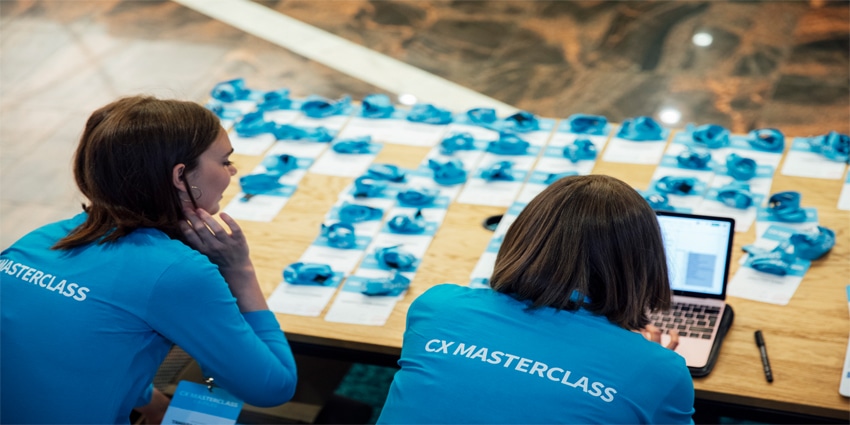
That much is clear after speaking with Sirte Pihlaja, Head of Team at CXPA Finland, who is organizing the latest CX Masterclass event.
This year’s event will see speakers and CX professionals from around the globe descending on Helsinki for two days of talks and workshops on how AI-native organizations are the future of CX.
But what exactly does AI-native mean?
For Pihlaja, it is about moving far beyond surface-level AI adoption.
“We want to help organizations become AI-native,” she said, explaining how relying on scattered pilots or small internal experiments simply won’t cut it.
“If you think, ‘Ok, I’m going to use ChatGPT or Copilot’… you might only achieve like a 10% personal productivity gain from that. But you won’t be able to deliver the major improvements that you’re looking for.”
And this isn’t purely a CX issue. Pihlaja details how AI-native organizations can have a wider economic impact.
“Finland [Philaja’s home country] has been in an economic slump for almost 20 years,” she said, and AI offers one of the clearest pathways out of it, but only if organizations re-engineer themselves with enough urgency and ambition.
In her words:
“We have been handed the technology and the solution… it’s just a question of making people understand how vital this is for our society in the first place.”
That belief shapes this year’s CX Masterclass, which brings together 25 speakers from across business, government, and technology.
The goal is to give leaders the cross-functional perspective needed to go from dabbling with AI to embedding it in the operating model of the entire organization.
Building the Case for AI-Native Organizations
Pihlaja’s definition of ‘AI-native’ goes well beyond integrating agents into customer service or adding a handful of automation features; it means rethinking how processes run, how decisions are made, and how work is distributed between people and AI systems.
She points to Sitra – the Finnish organization responsible for public-sector funding – as an example of the shift that is already underway.
According to Pihlaja, Sitra has decided that if an organization does not have a plan in place to become AI-native, it will not be given funding.
While these measures may seem extreme, they emphasize how strongly Finland believes in the technology .
Pihlaja believes that CX sits at the center of this transformation. Not because CX teams own AI strategy, but because customer journeys are where the impact becomes tangible – and where broken processes reveal themselves most clearly.
Still, she is clear that this event is bigger than a CX audience alone.